
Photographer Shoots Tour of Britain With Fifty Year Old Camera
Photographing the Lloyds Tour of Britain Men on Film
As an experienced cycling photographer I set myself a new challenge. I’ve written here about how shooting a fast moving sport like cycling on film is one of the most difficult things I photograph so I set out to shoot the 2026 Tour of Britain exclusively on film, with two 40-50 year old cameras and associated lenses.
My objective was to approach the race in the same manner as I always have; carry out the same in-depth level of planning, capture the detail of the race, take a creative approach to the race and it’s locations and share my images in a timely manner, each day.
Because I would be shooting on film I also wanted to demonstrate the use of different film stock, what influenced the images created and hopefully encourage others to pick up that camera gathering dust in their loft!
I was very fortunate to have Not Quite North Camera Shop and Film Lab sponsor me for this project, assisting with film, processing and rapid supply of scanned images. Read more about the choice of film stock for this project here.
Race Preparation
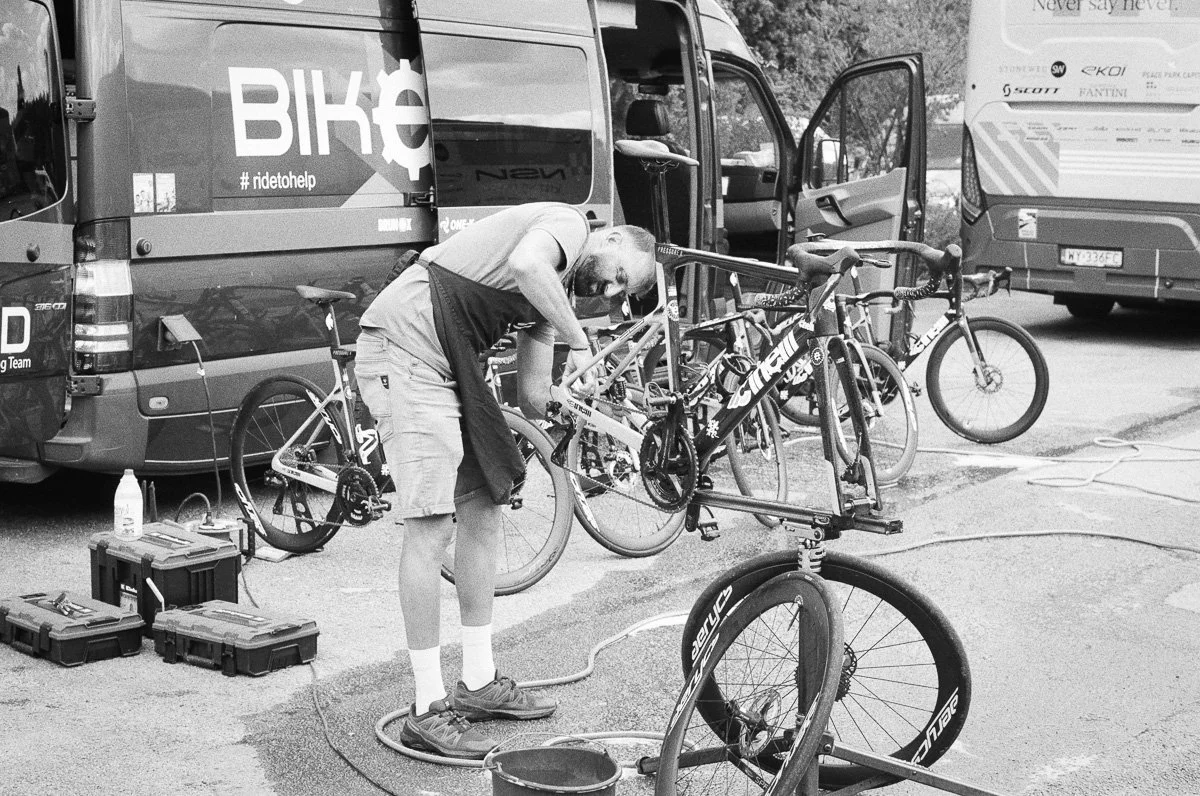
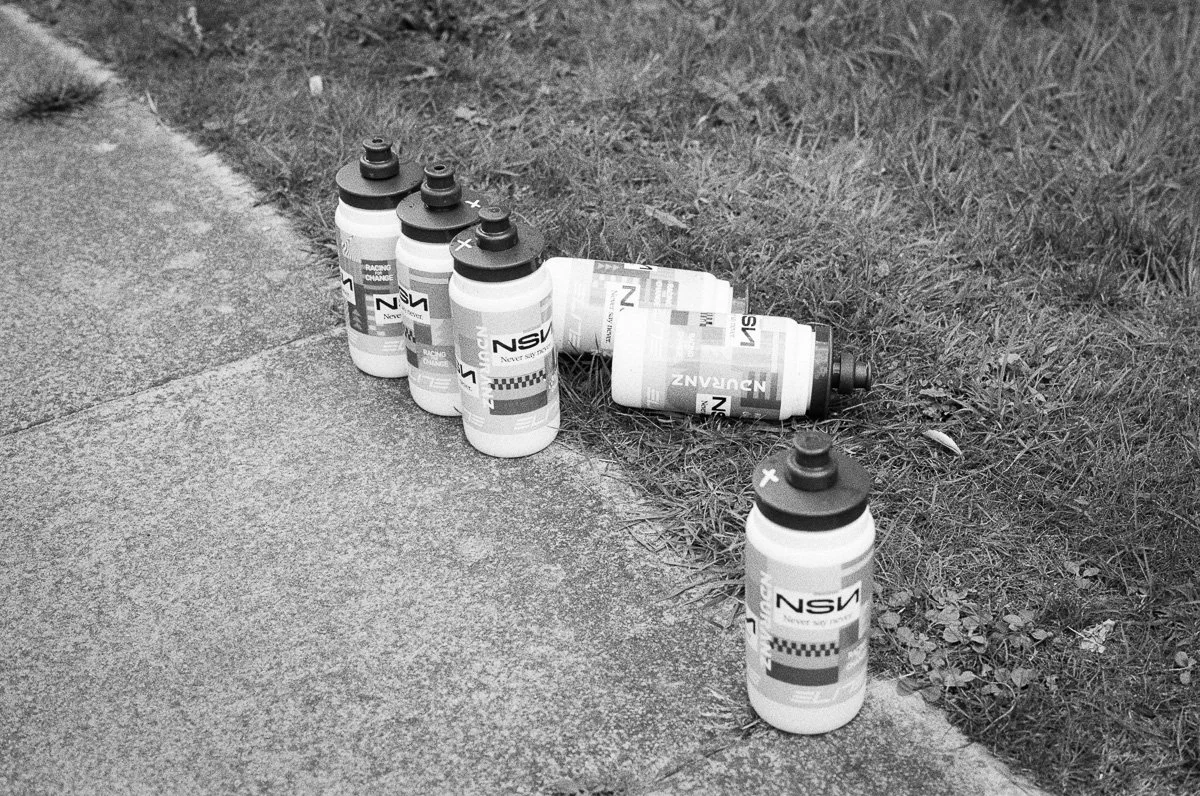
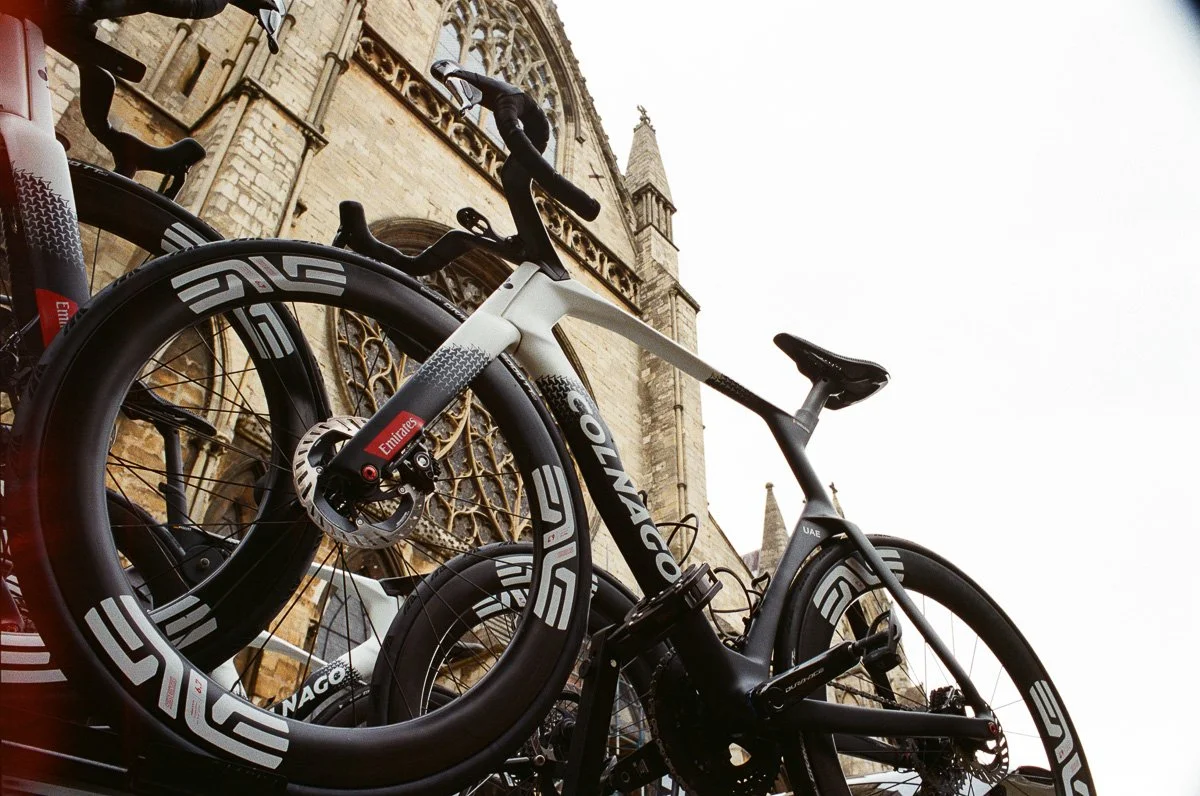
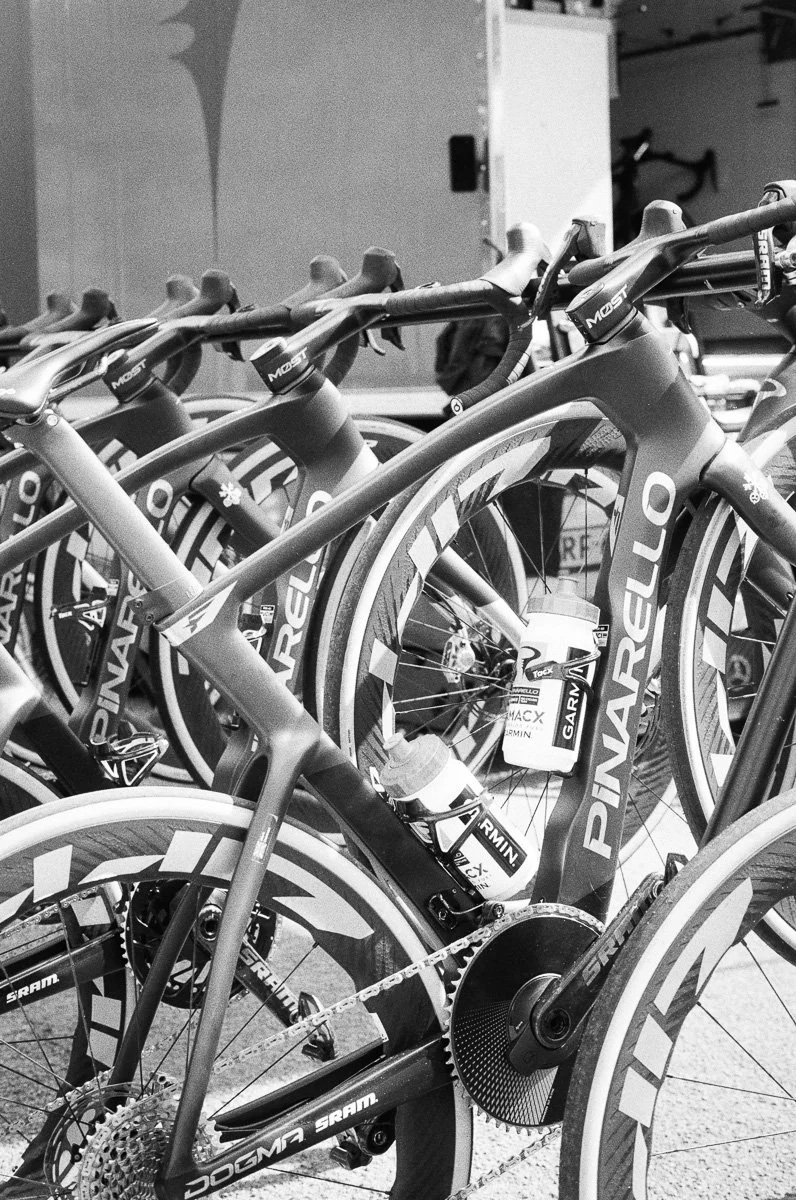
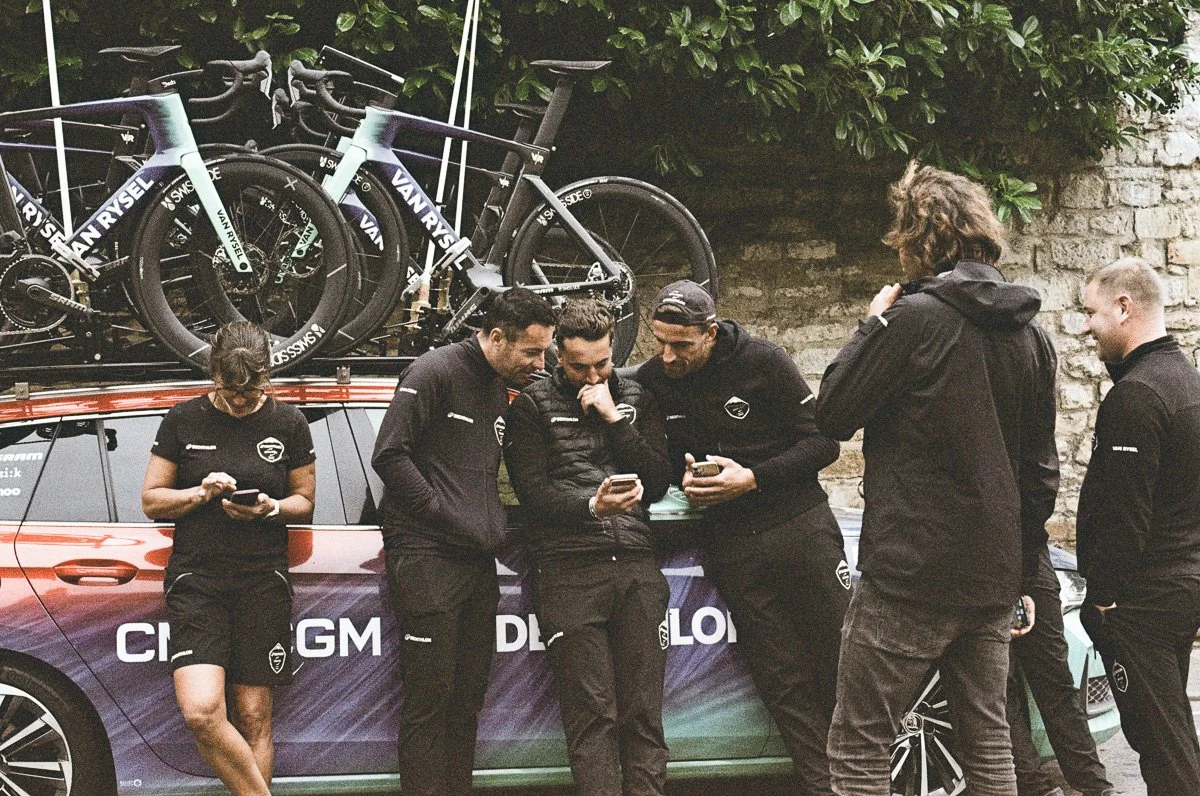
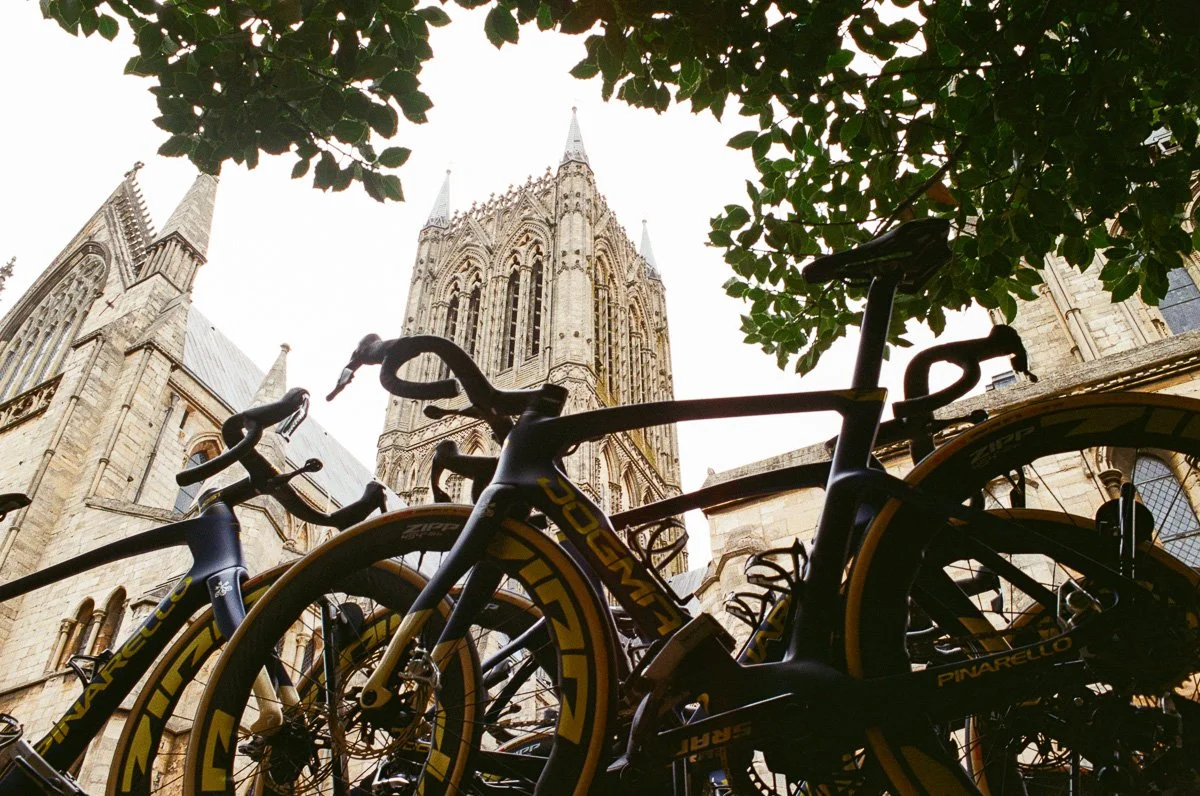
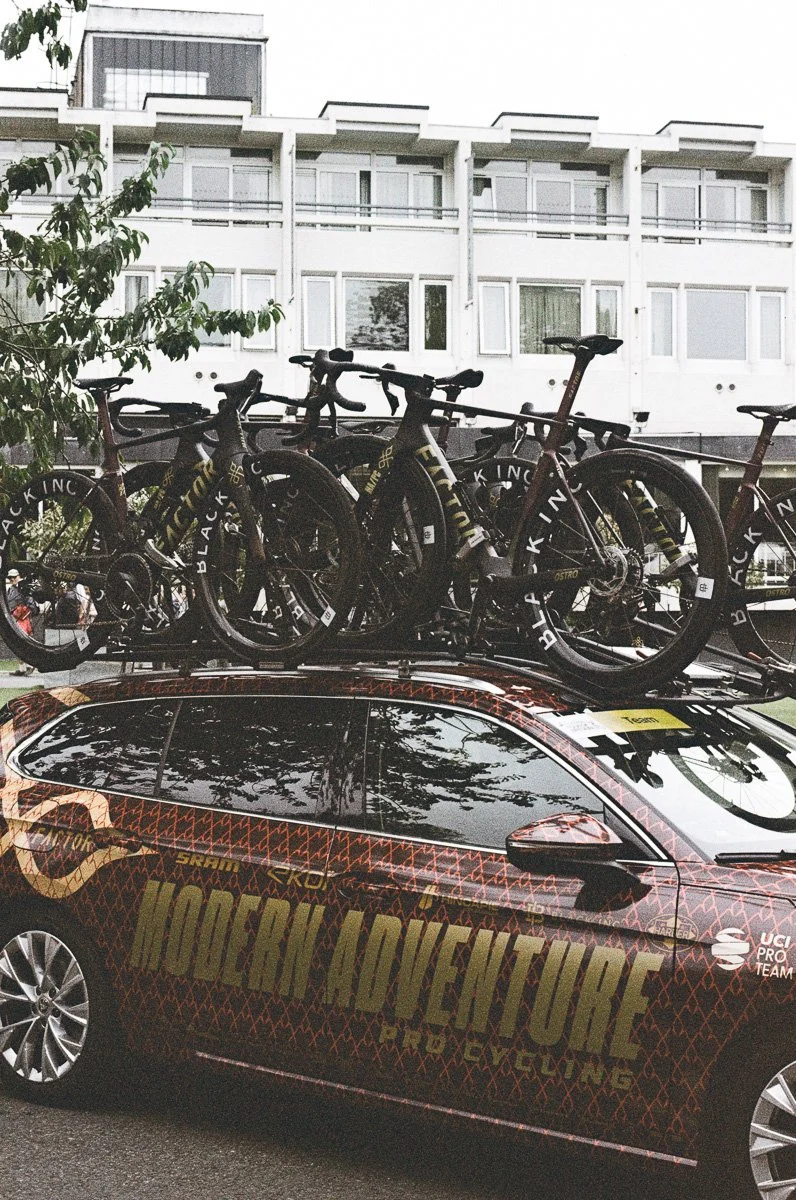
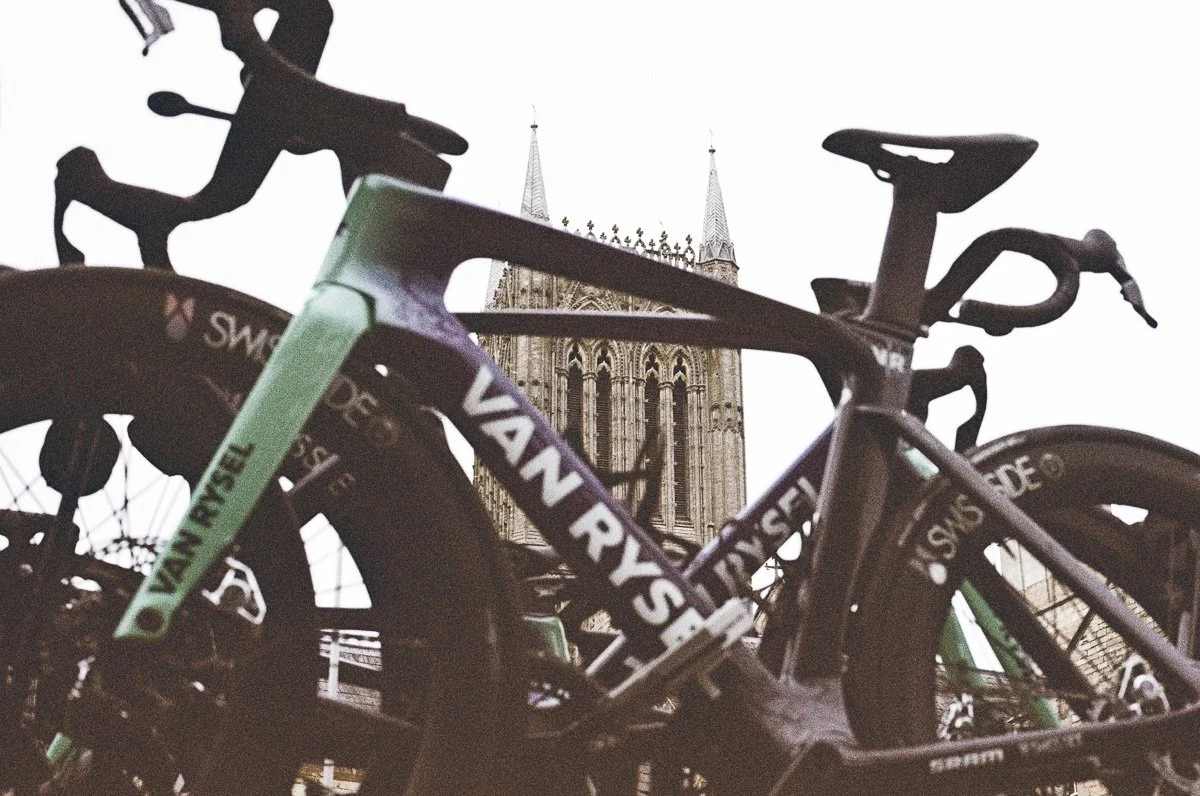
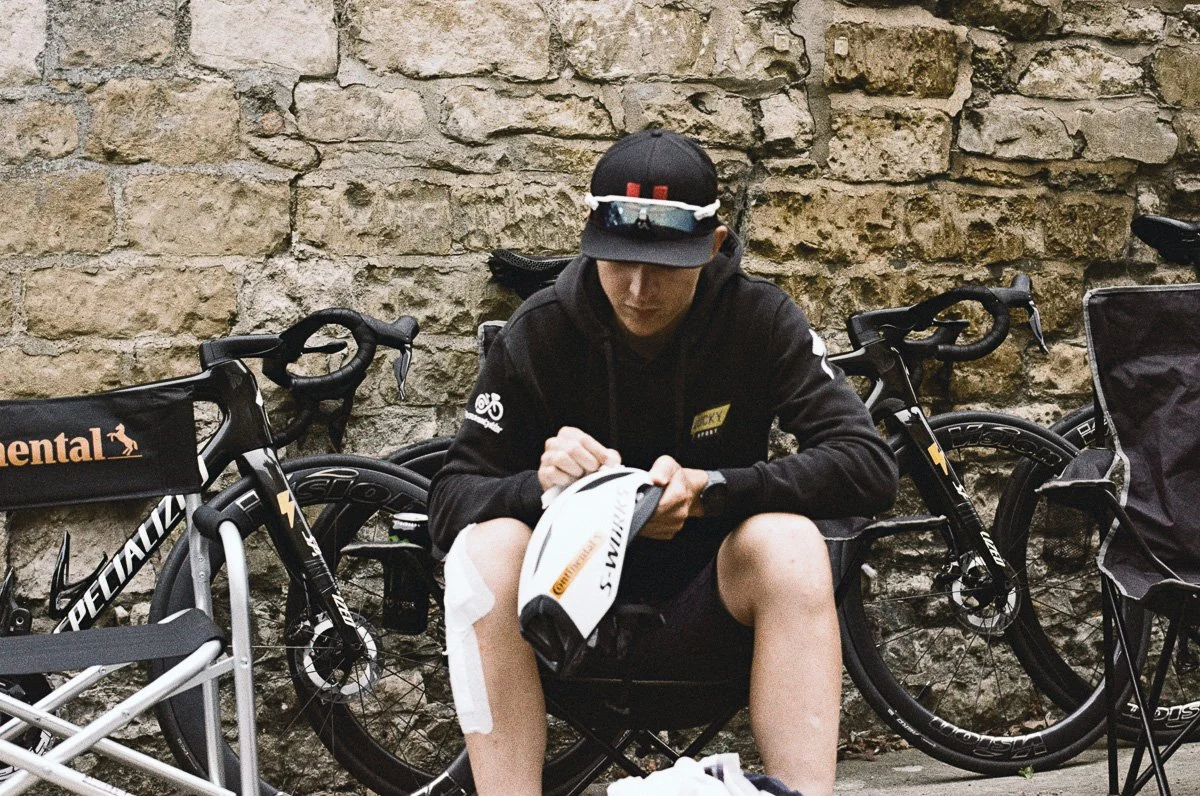
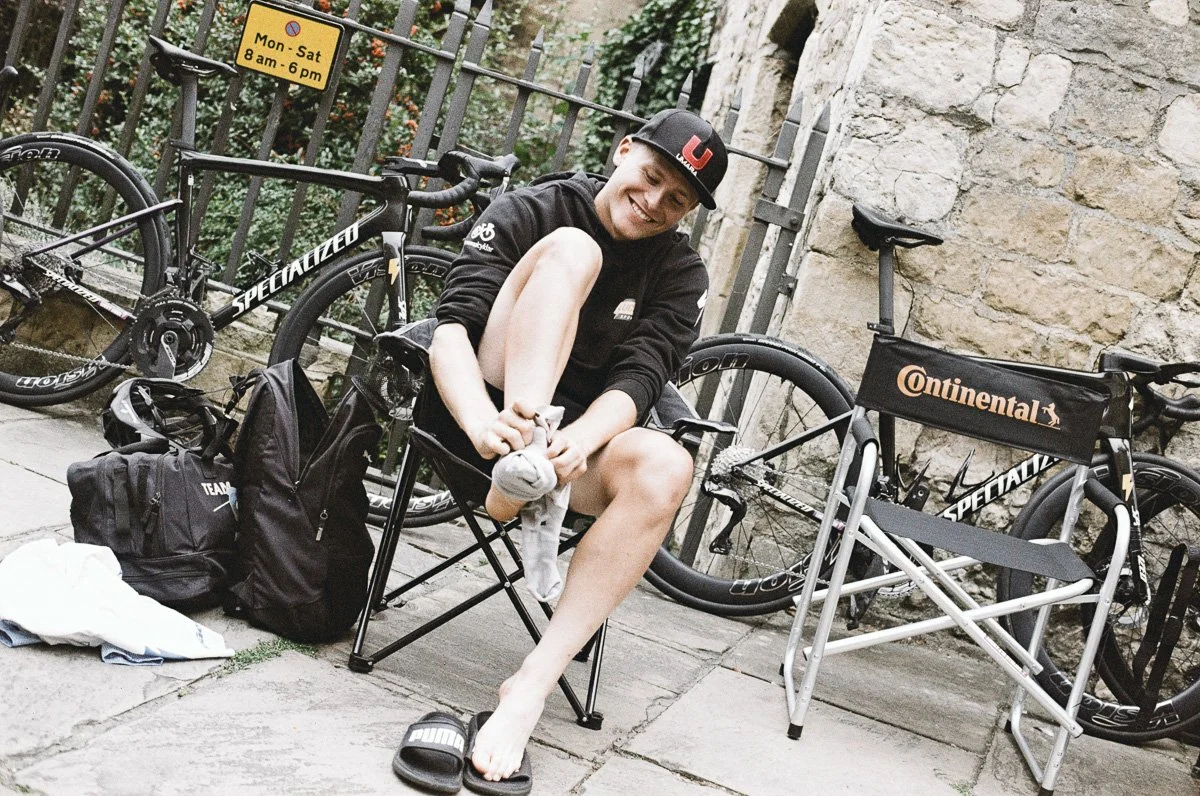
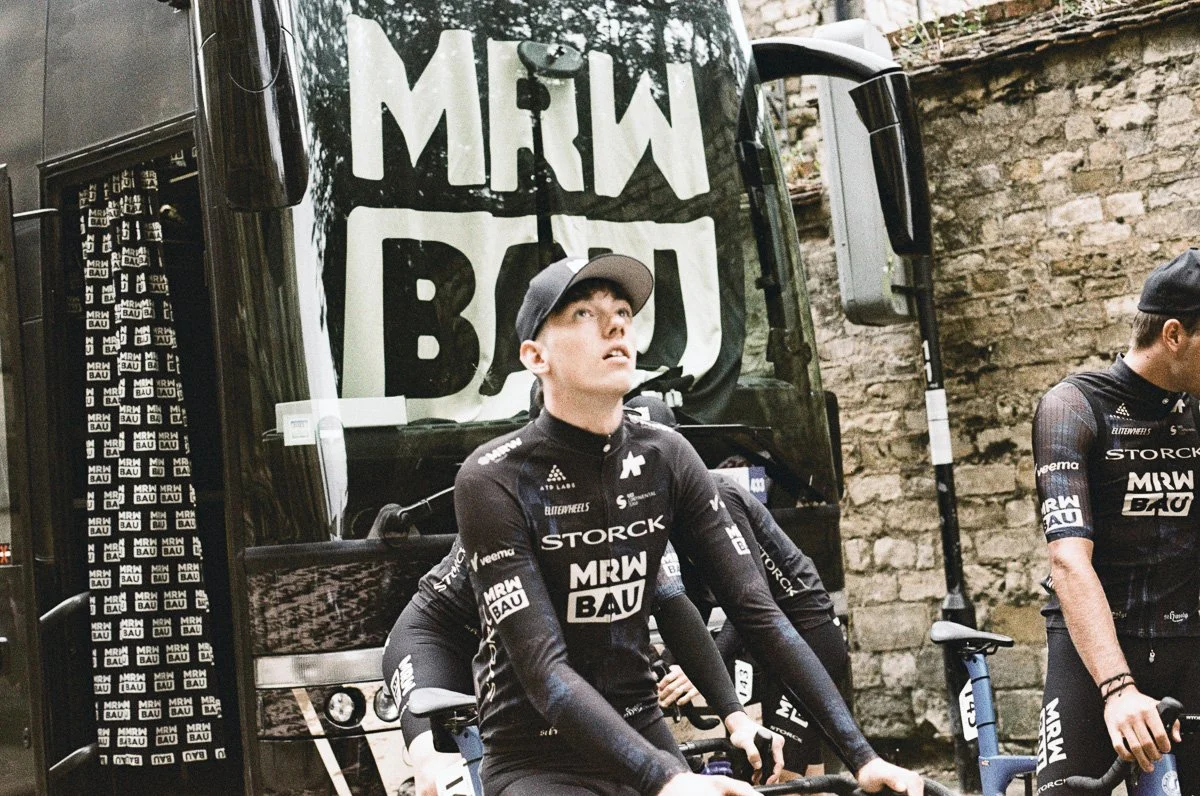
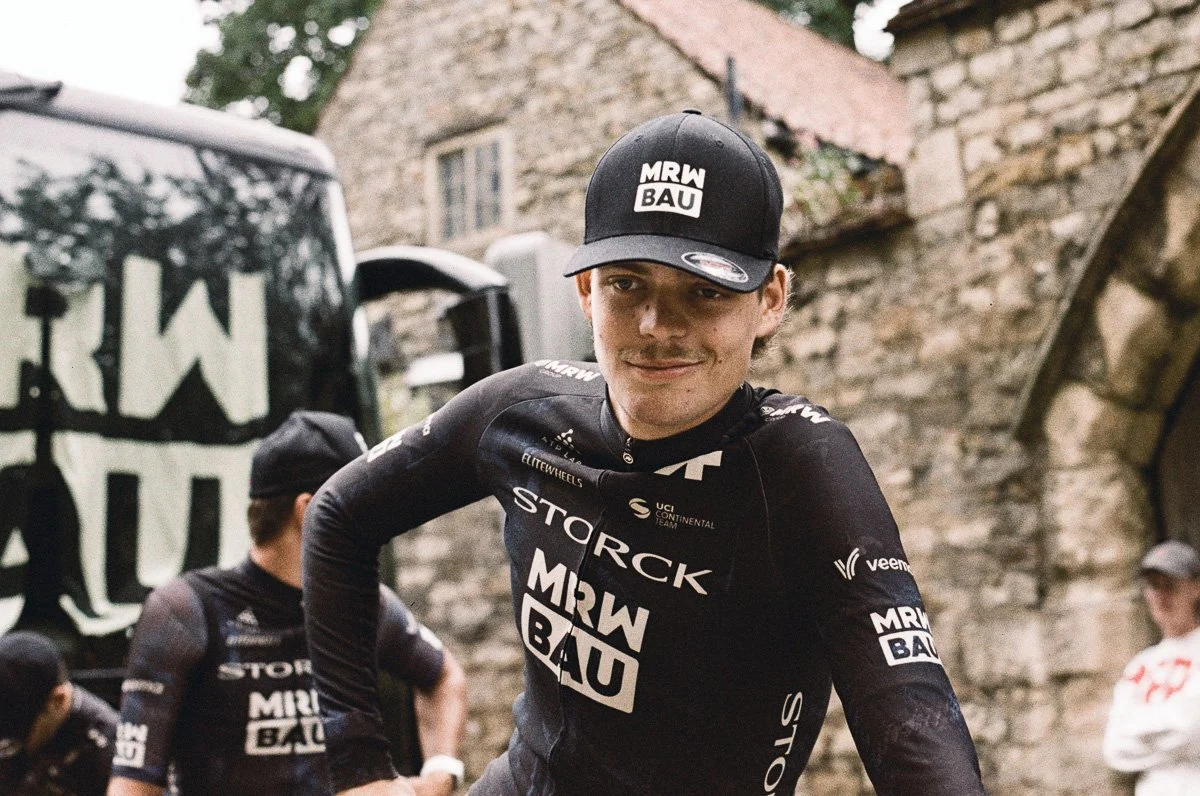
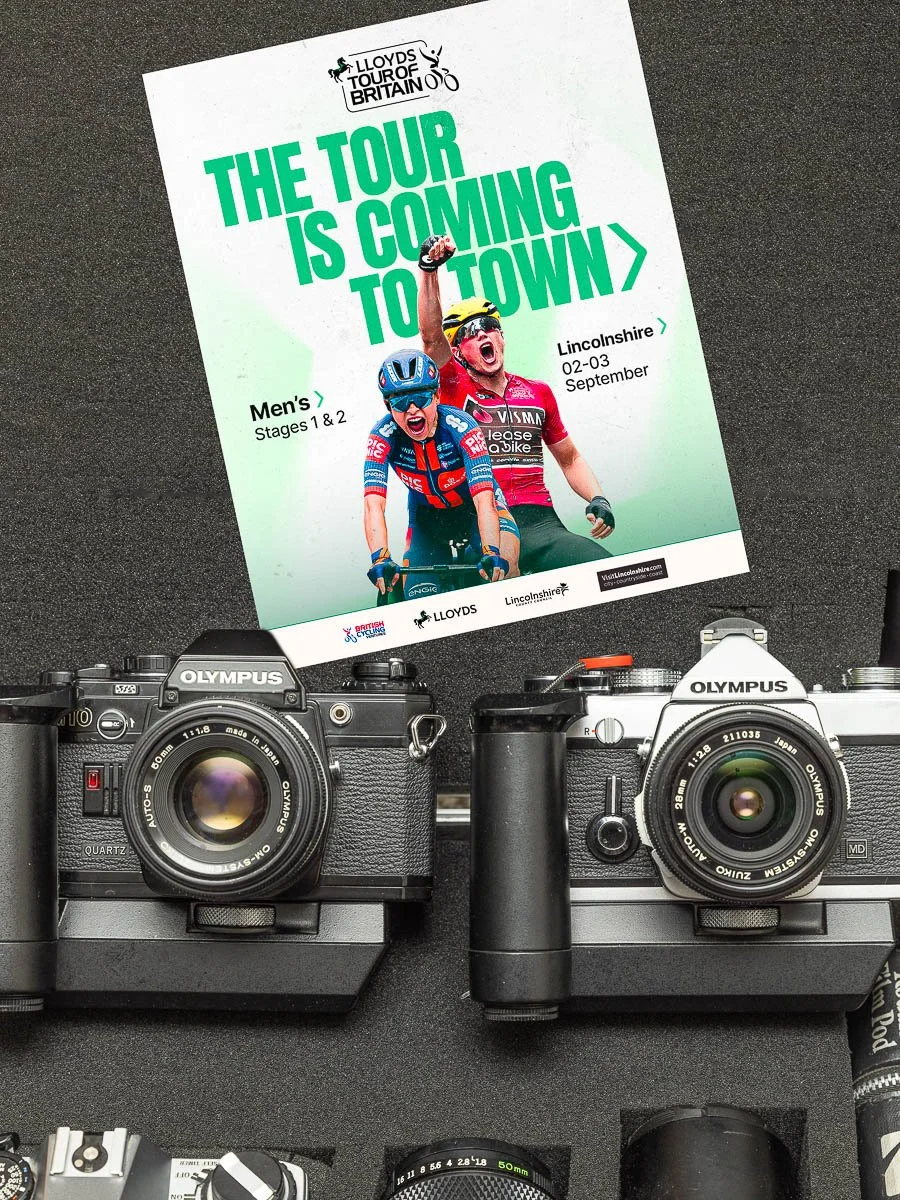
I shot this project with two Olympus SLR cameras from the 1970’s and a small selection of lenses of the same era. No auto focus, no sophisticated subject tracking, no instant image review and very limited exposure metering with fixed ISO of the film.
This means shooting on film is a much slower, deliberate and considered process where every click of the shutter counts (and costs!).
In moments of fast action, where my digital cameras can shoot up to 100 frames a second, I can shoot a maximum of 36 exposures on a roll of film at about three frames per second with my motor-drives attached.
Film demands another level of planning and either nerves of steel or a healthy indifference to the possibility of failing completely.
I have to make my plan, carefully, and stick to it. I can’t make and review test shots, adjust based on image review, I can only hold my nerve and rely on the long process which will deliver a blunt judgement.
There’s a constant sense of jeopardy when relying on vintage equipment more than 40 years old.
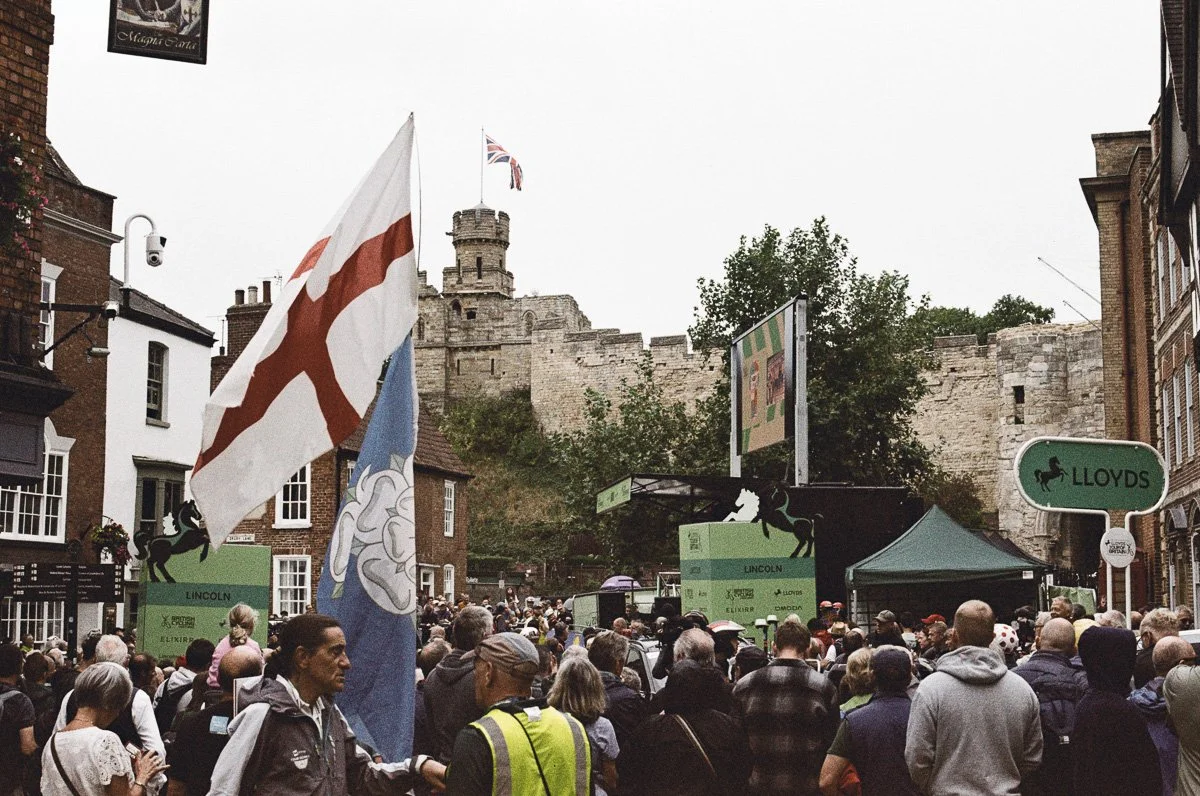
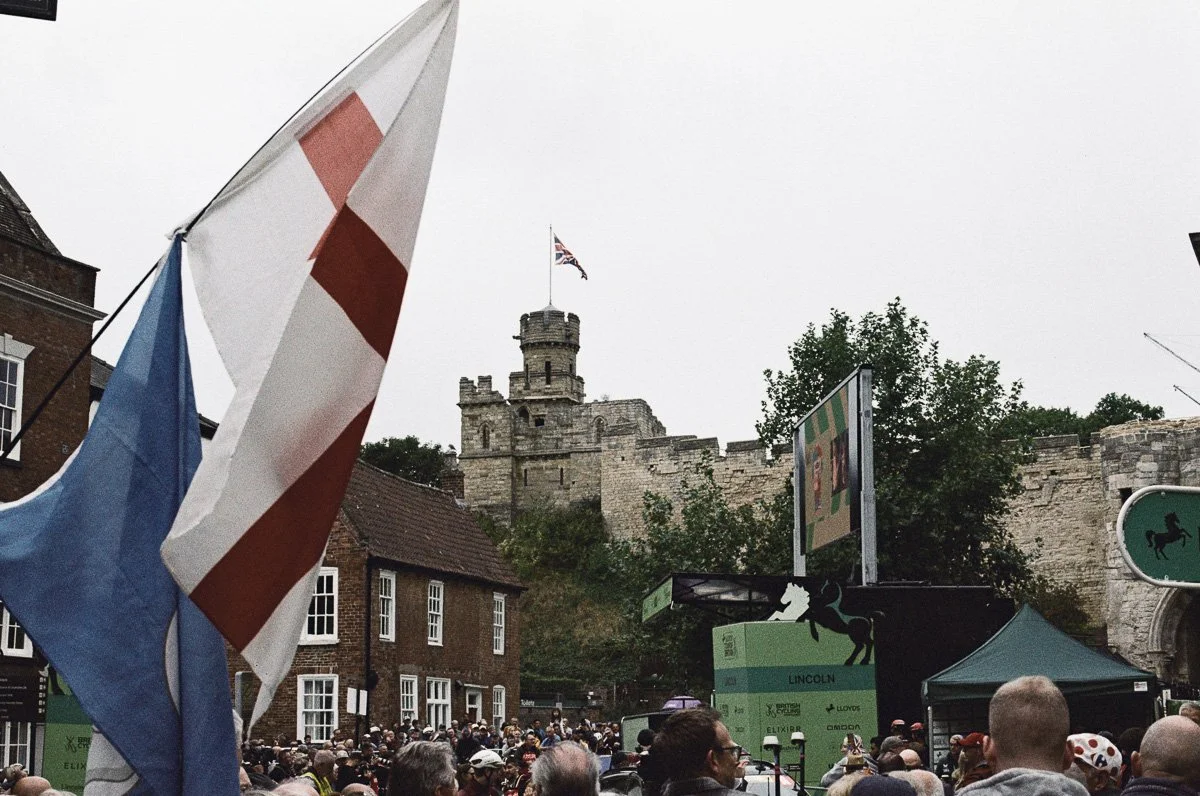
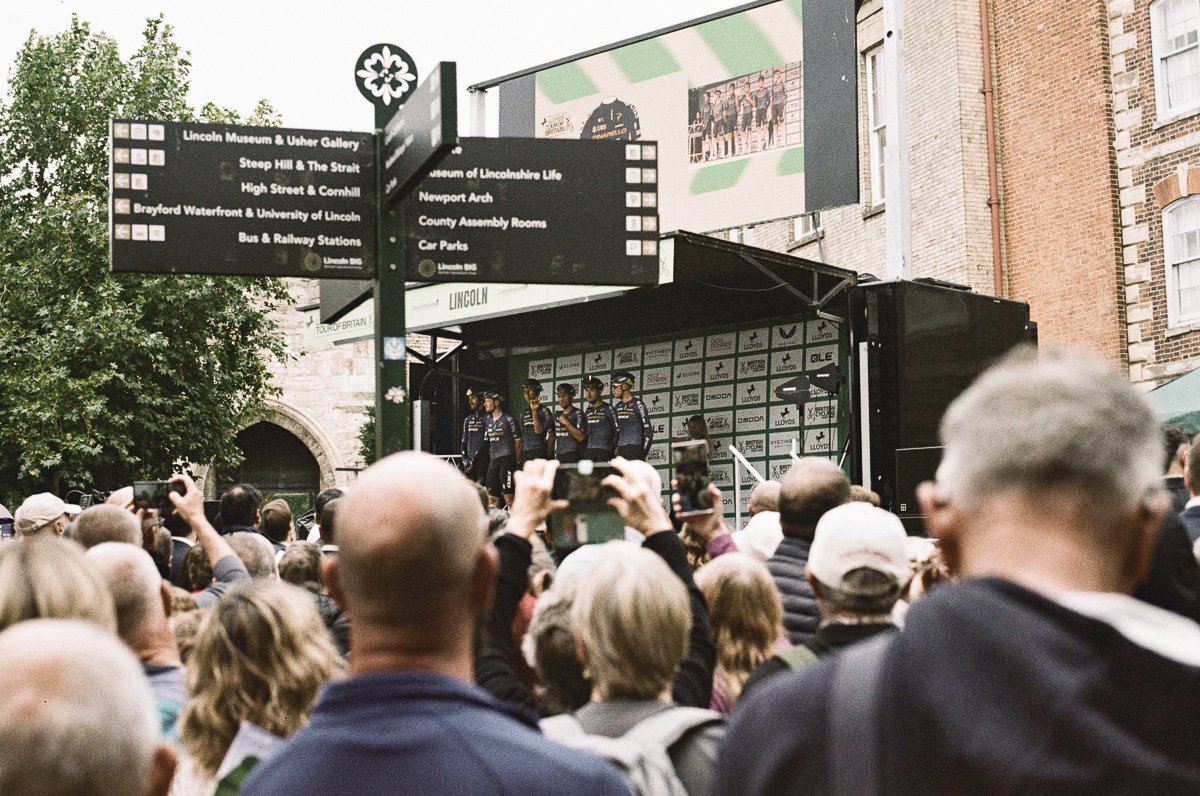
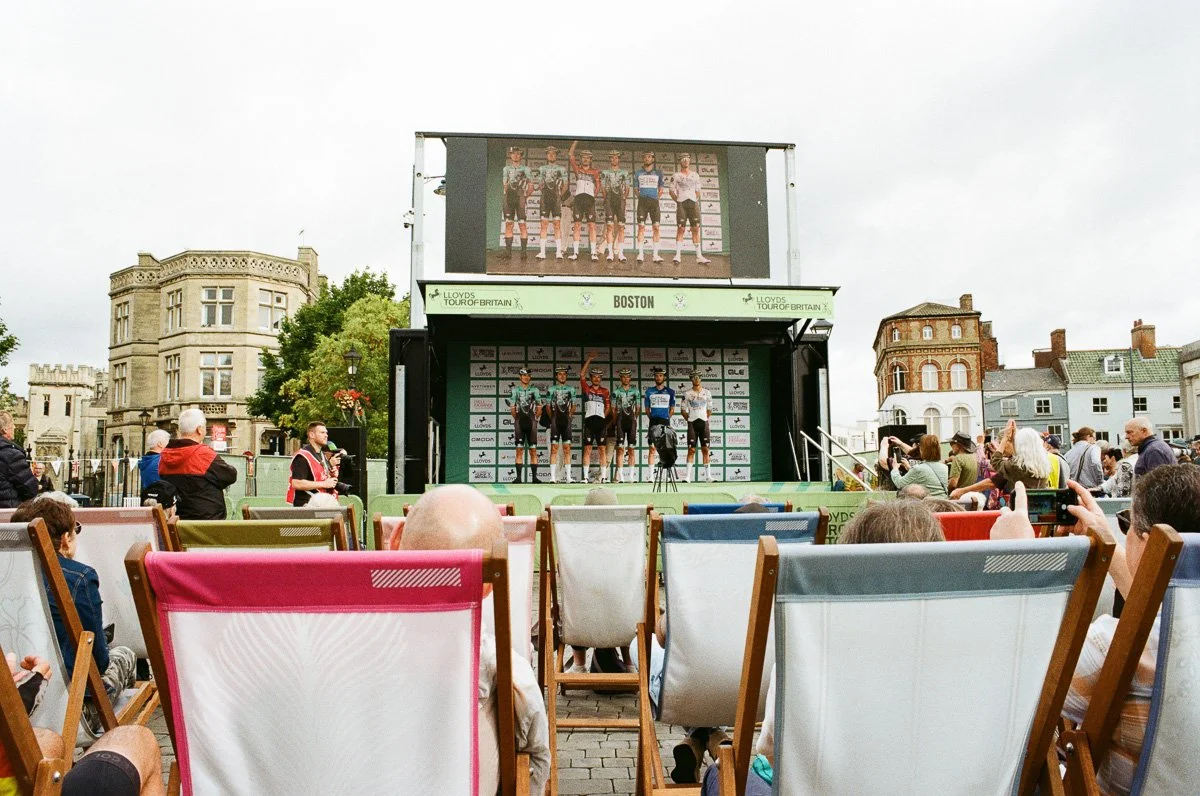
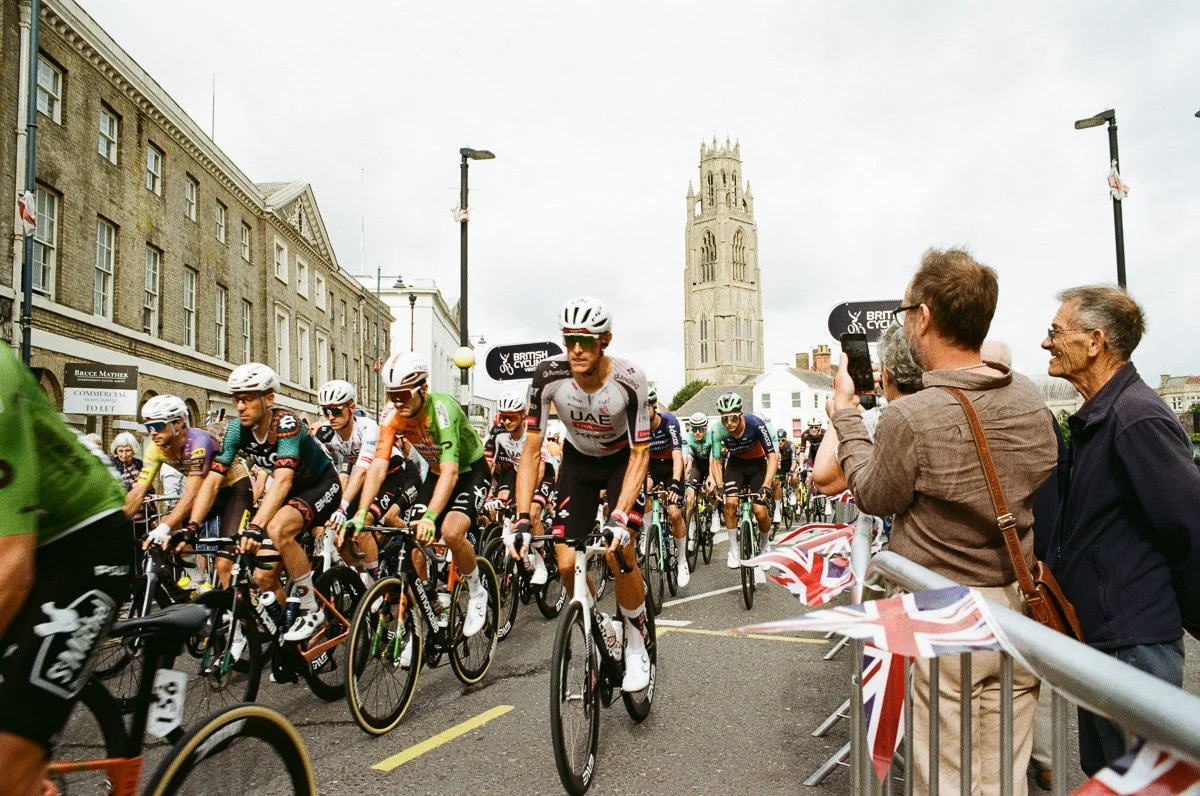
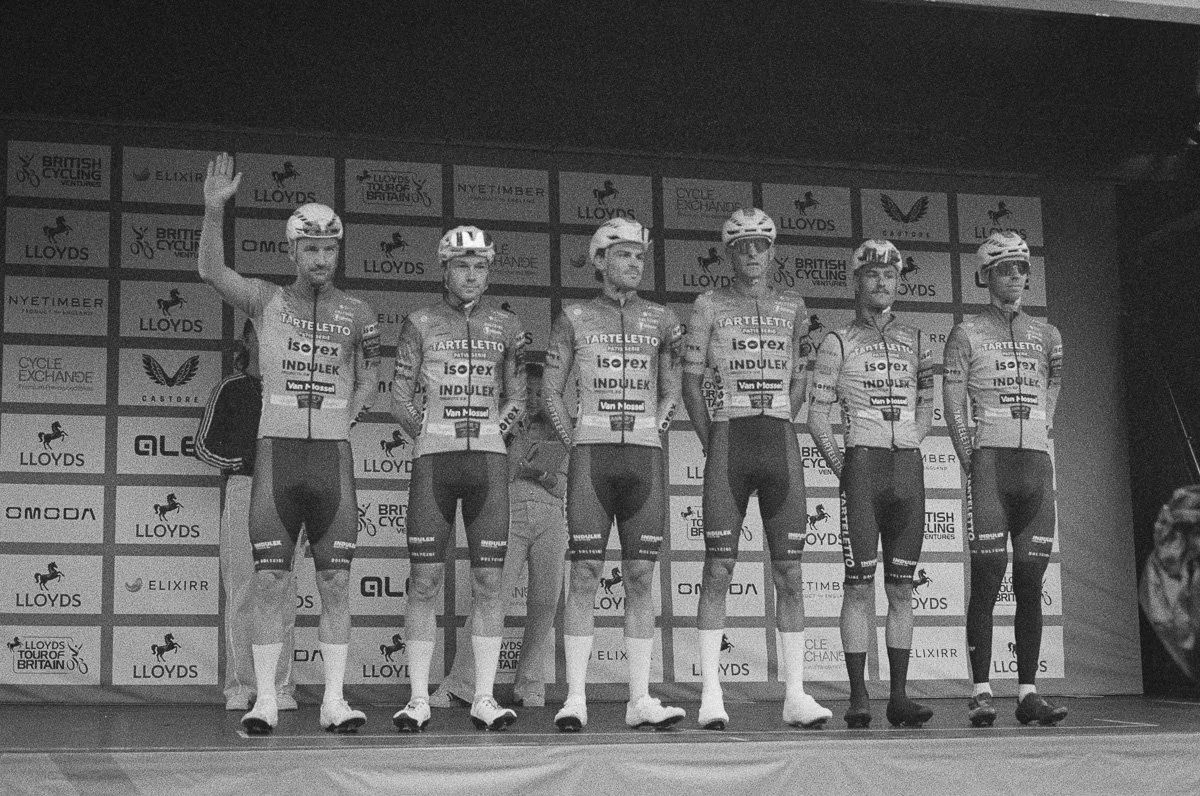
Teams are Presented to the Crowd Before Stage One in Lincoln
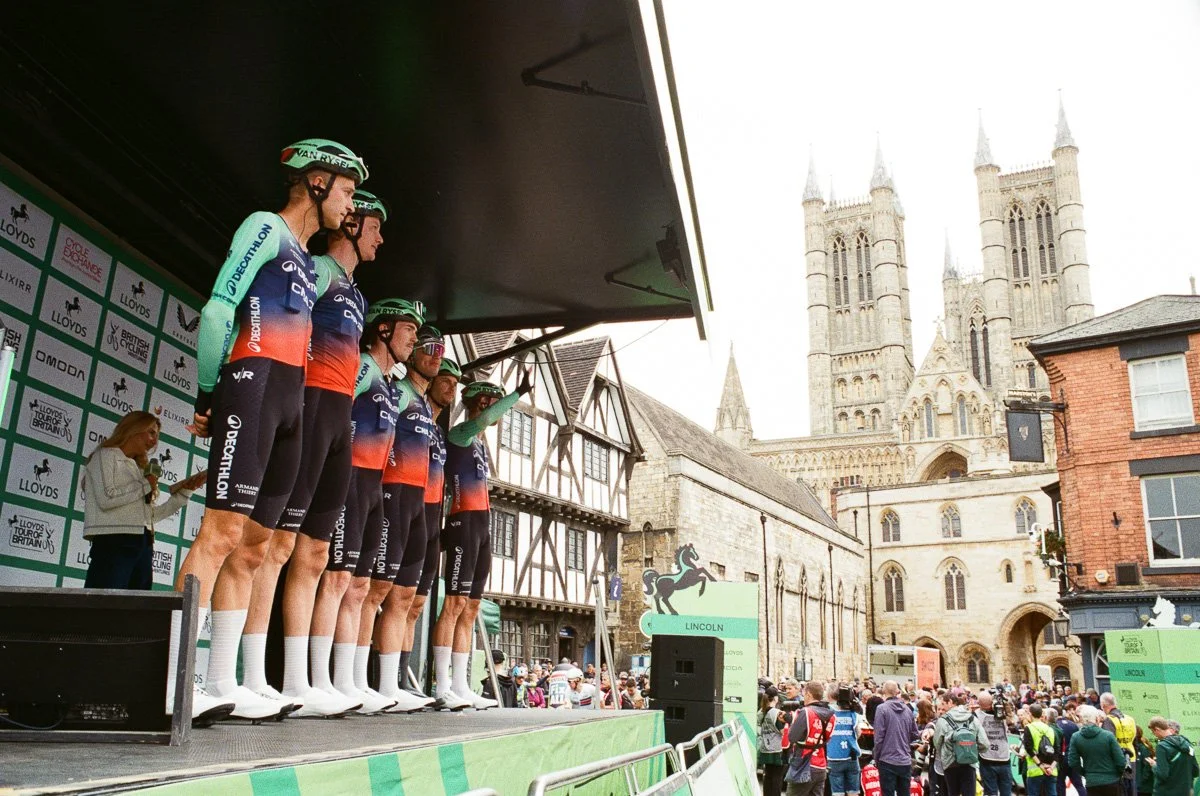
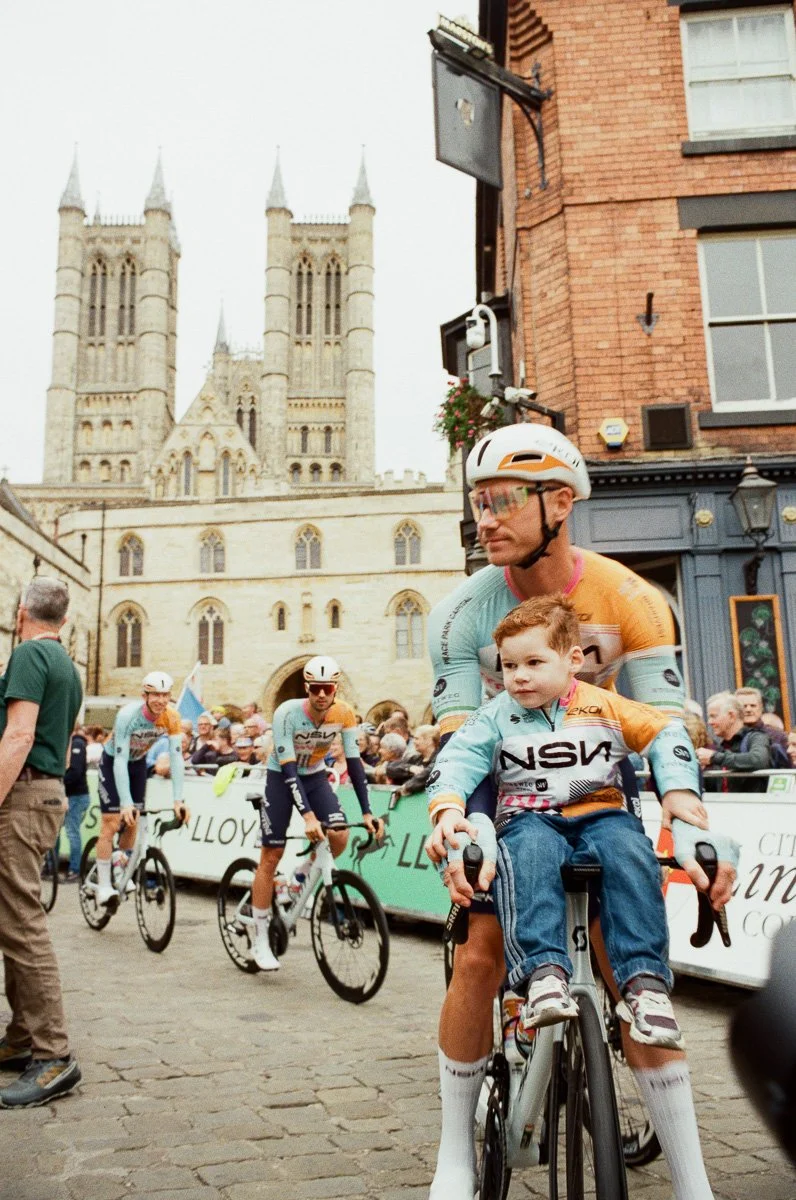
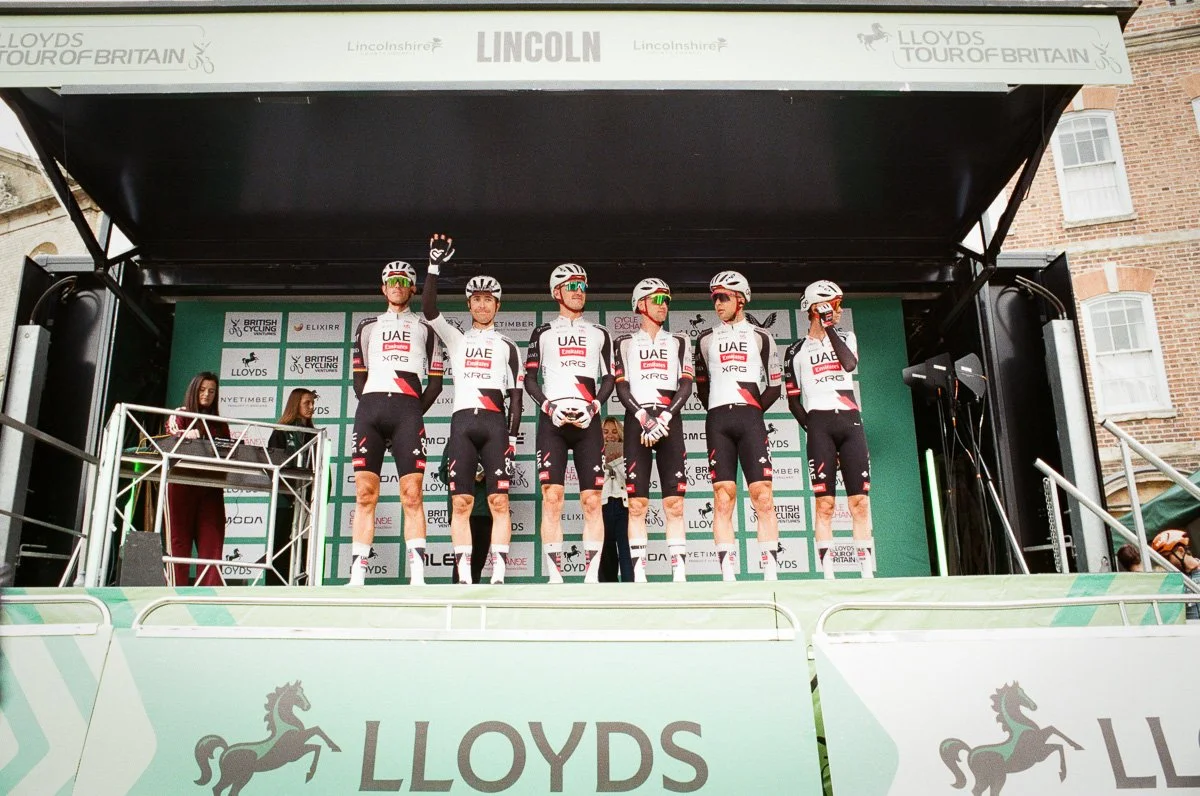
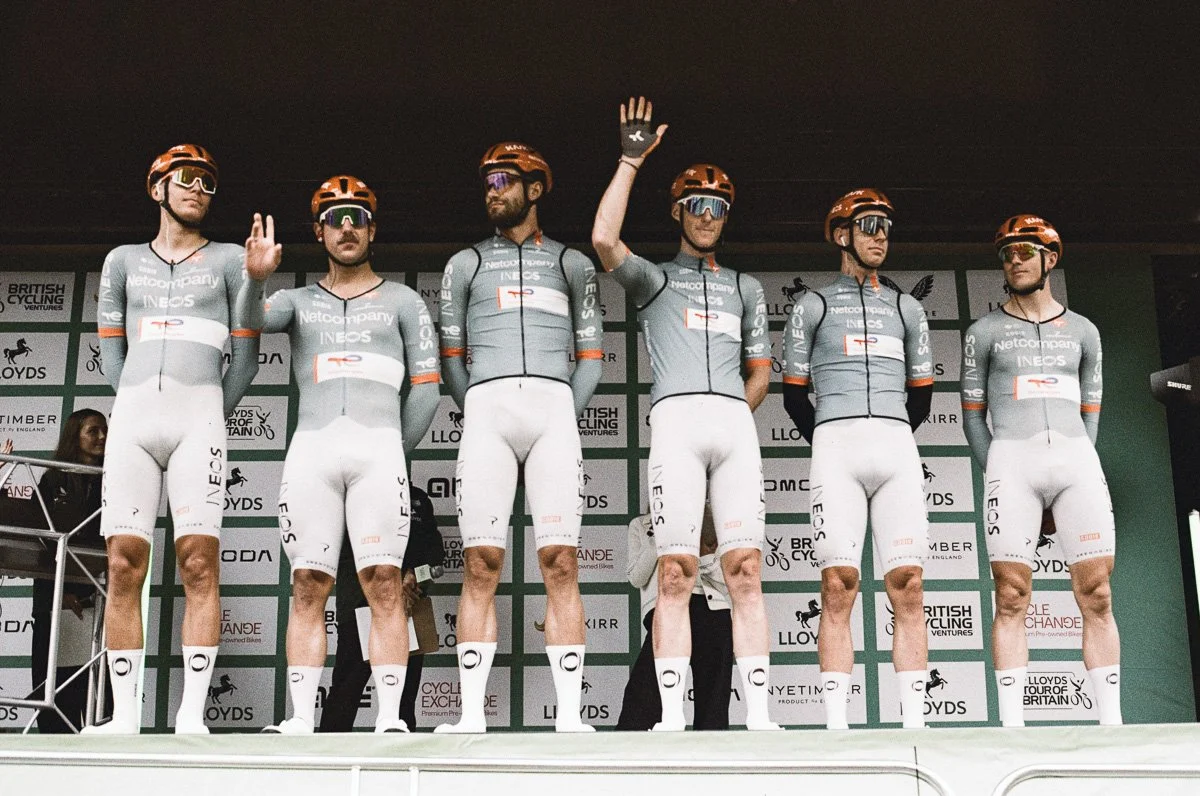
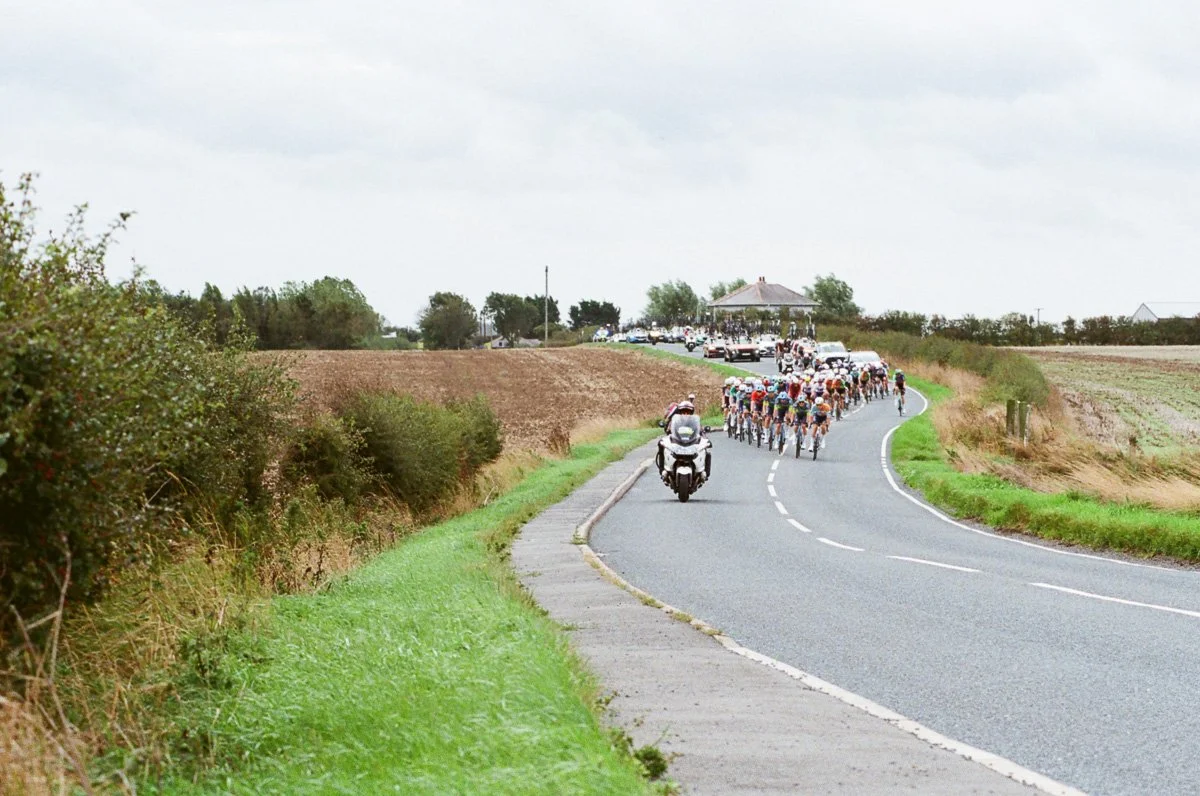
The Race Heads out Into the Lincolnshire Countryside
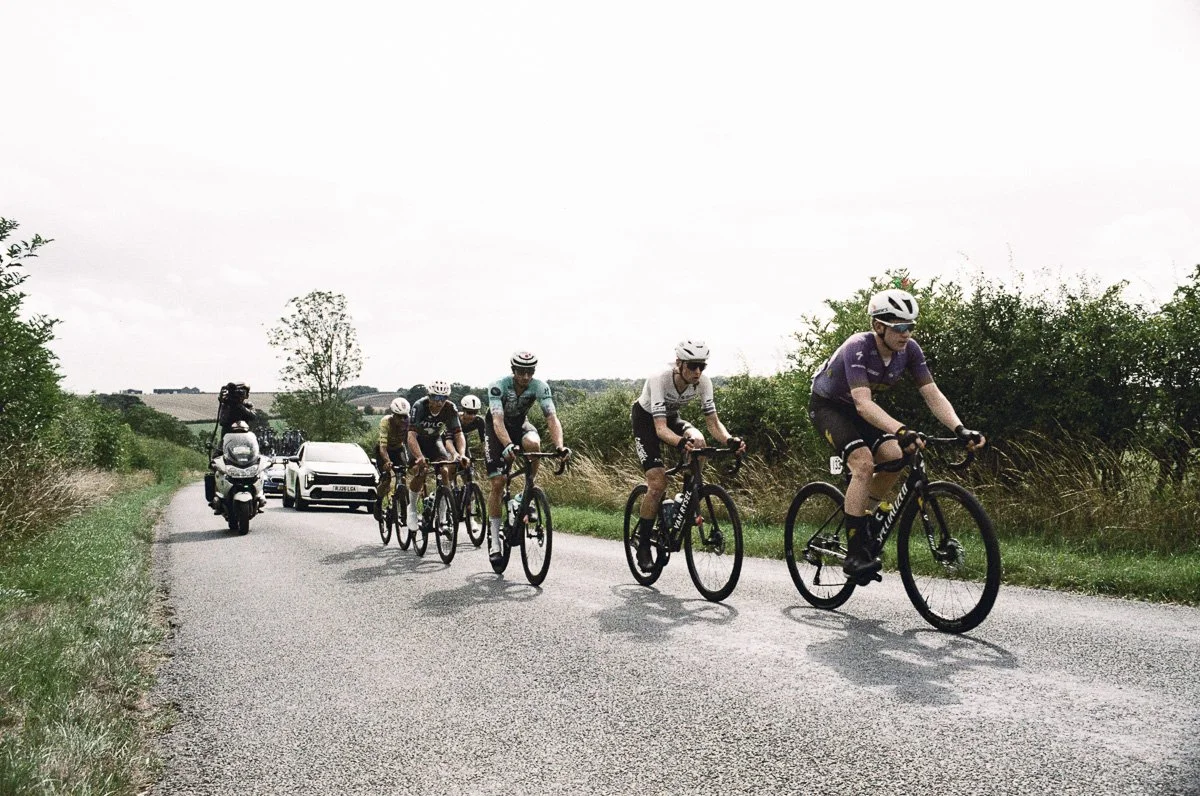
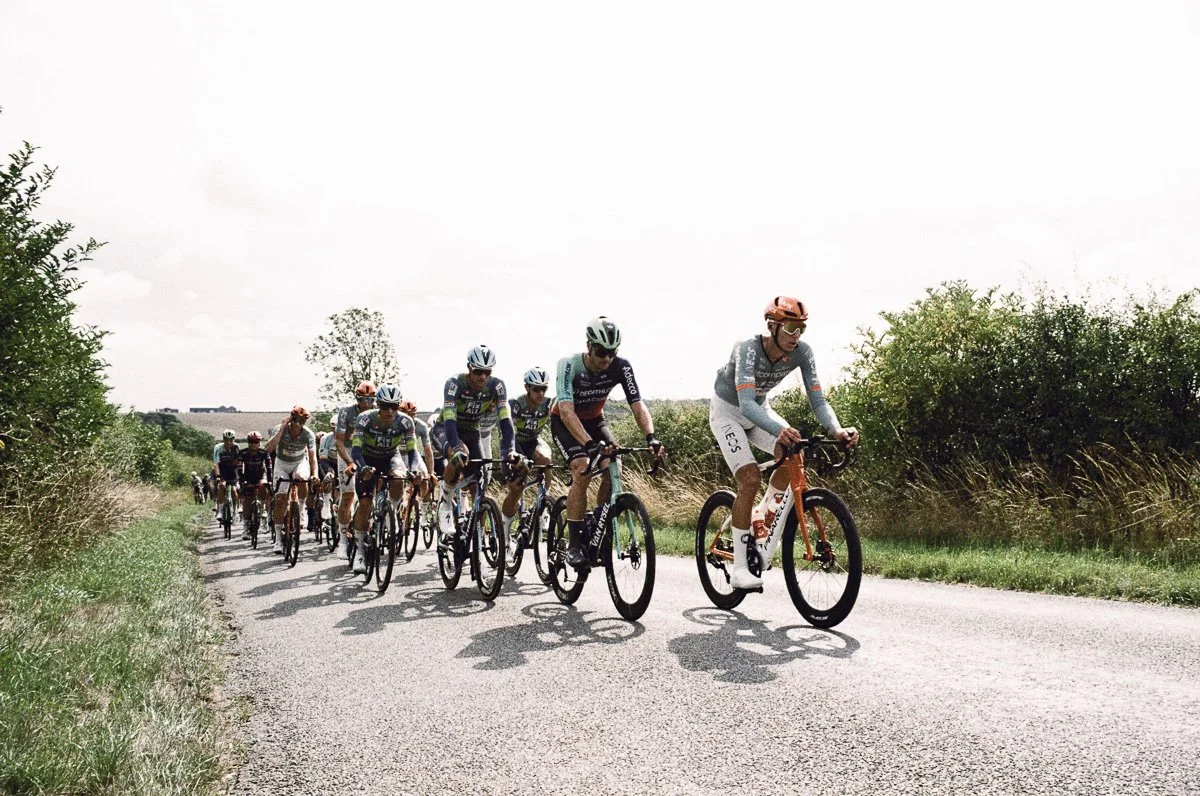
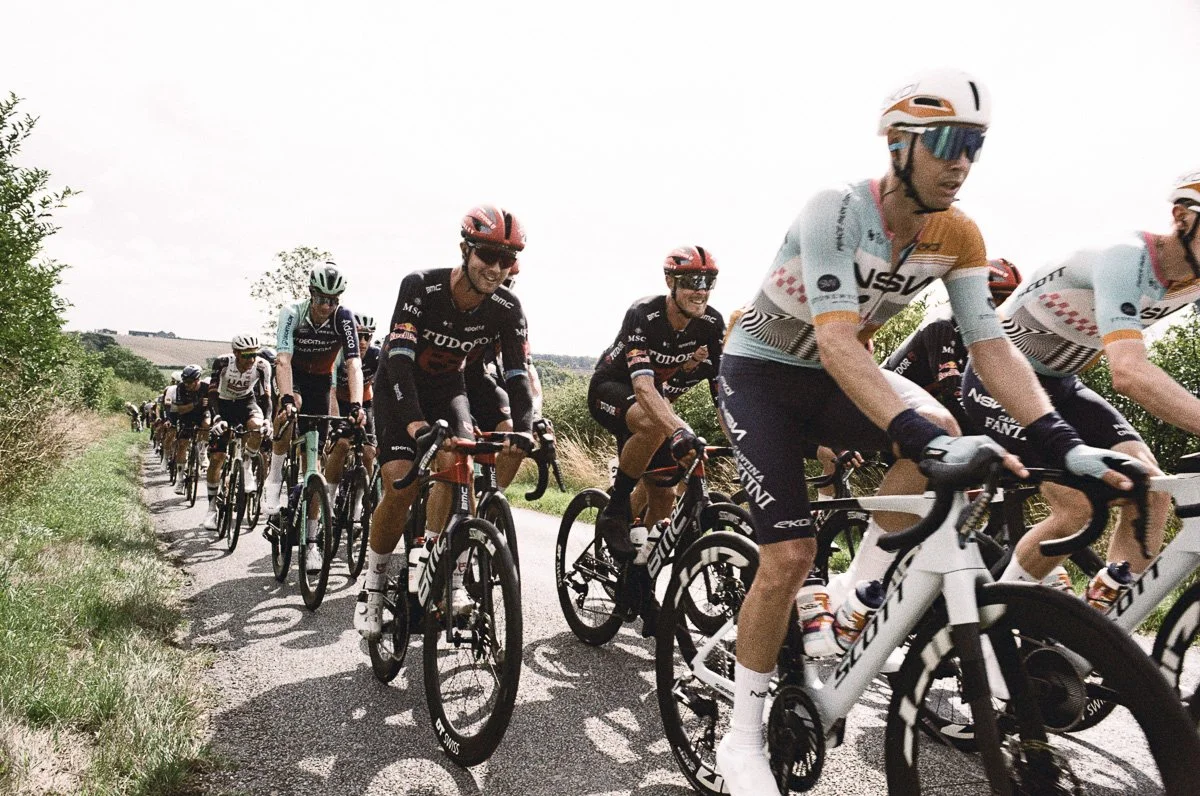
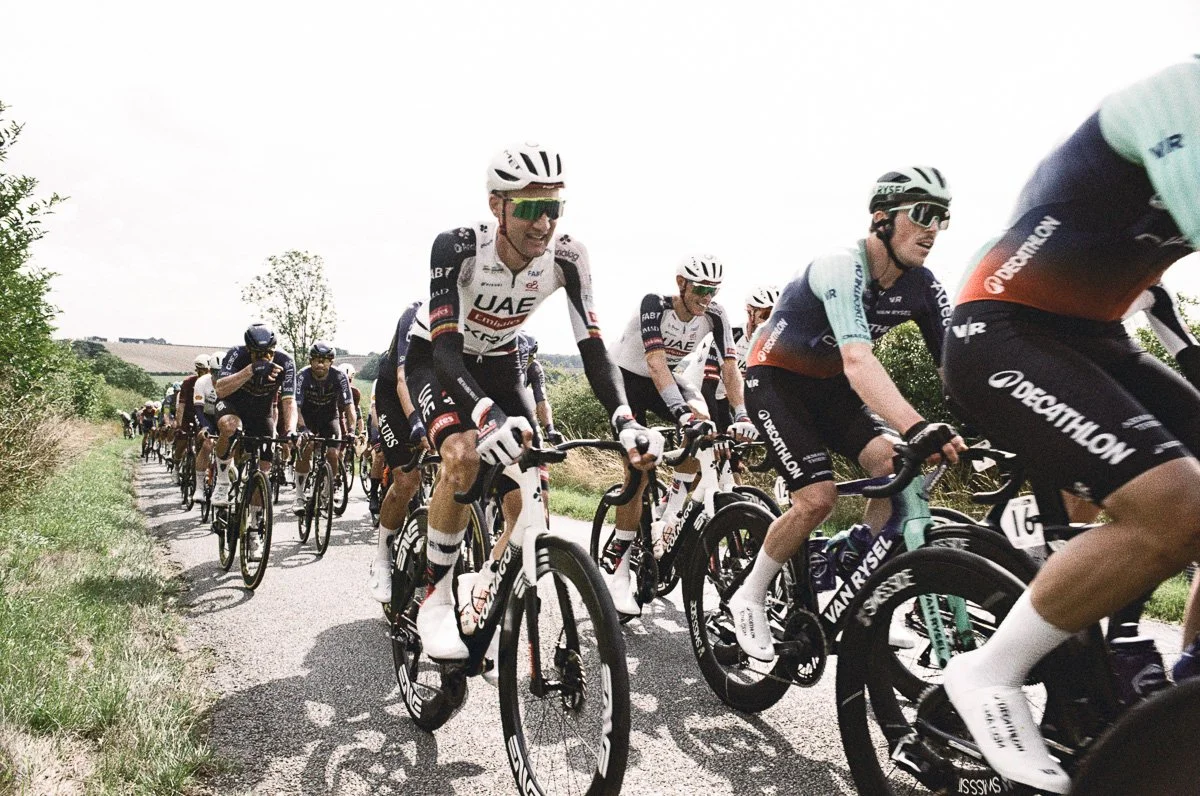
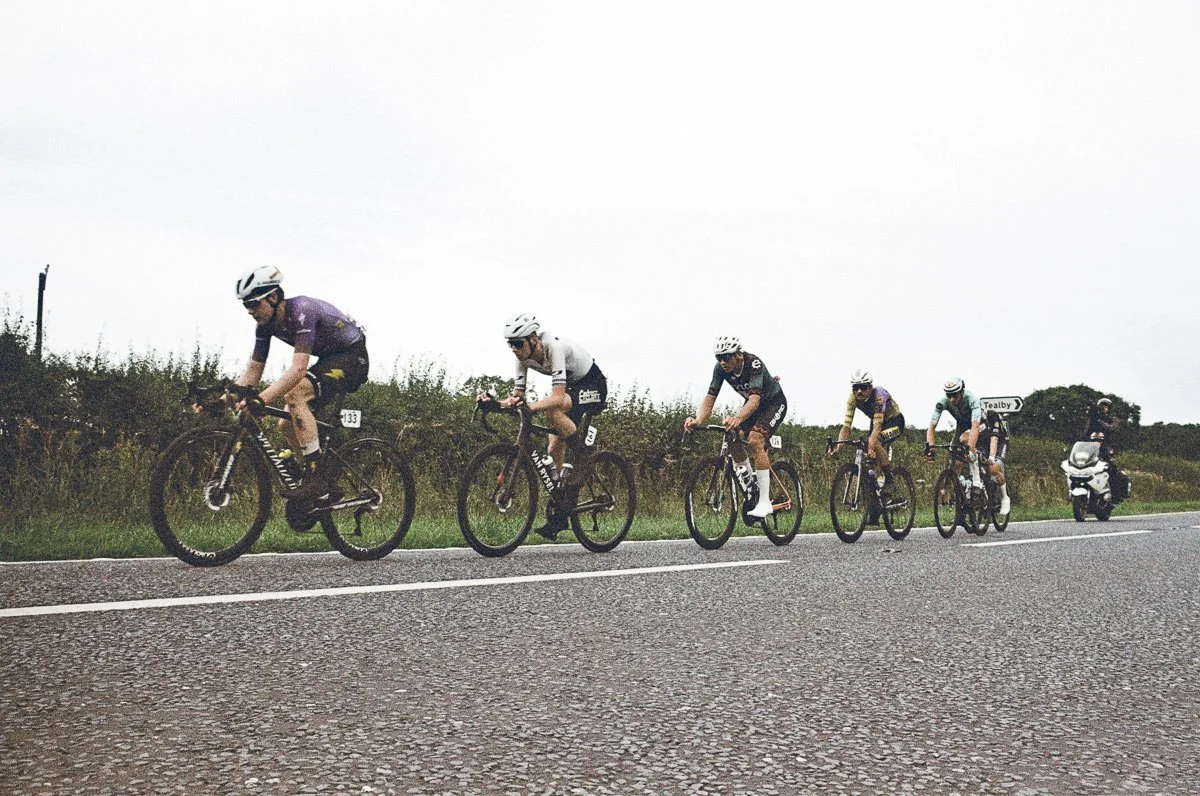
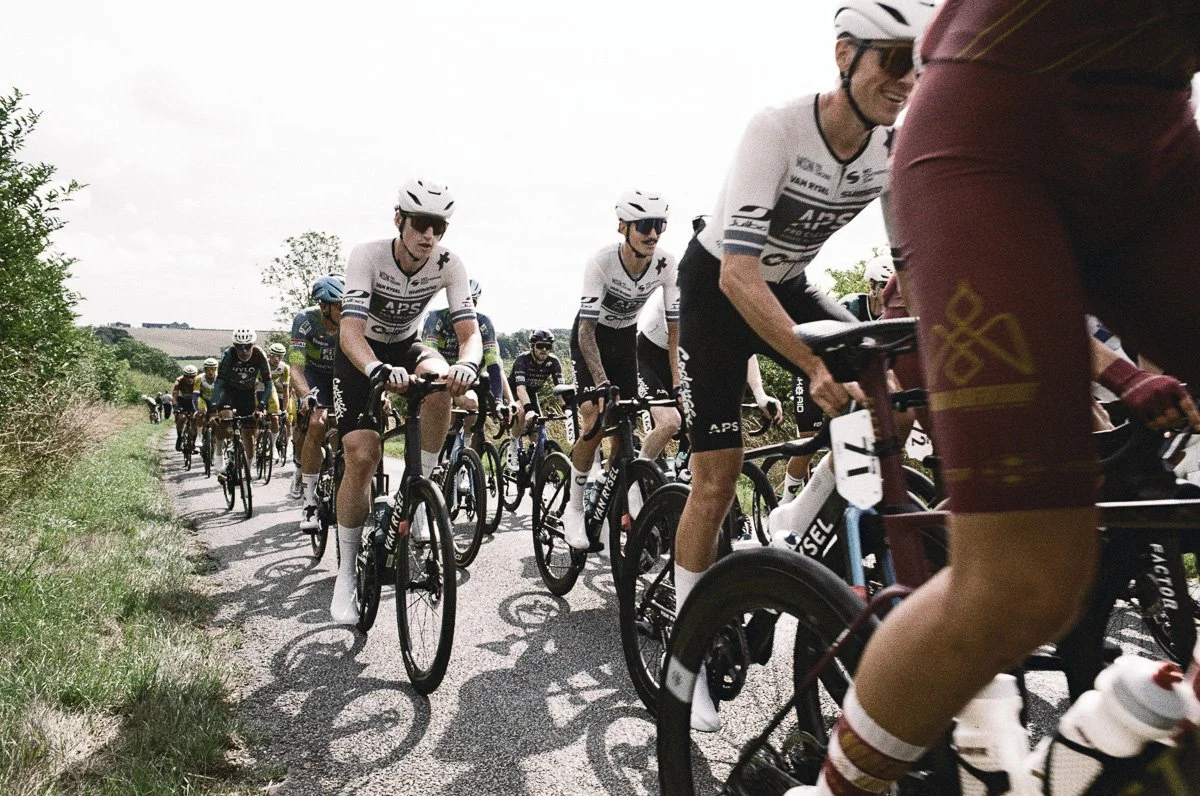
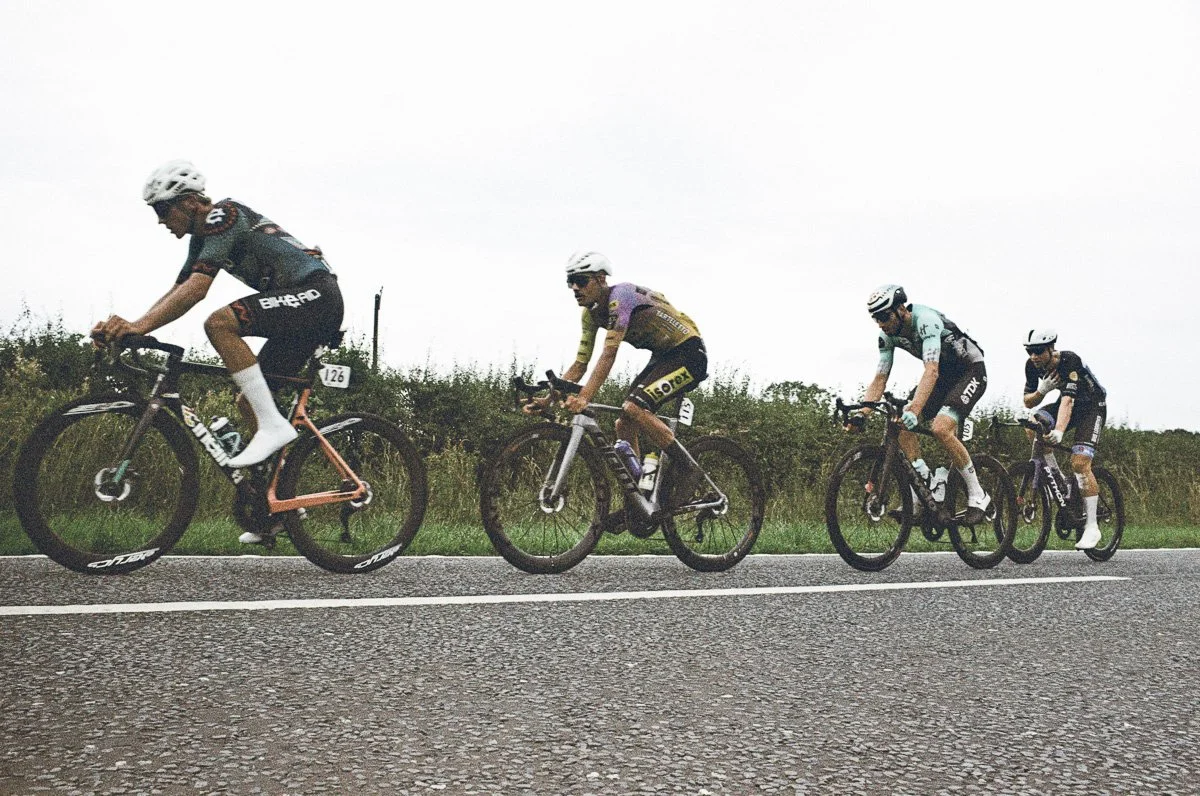
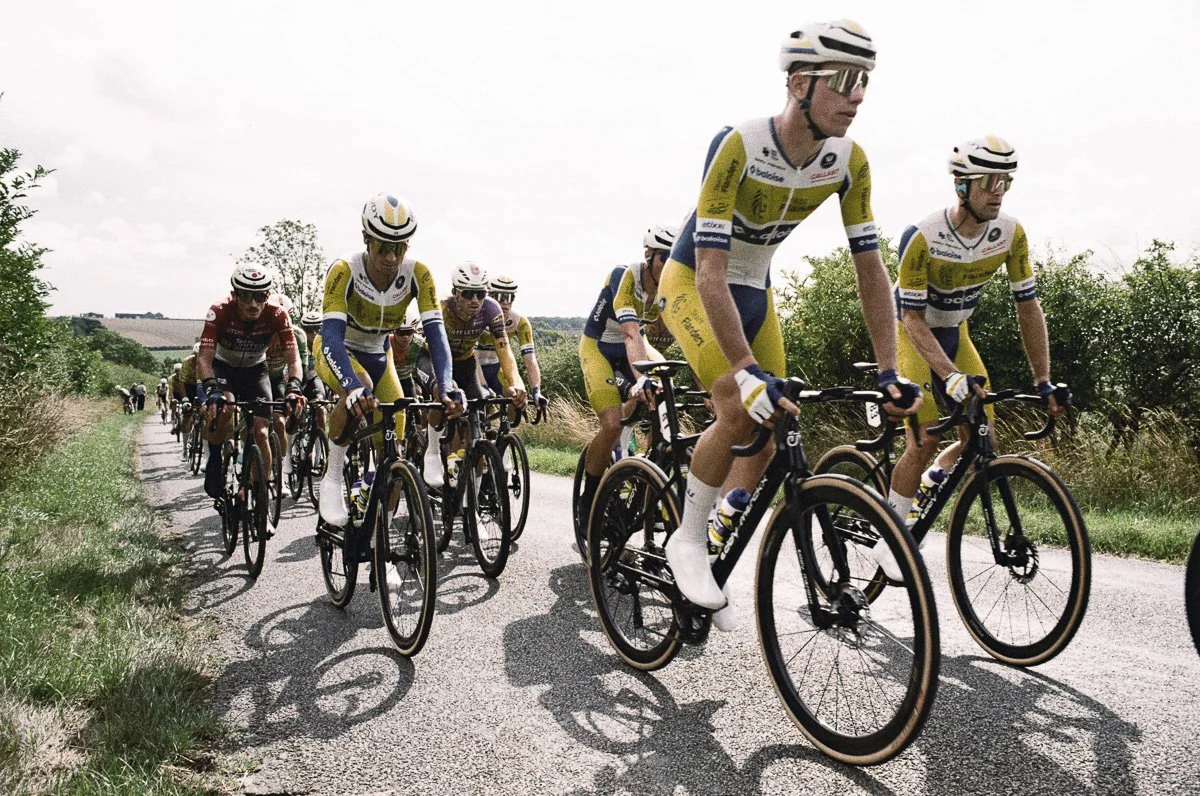
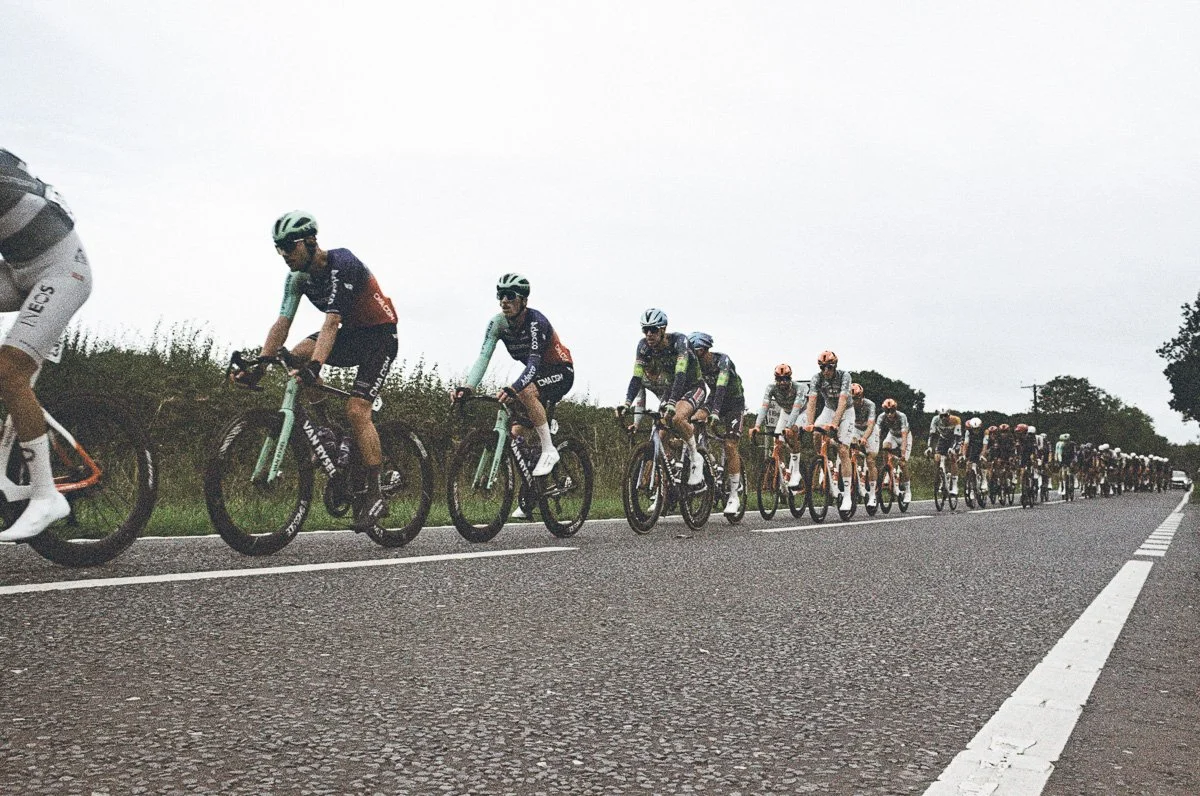
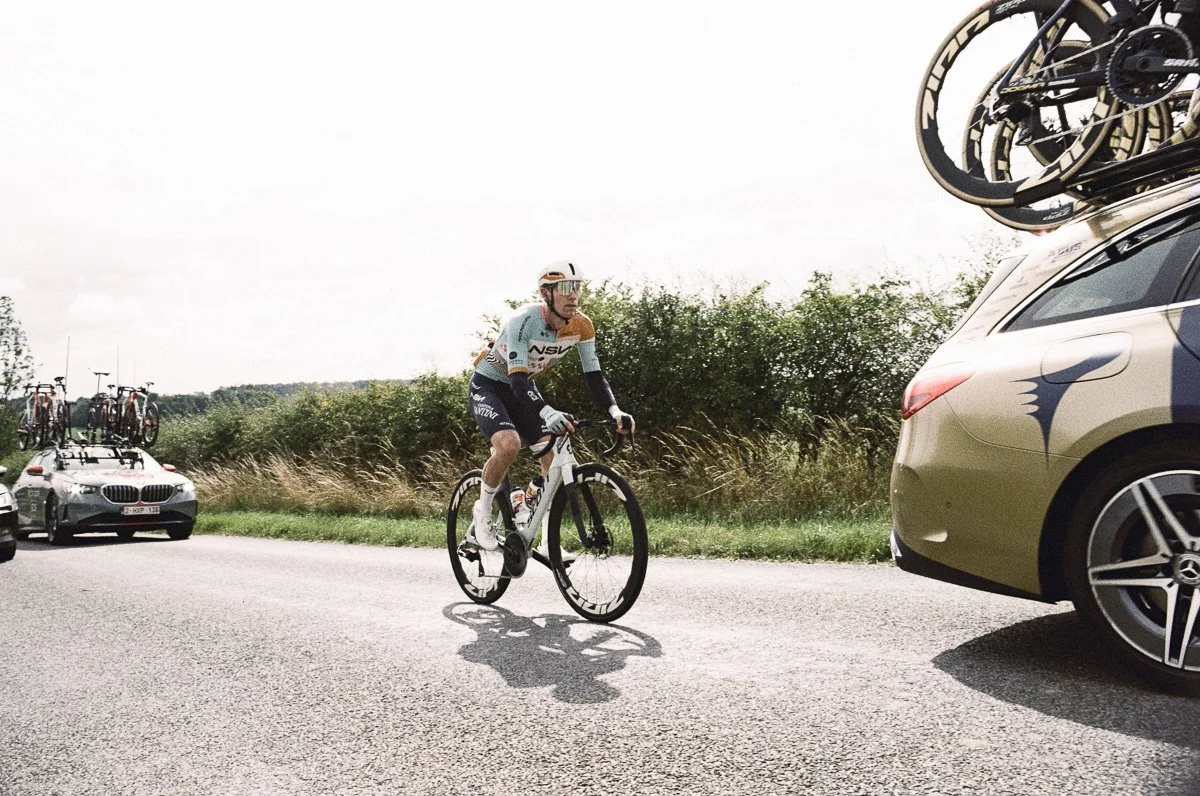
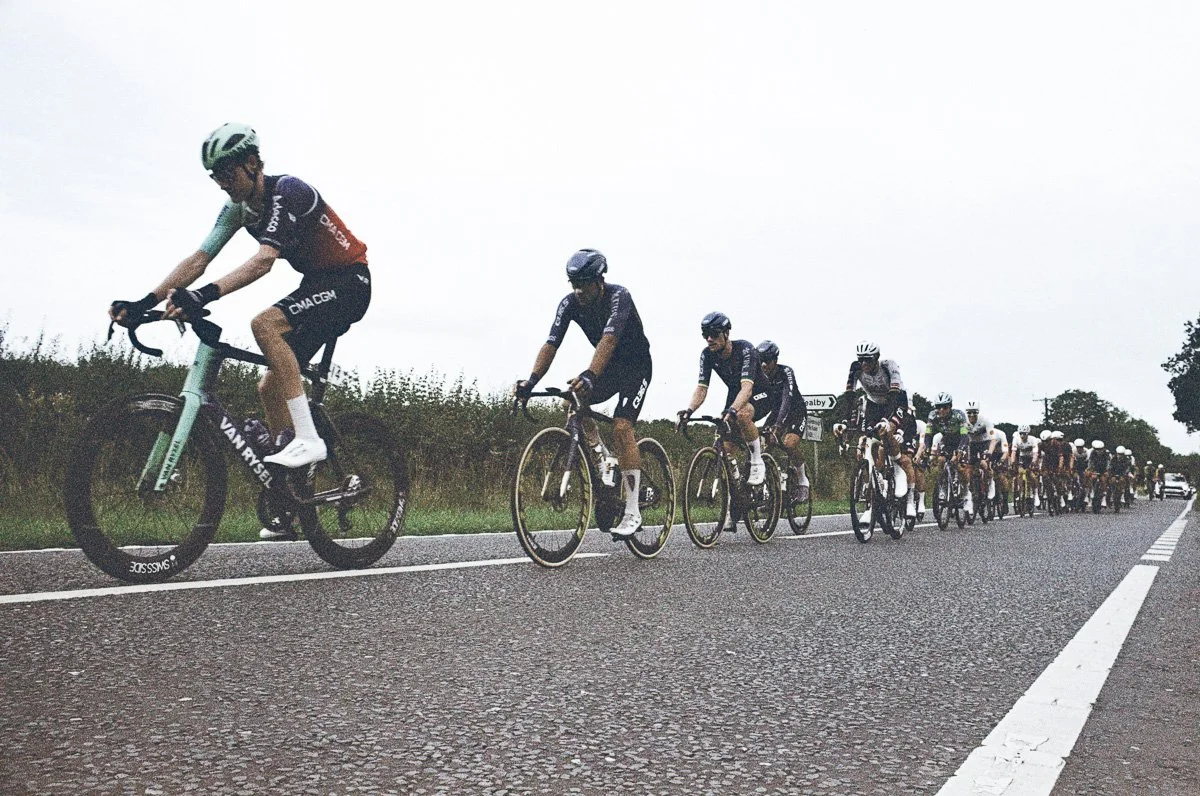
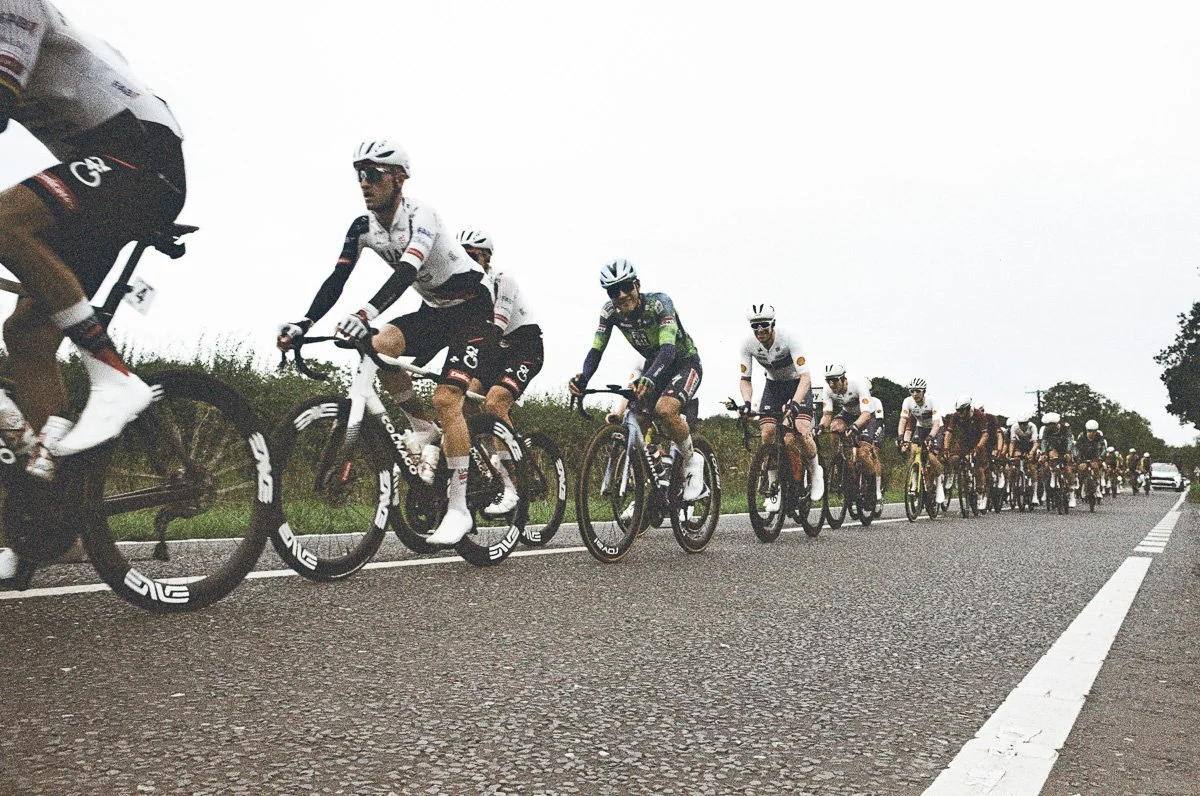
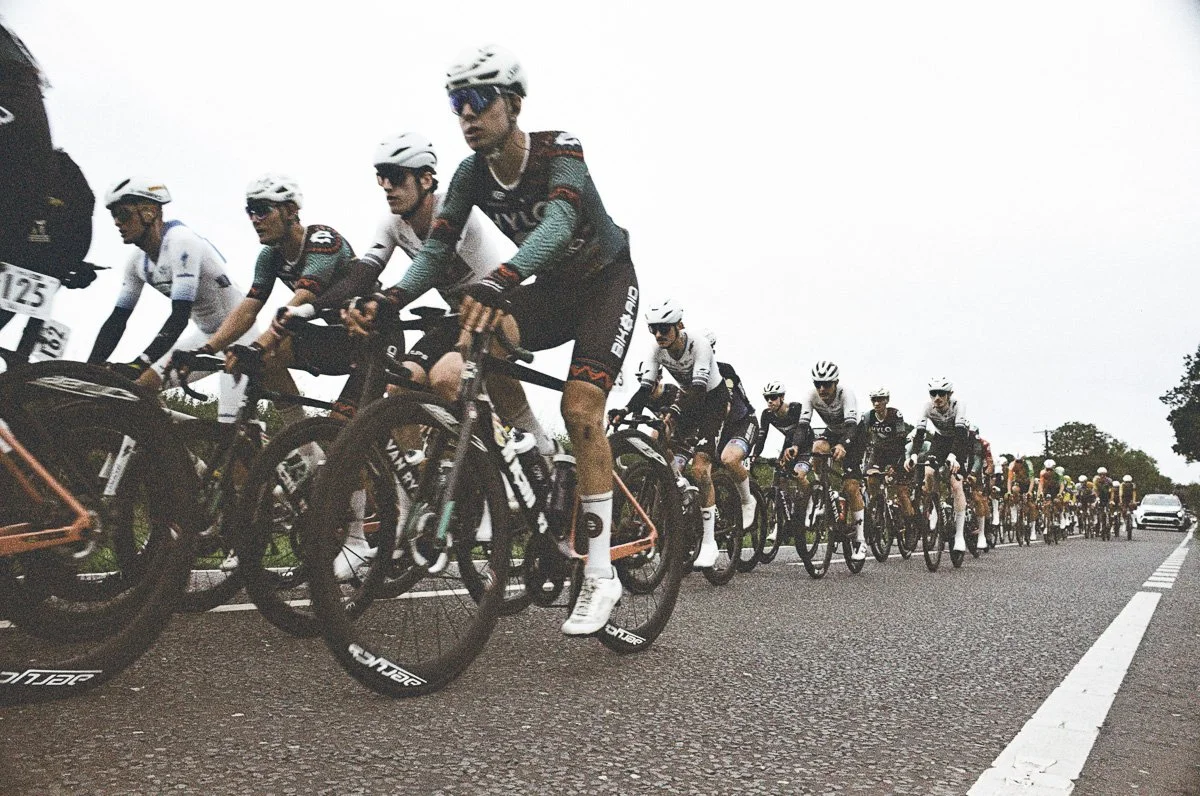
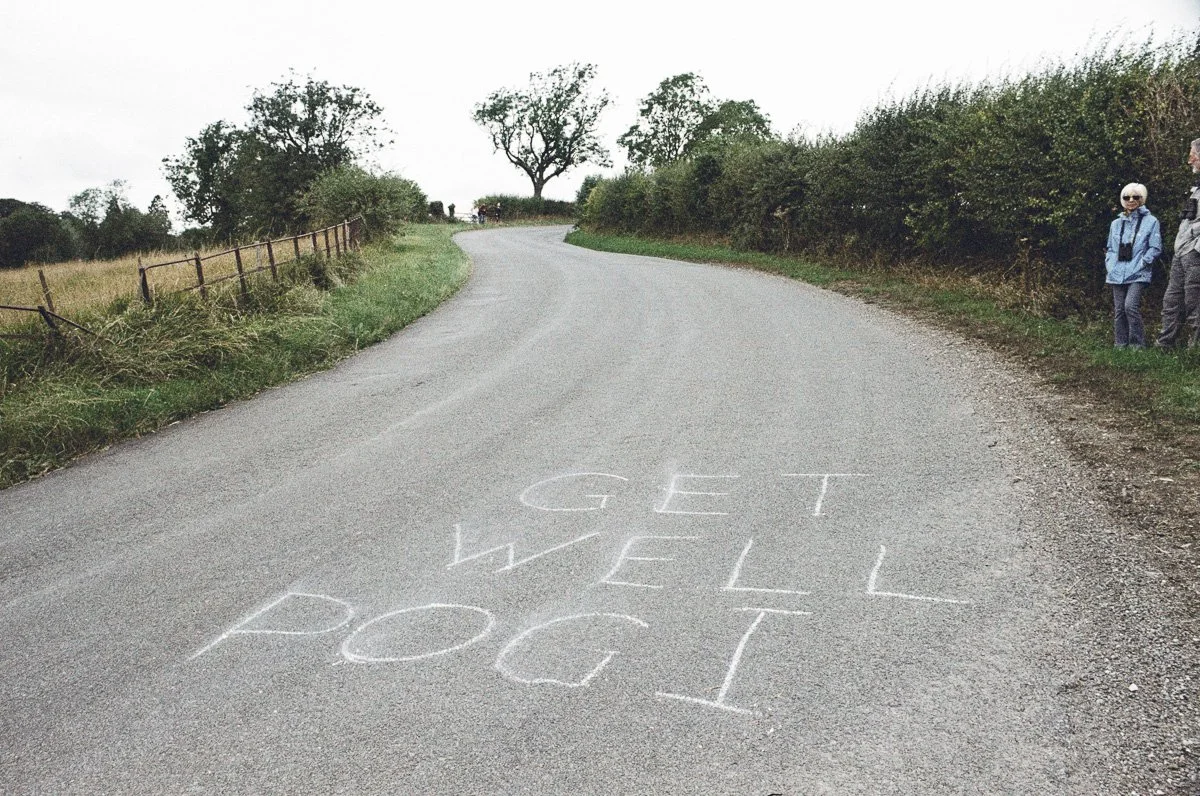
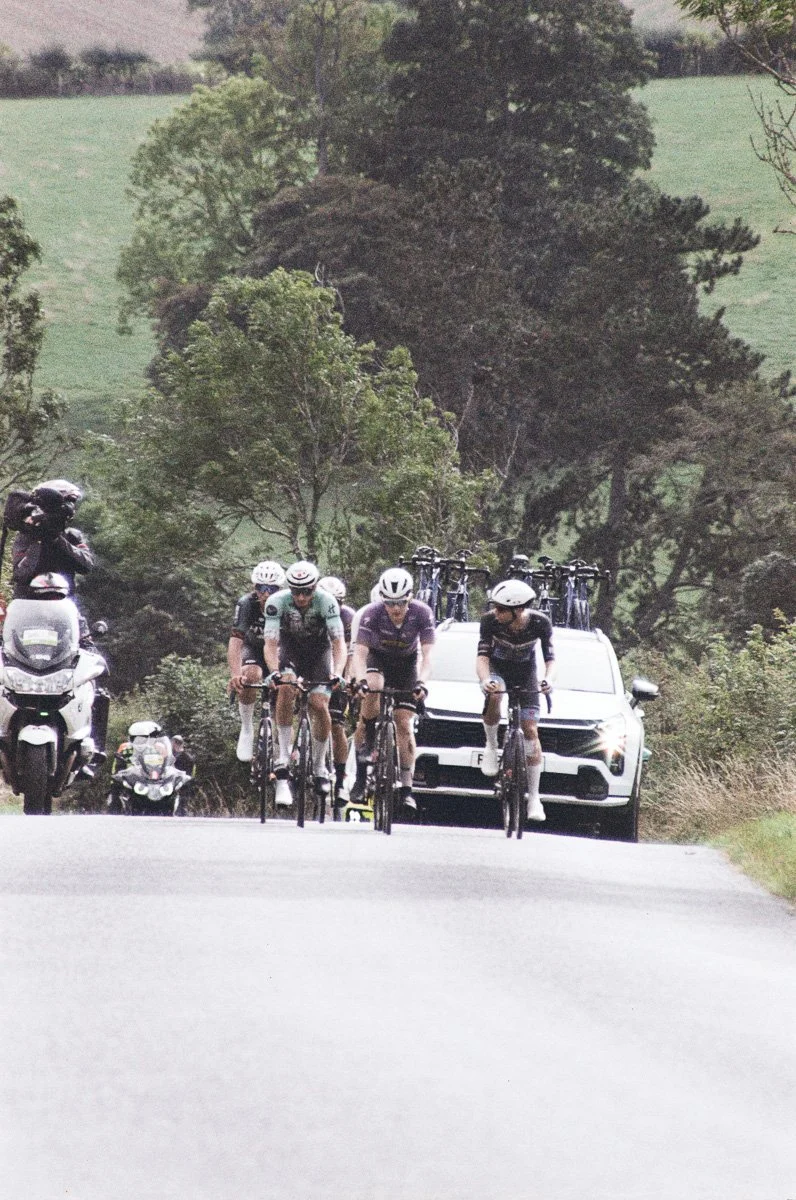
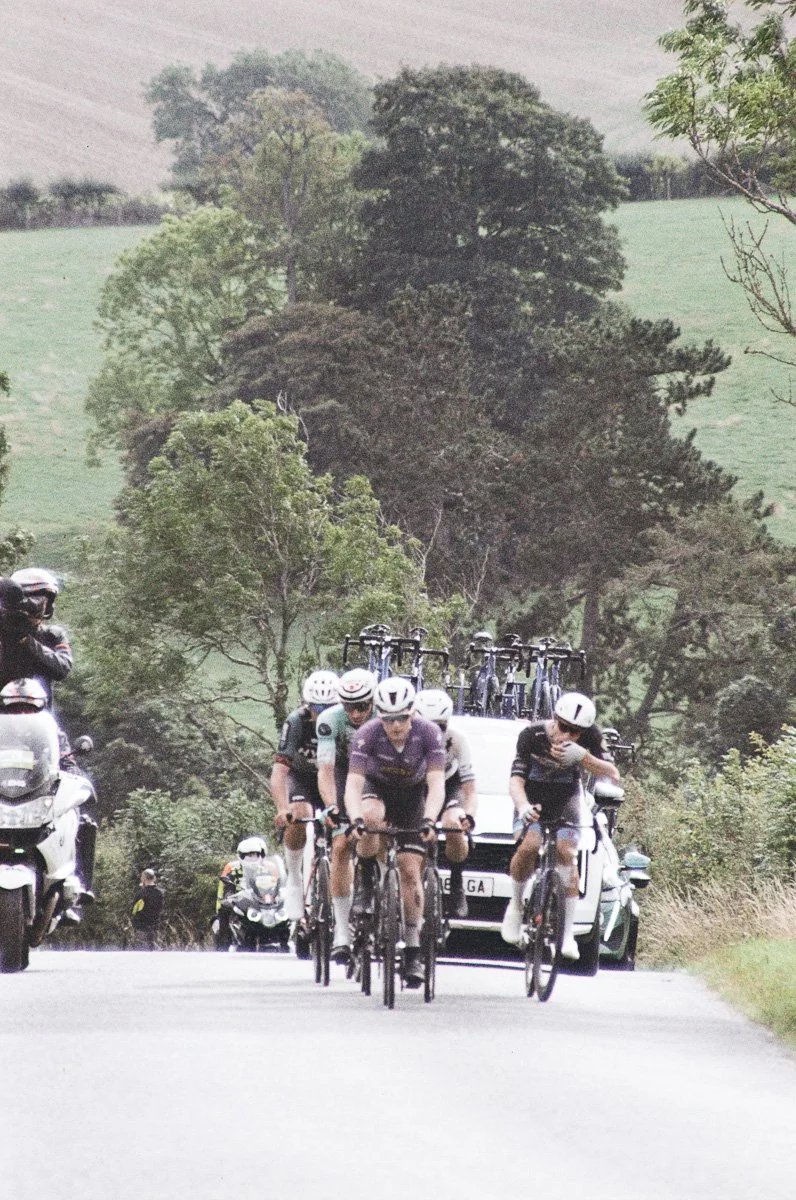
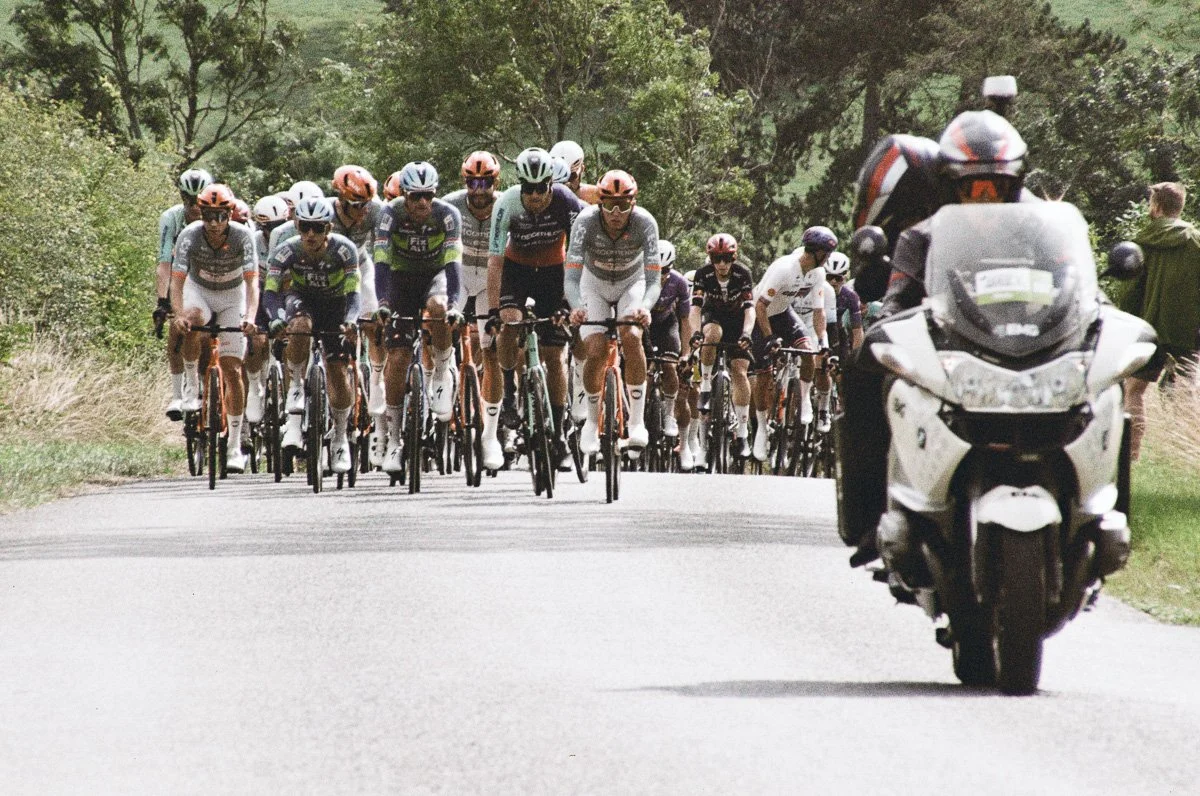
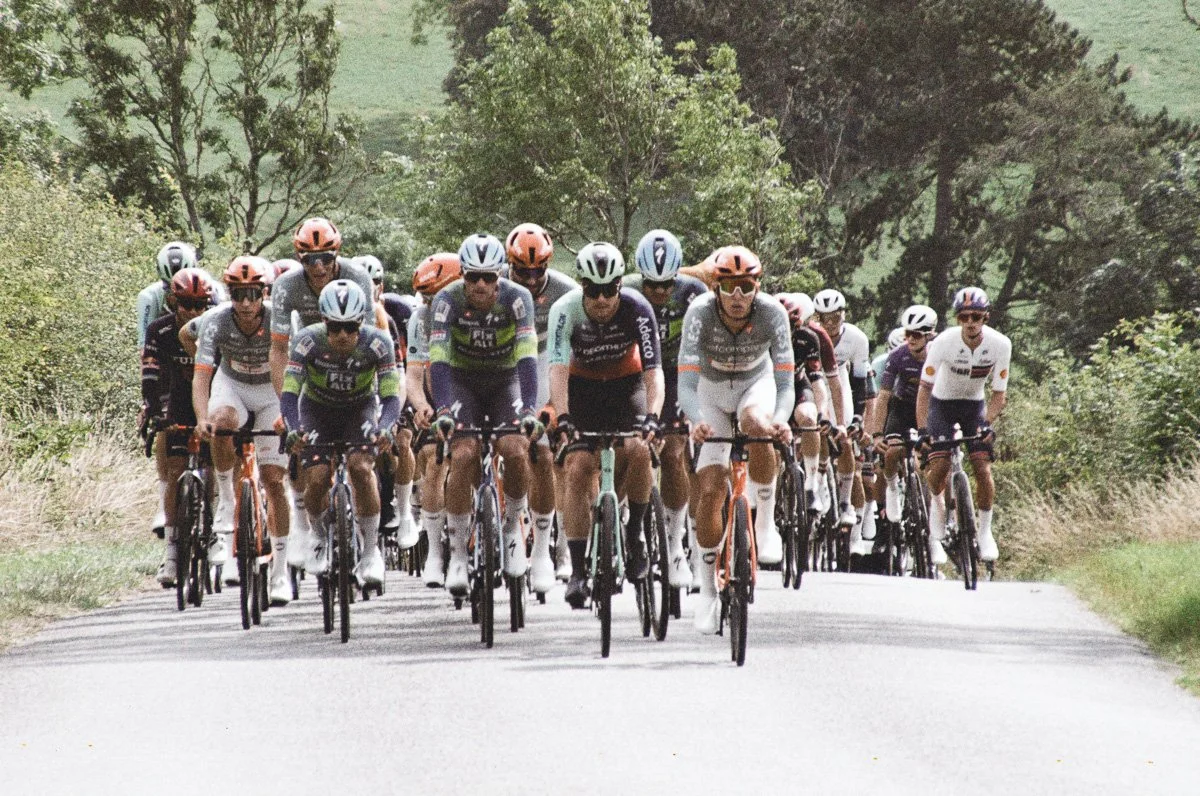
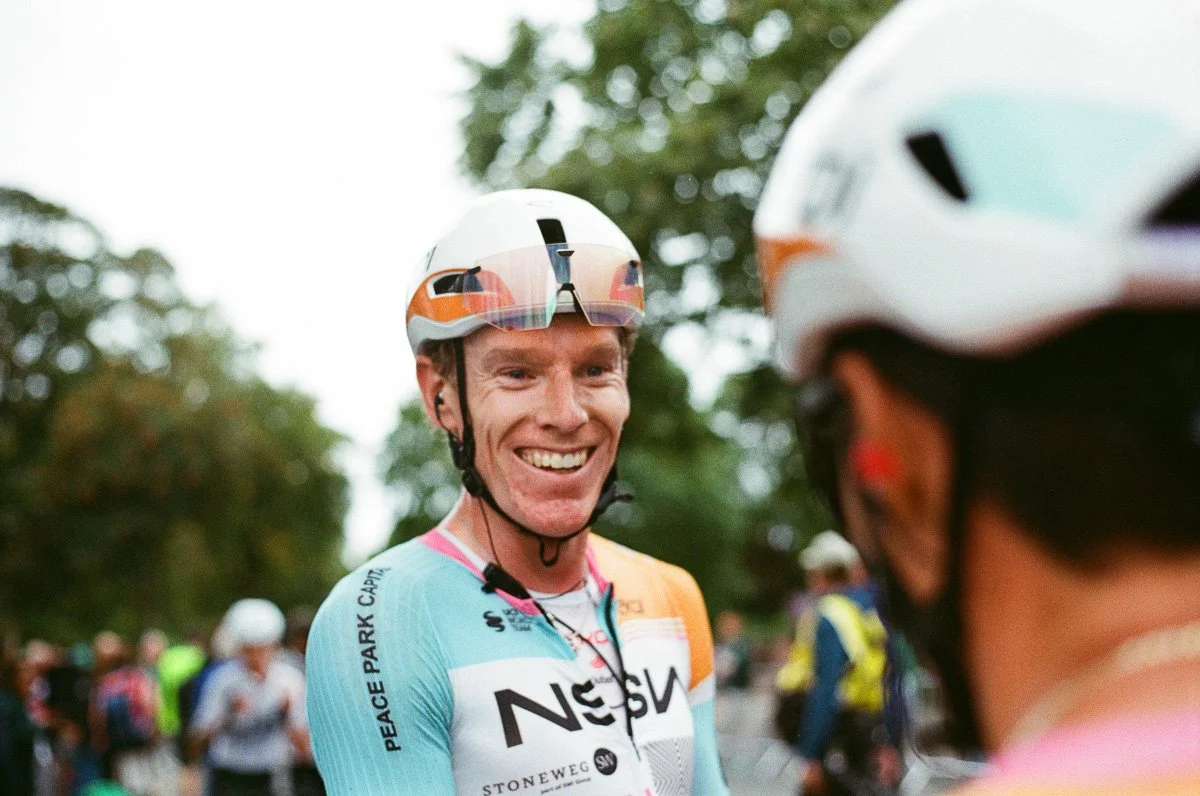
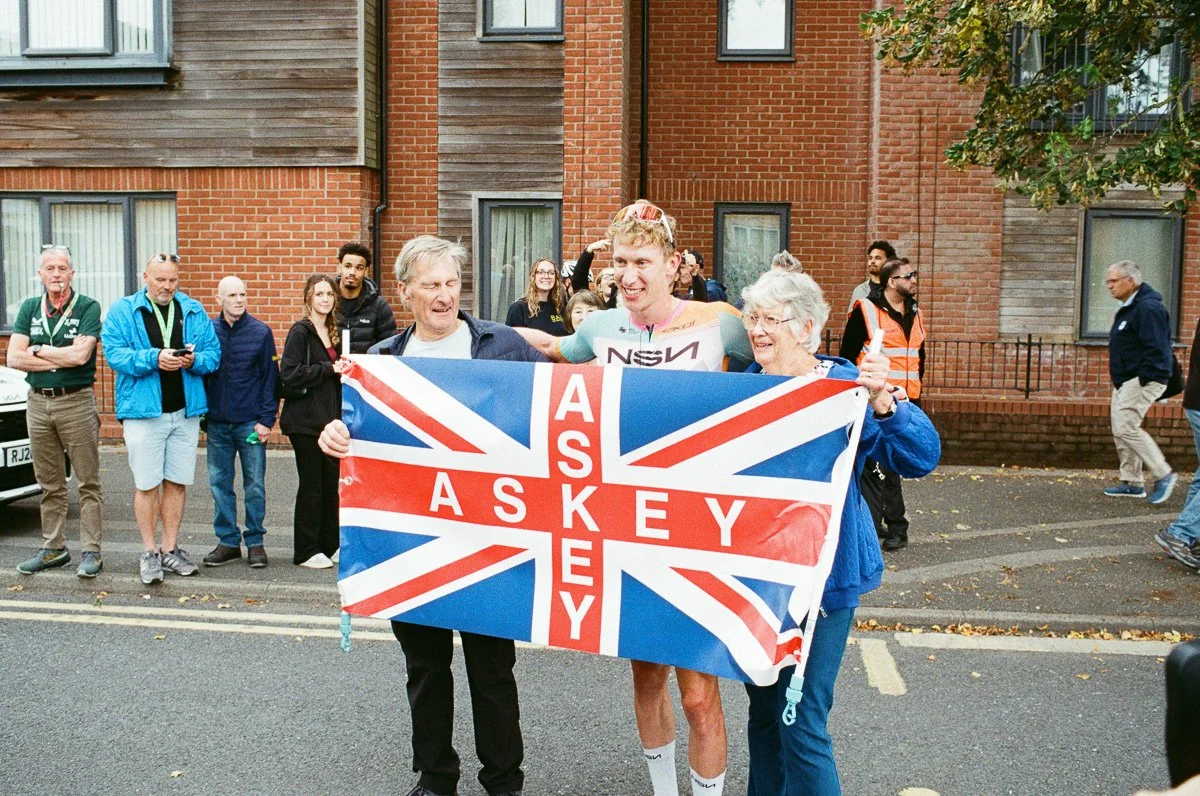
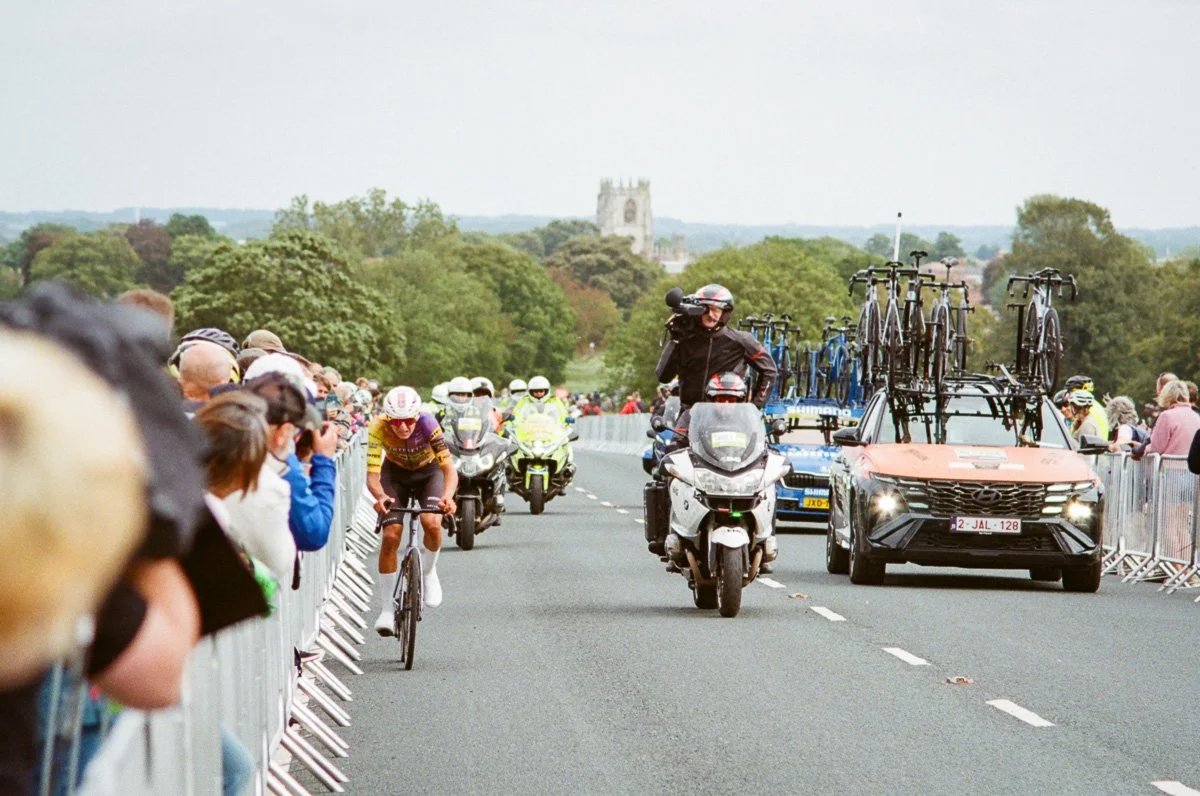
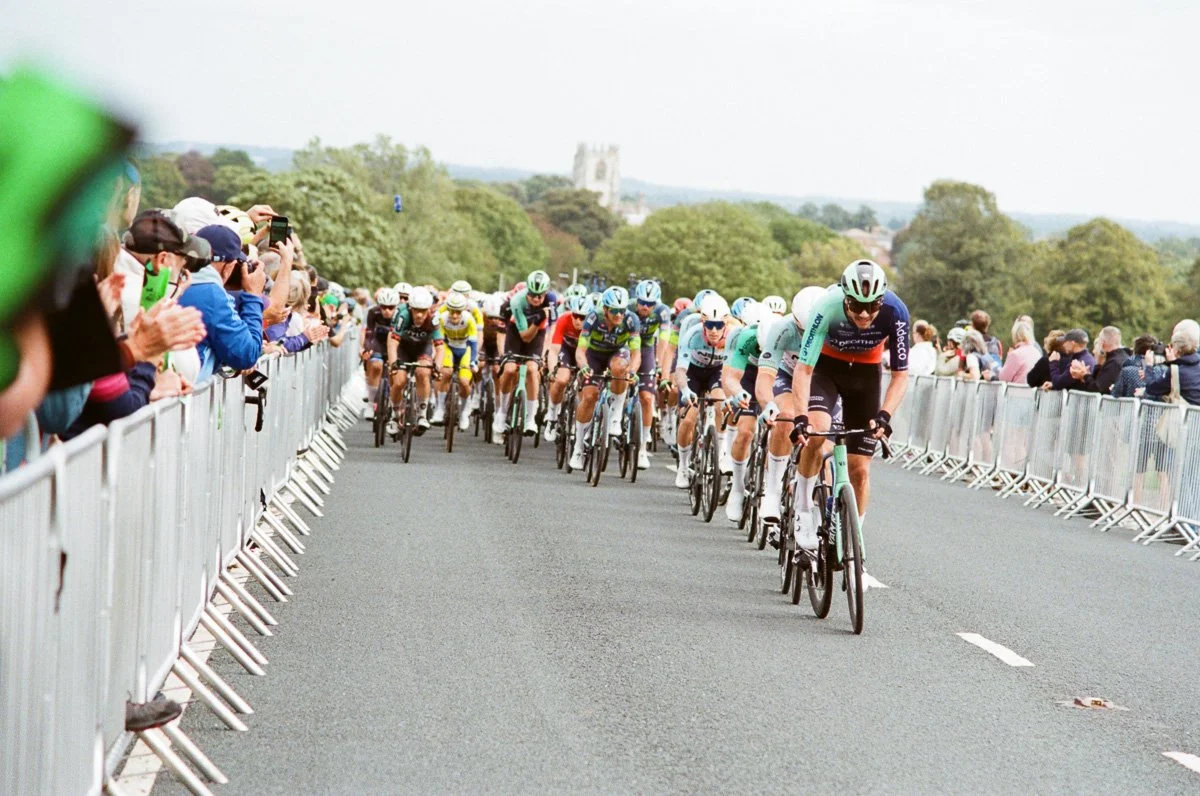
The Race Hits the Iconic Michaelgate Climb for Four Circuits Before Lewis Askey of Team NSN Takes the Victory
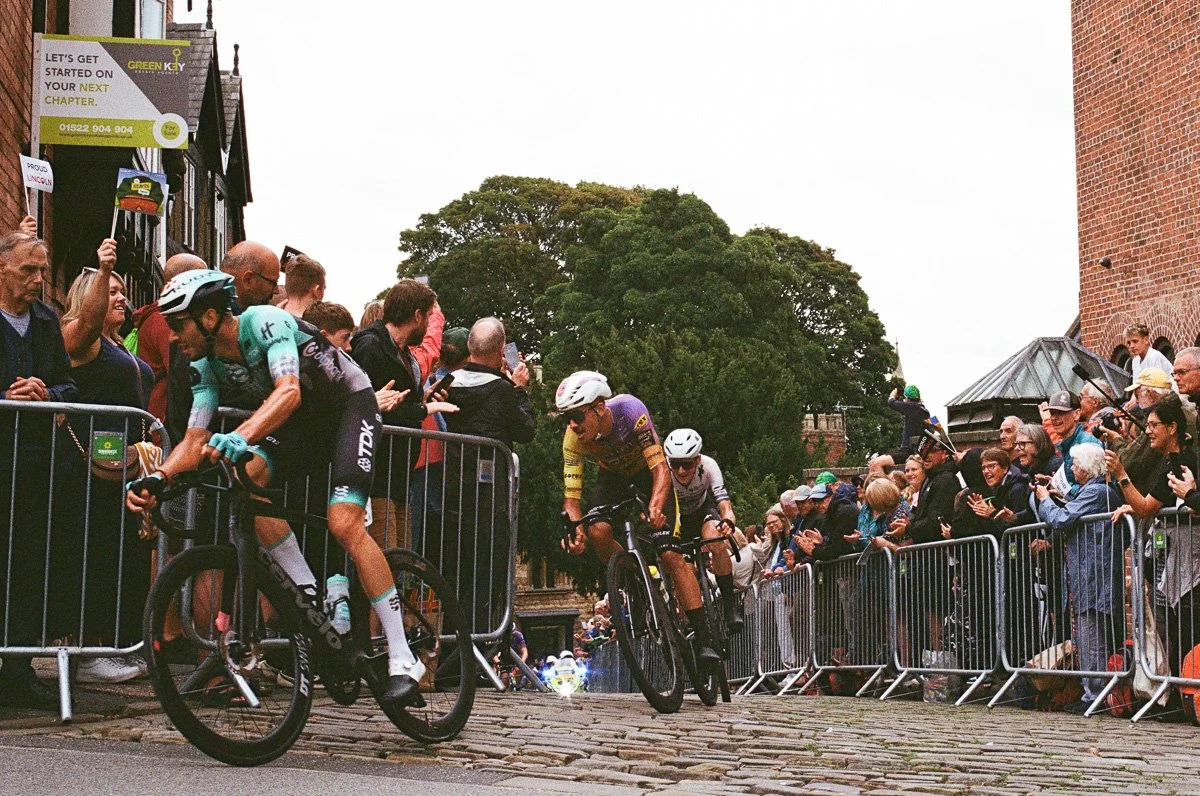
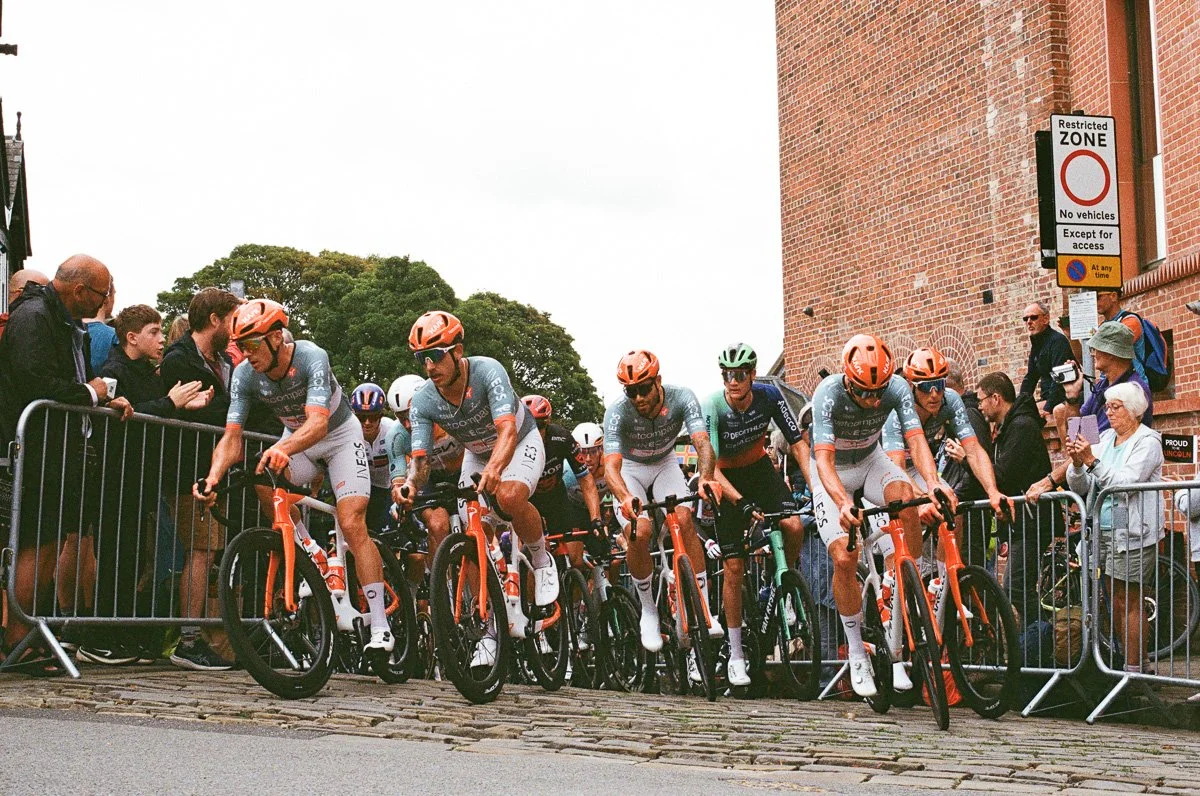
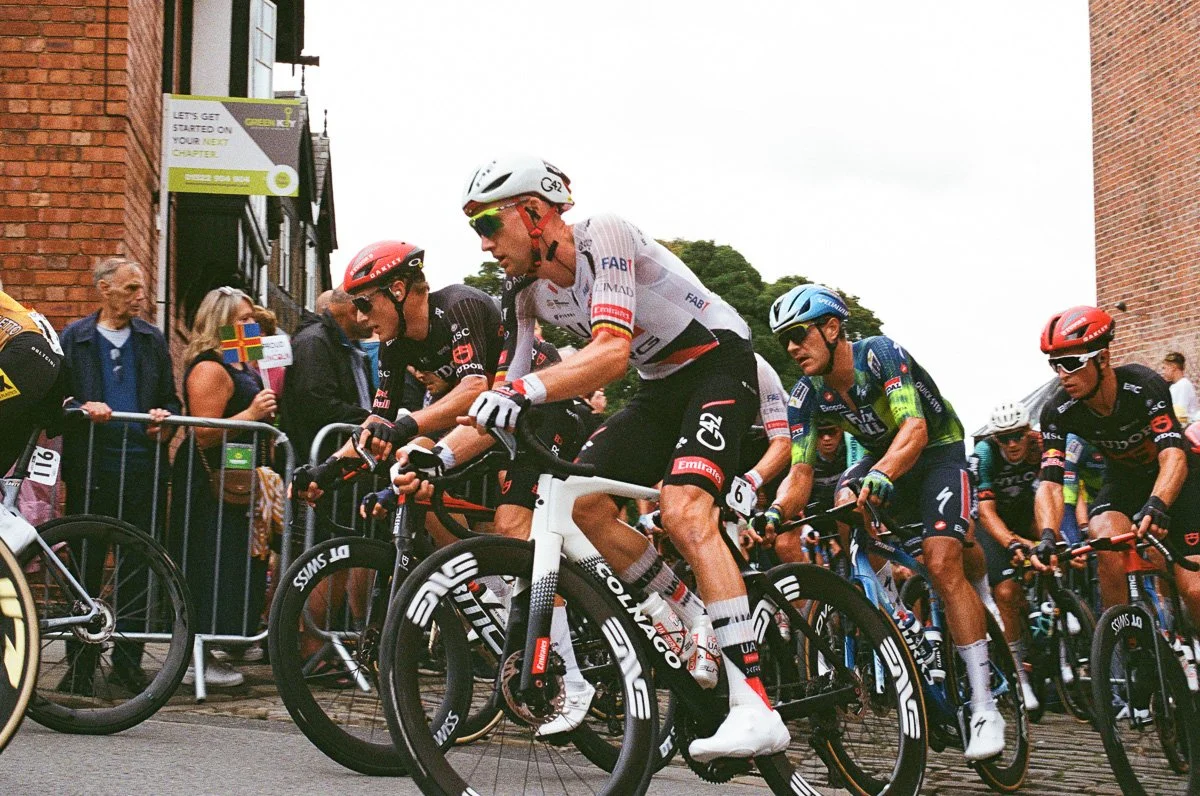
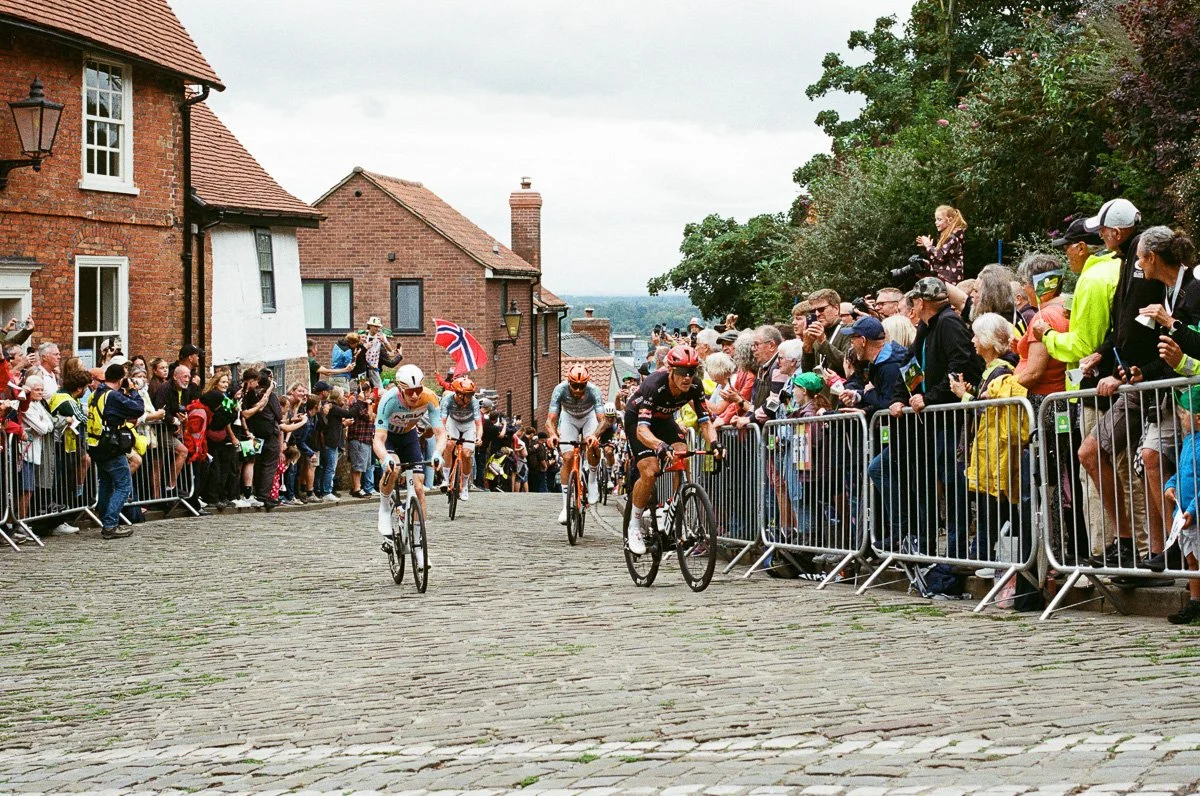
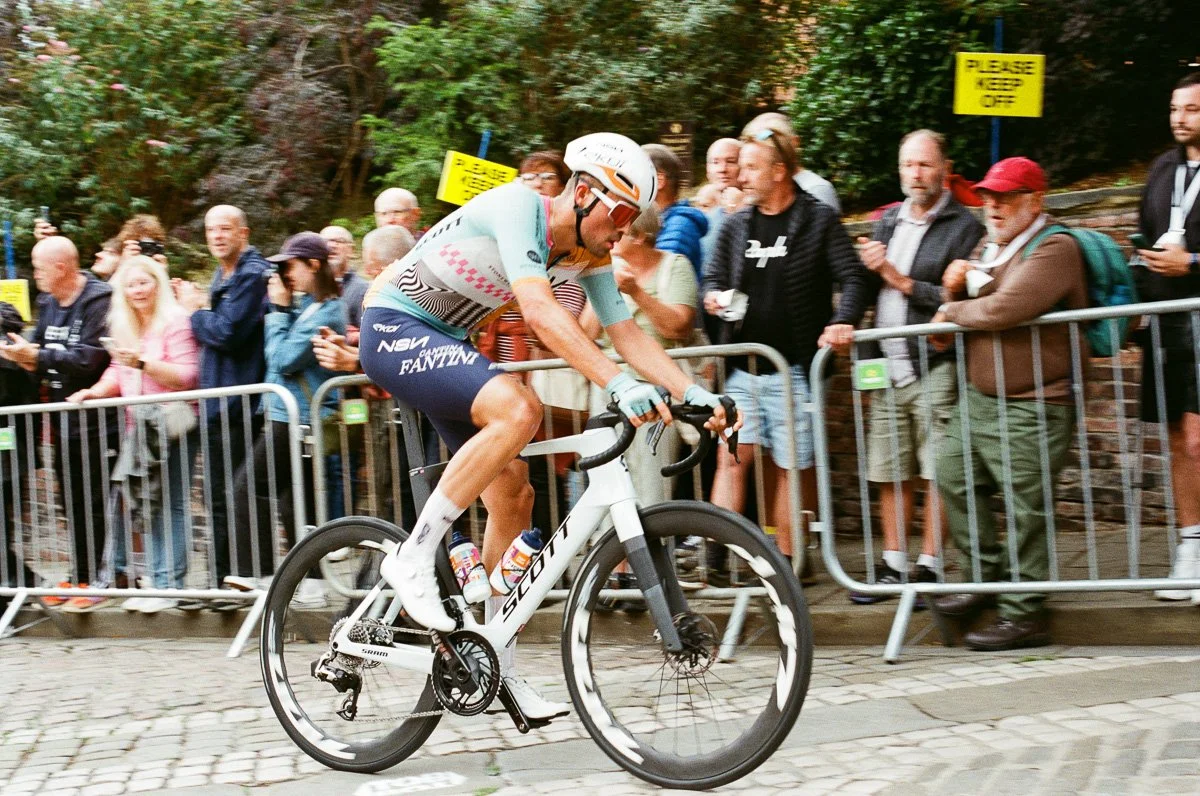
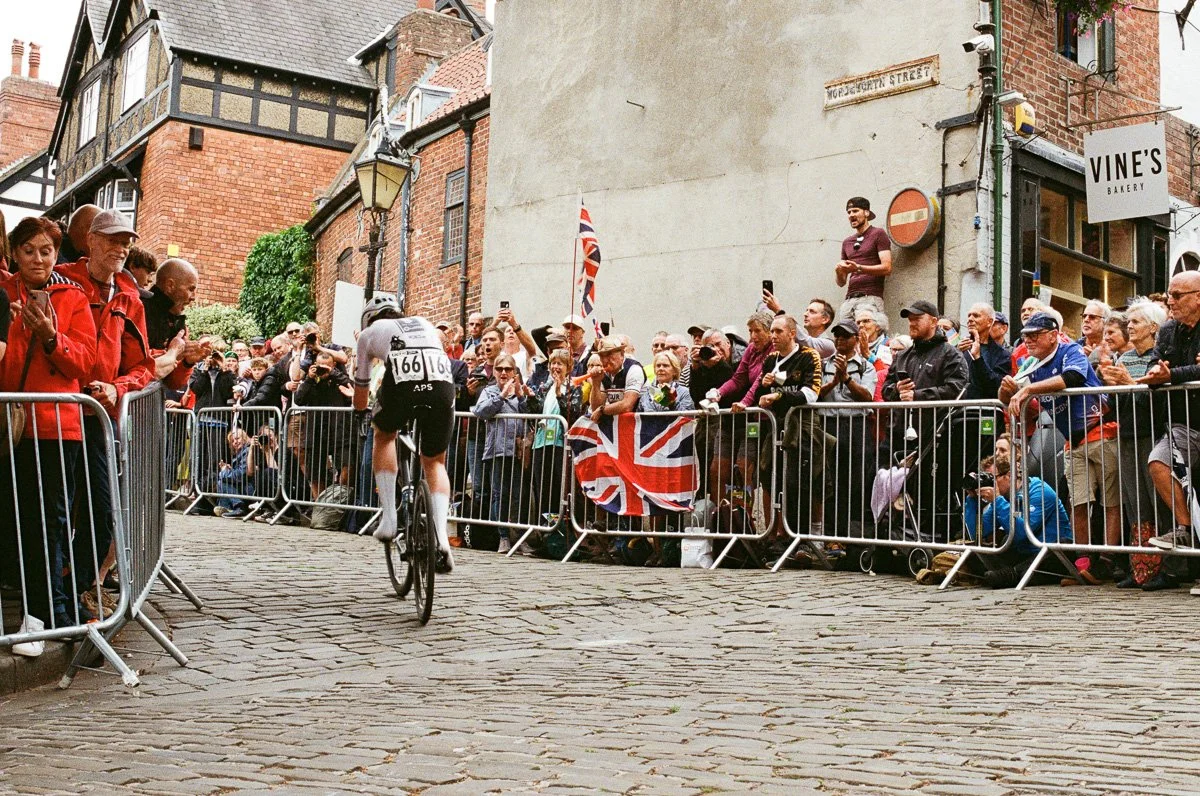
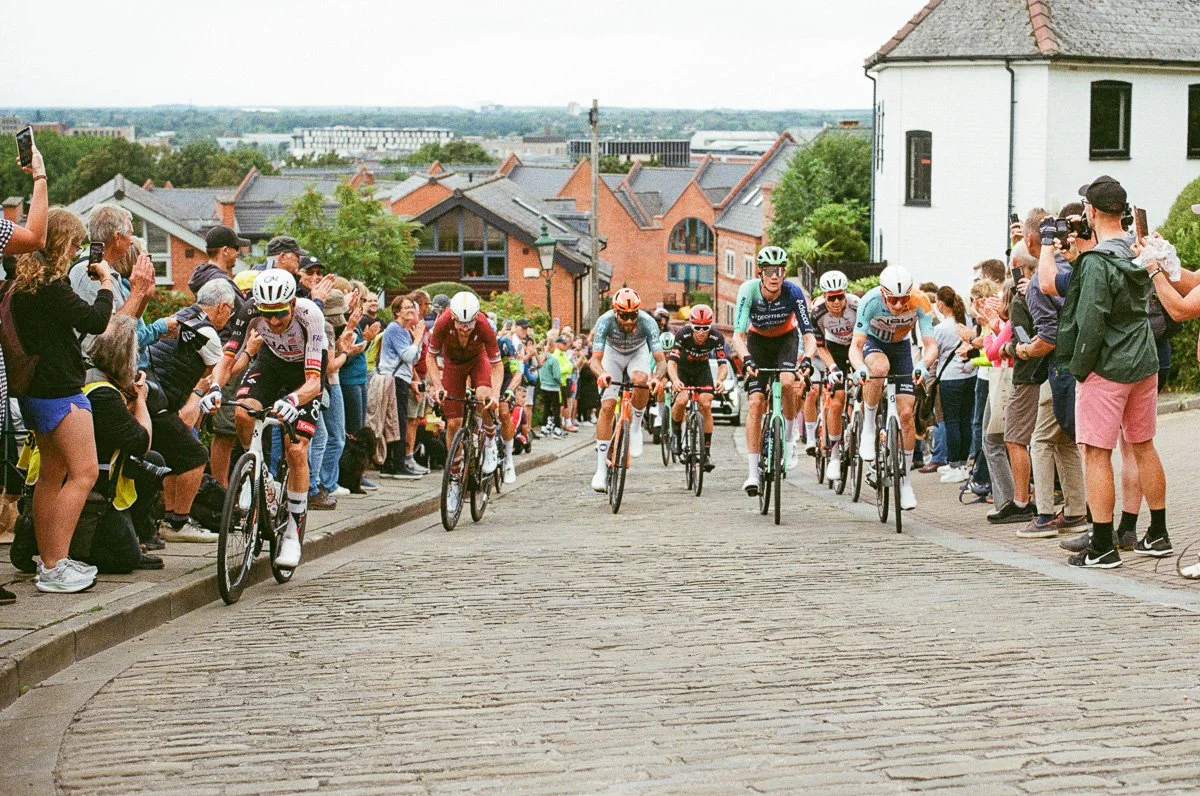
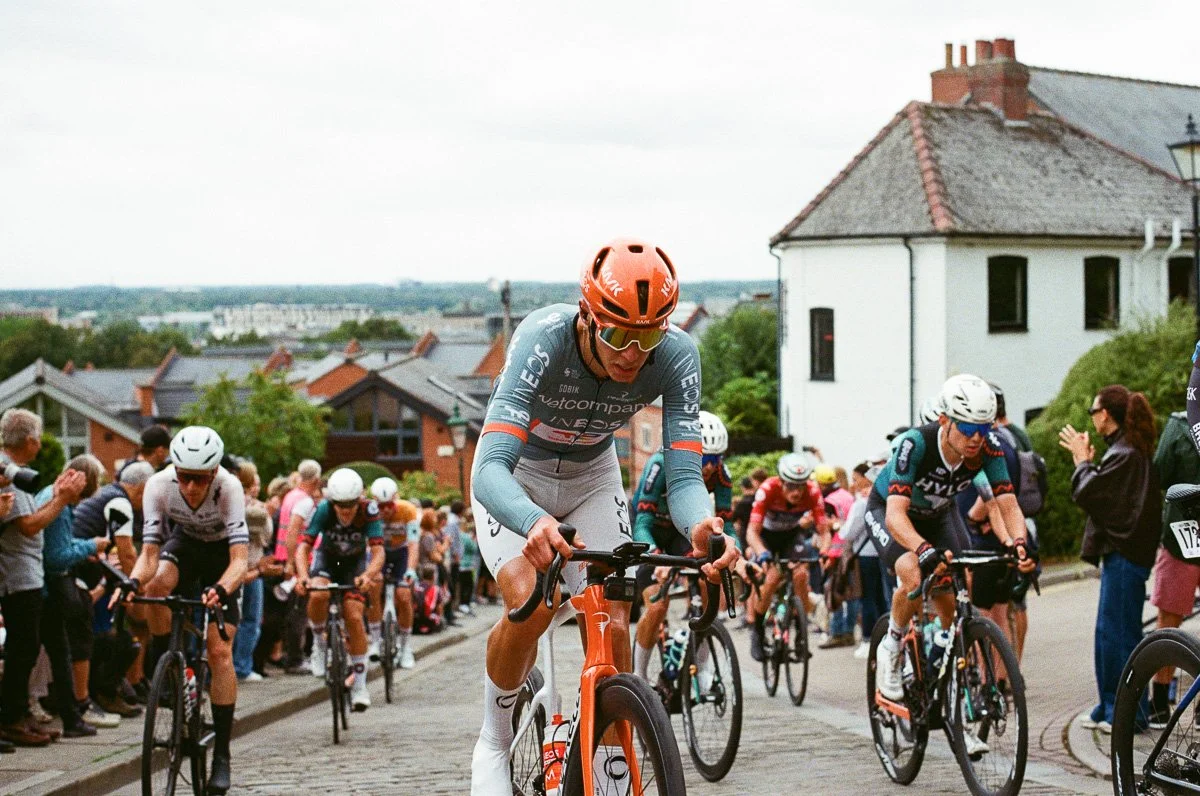
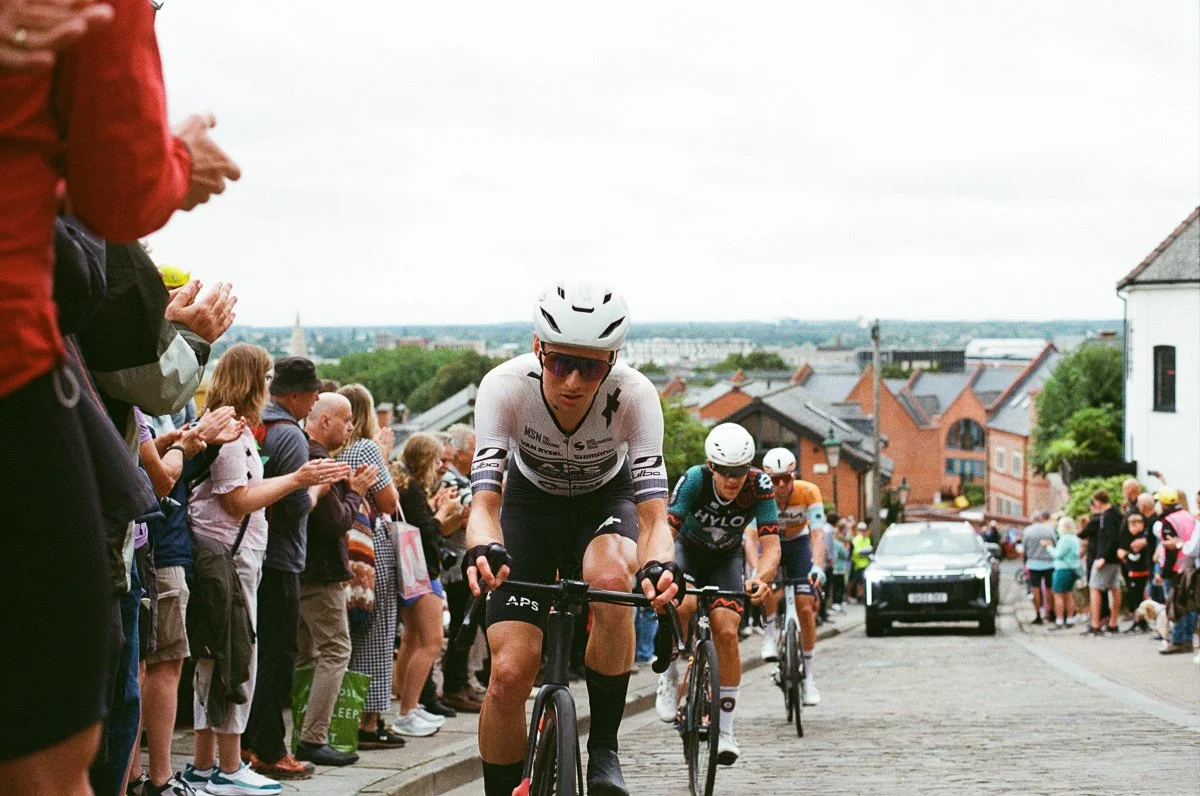
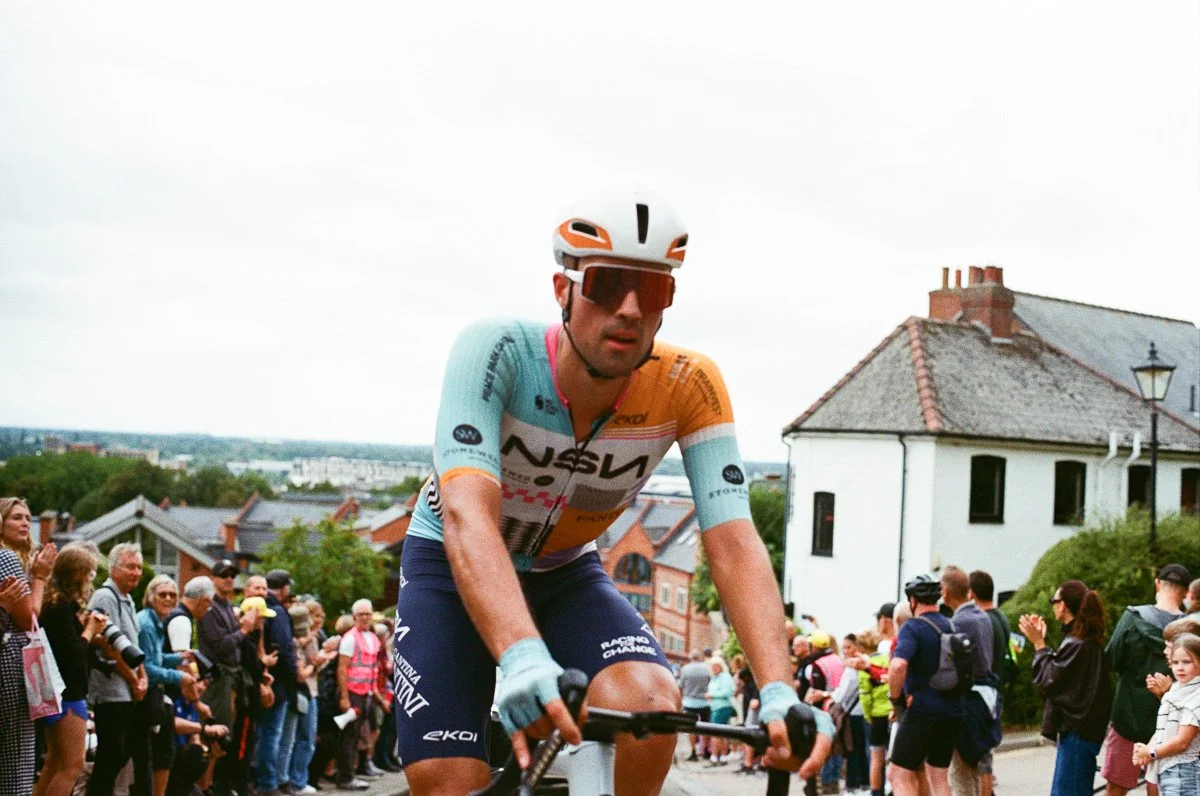
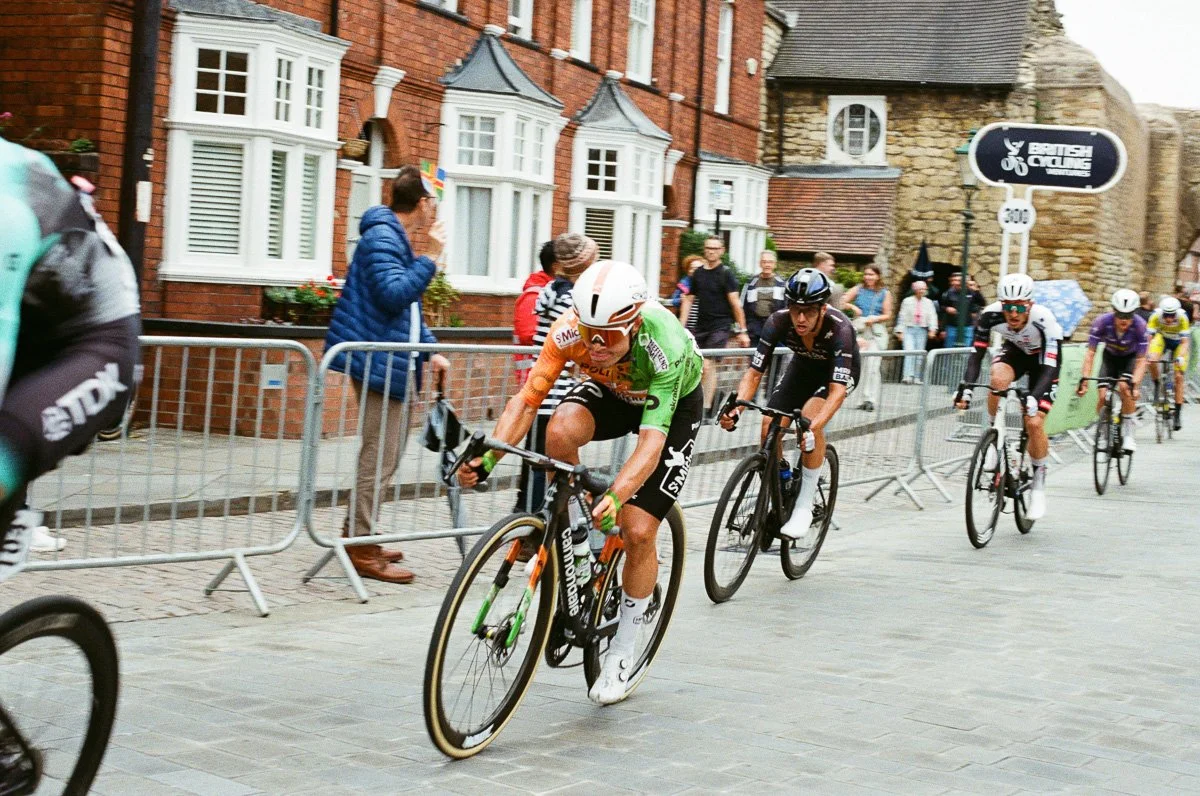
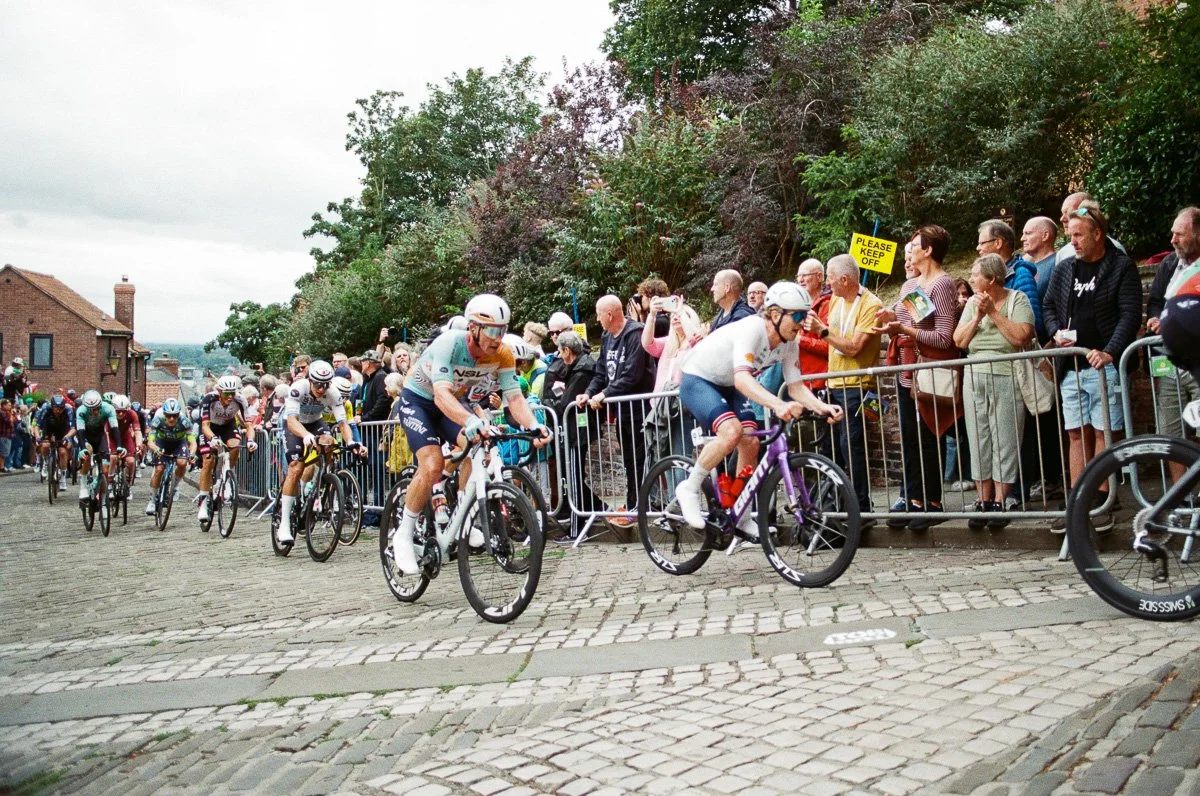
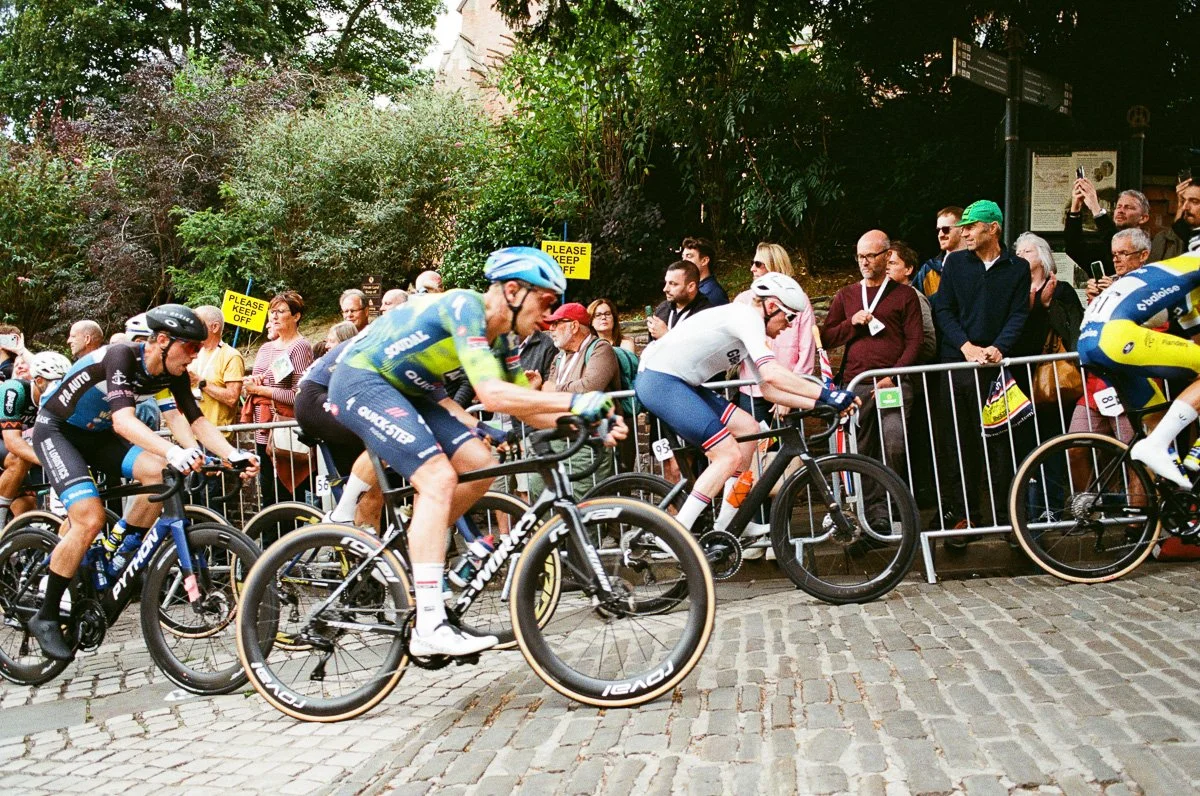
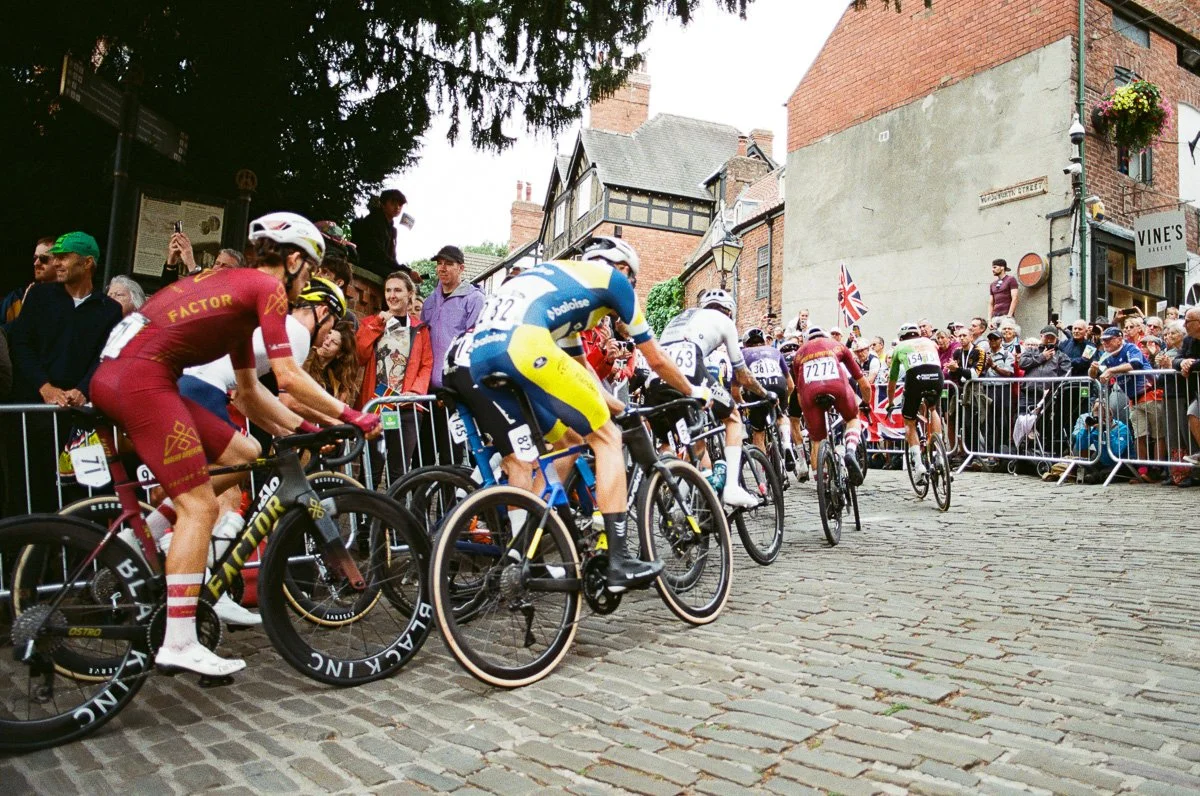
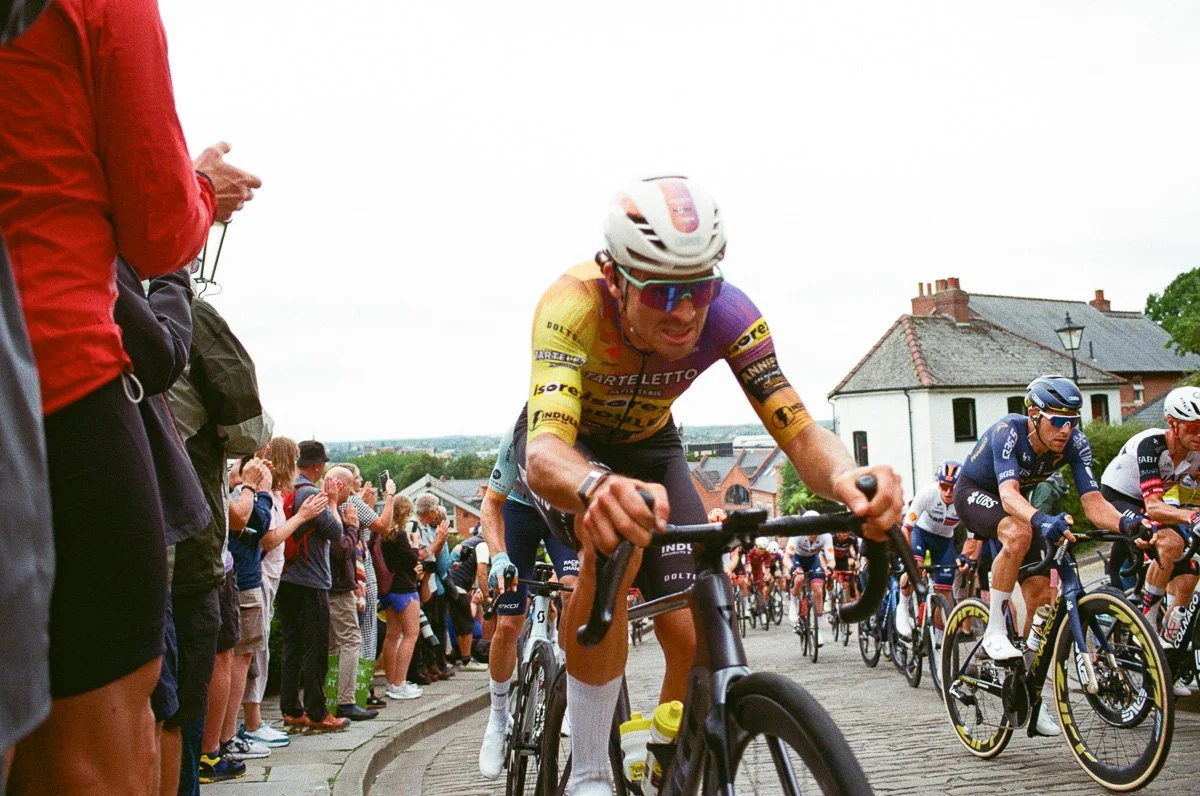
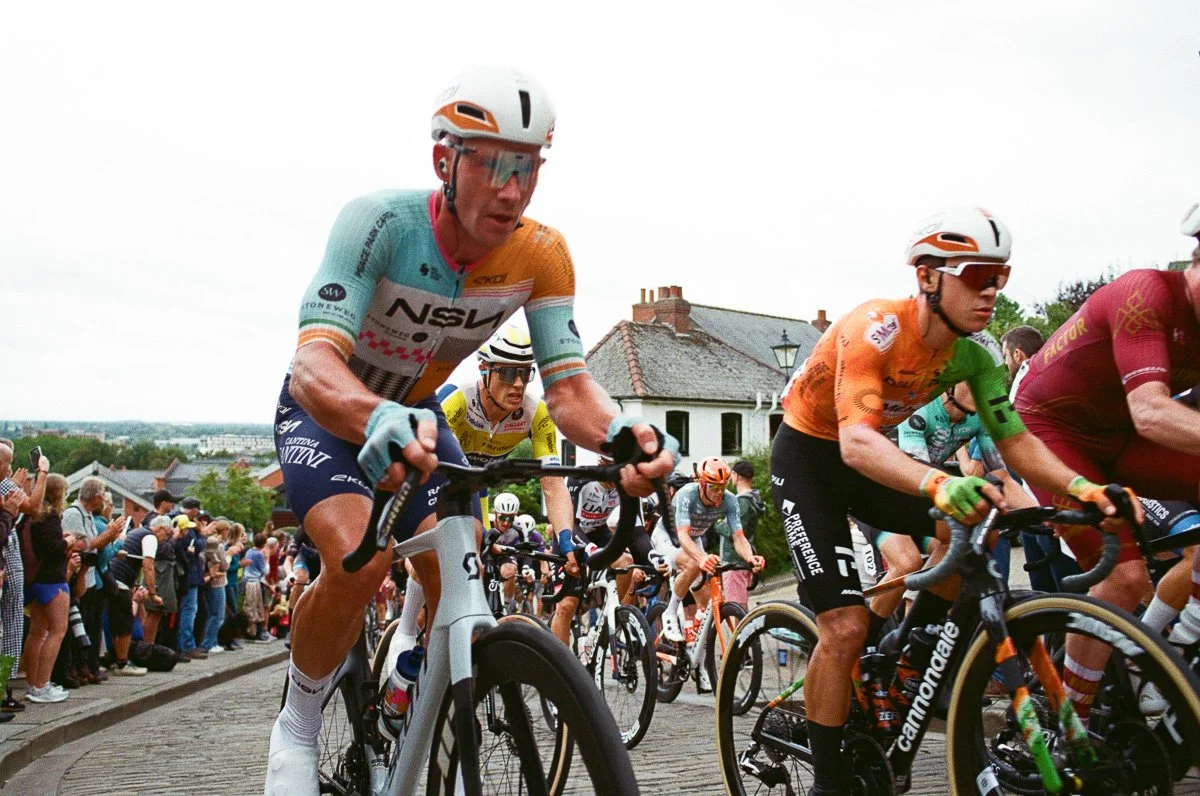
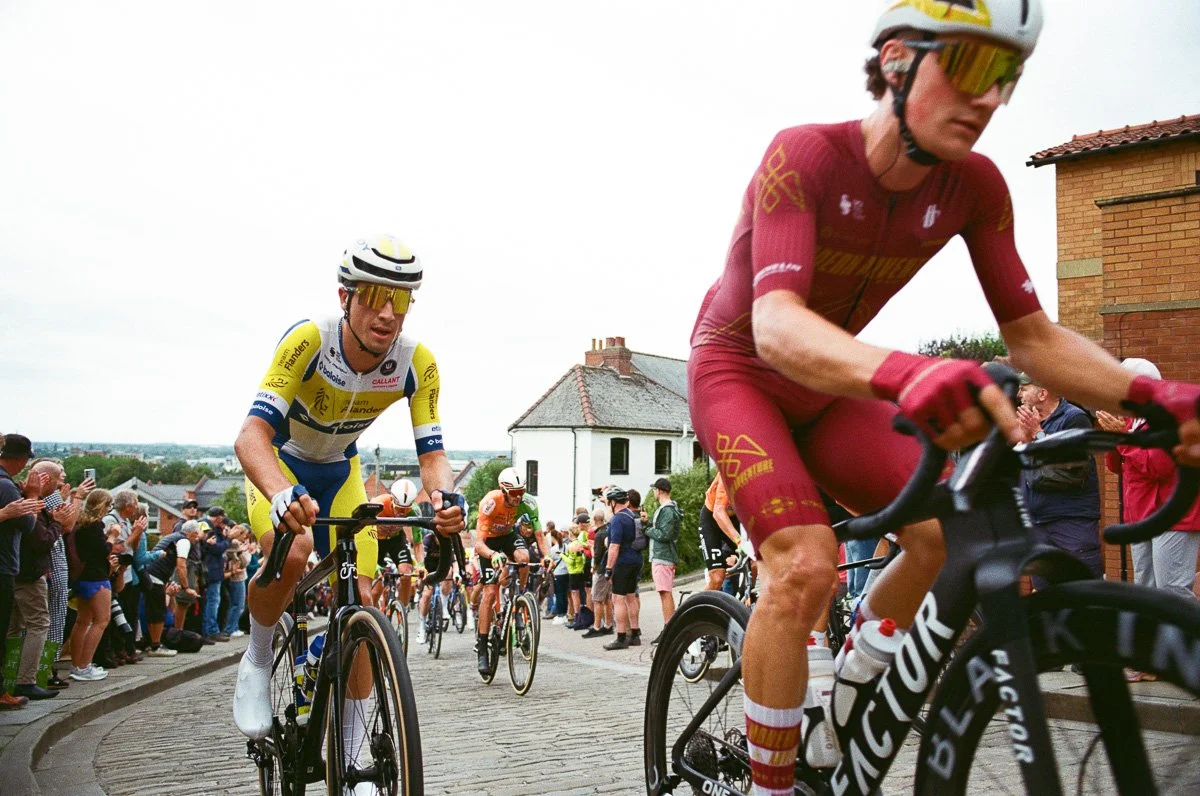
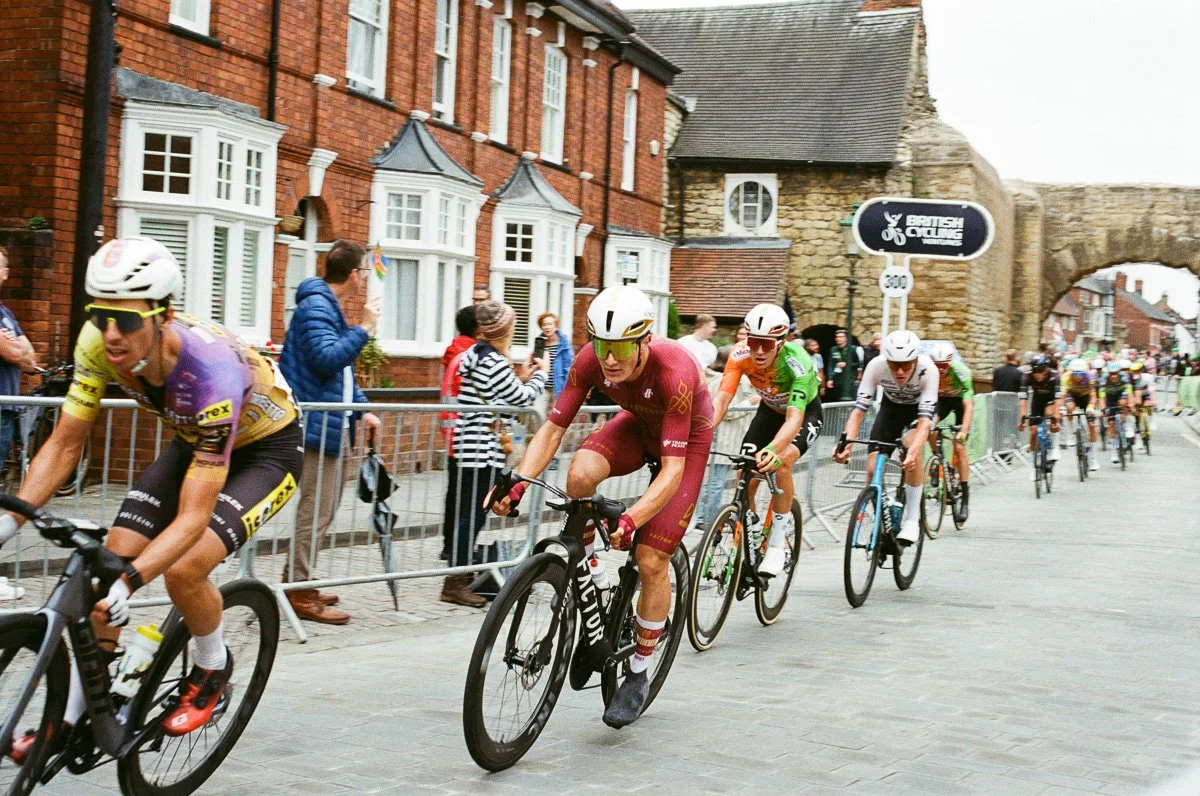
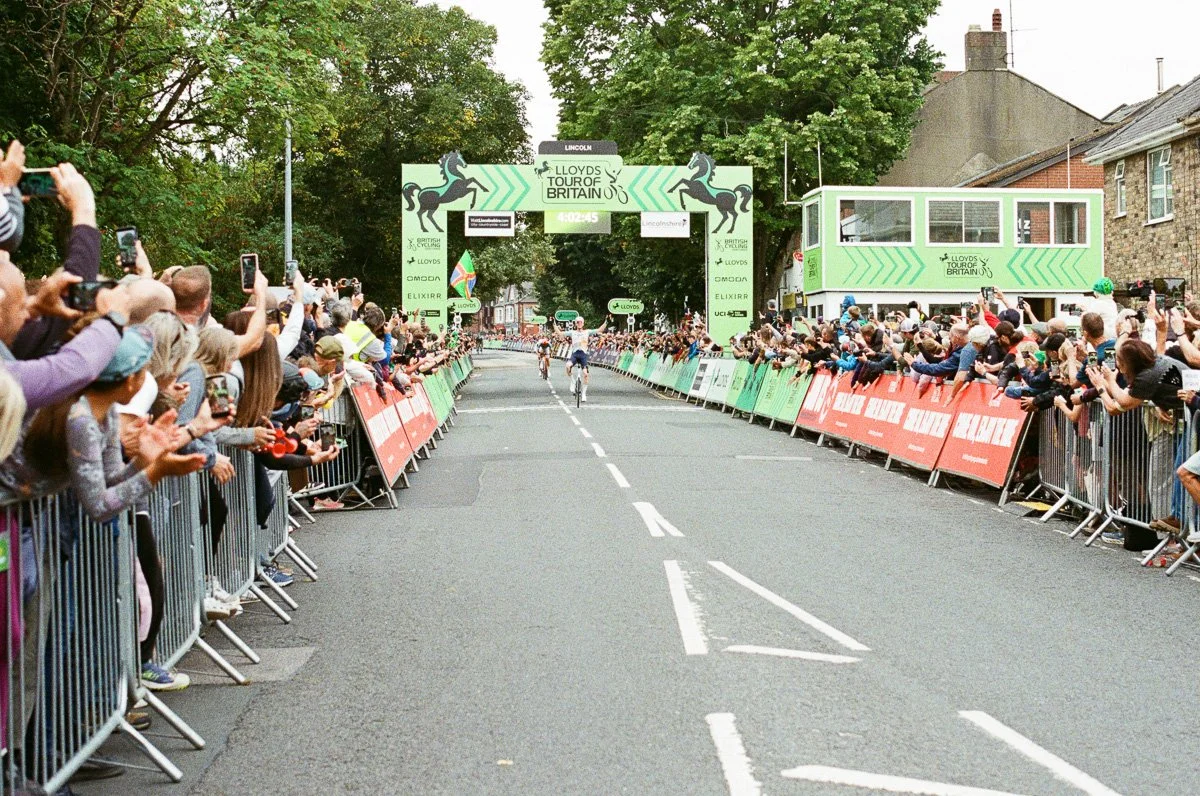
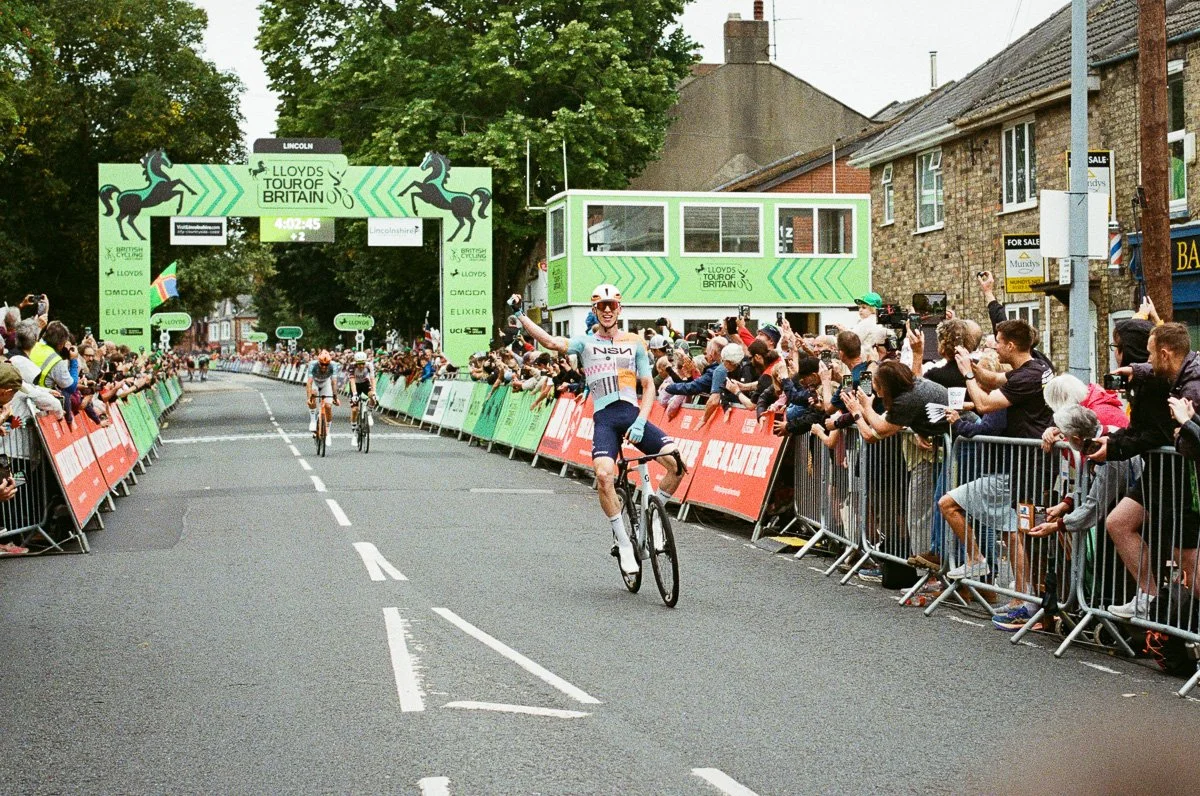
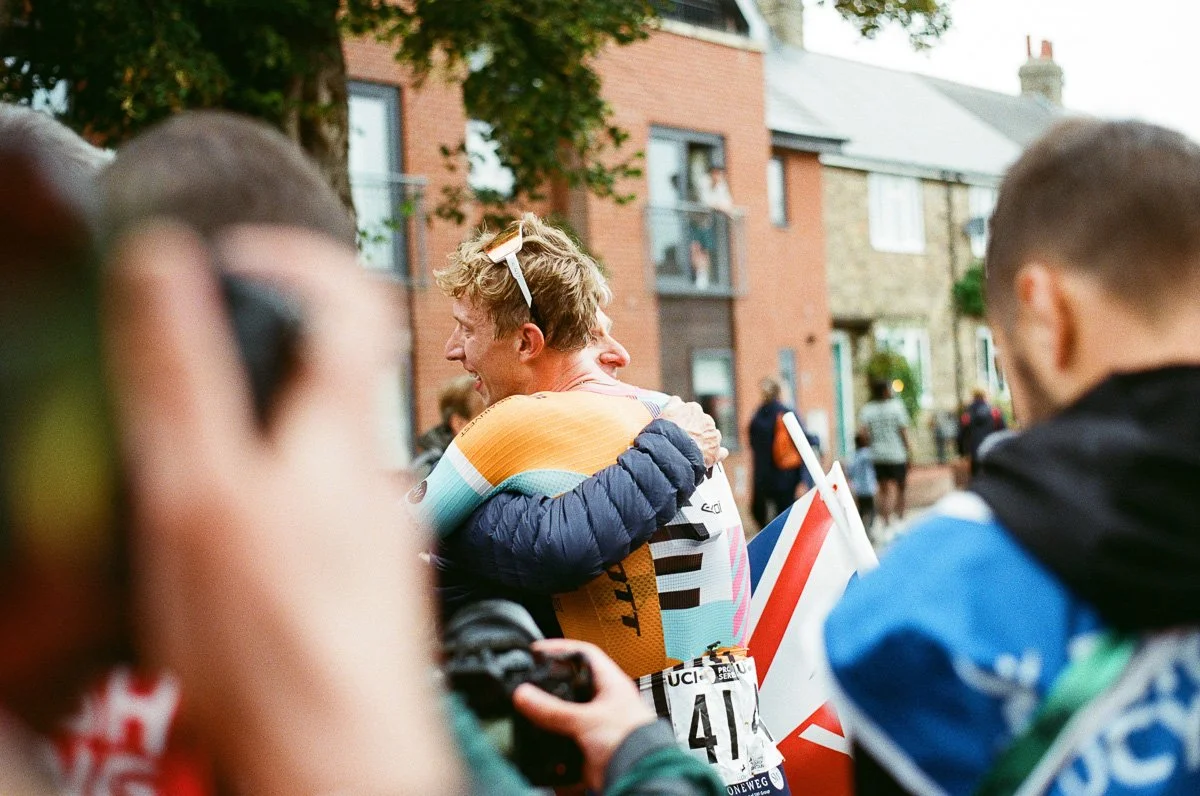
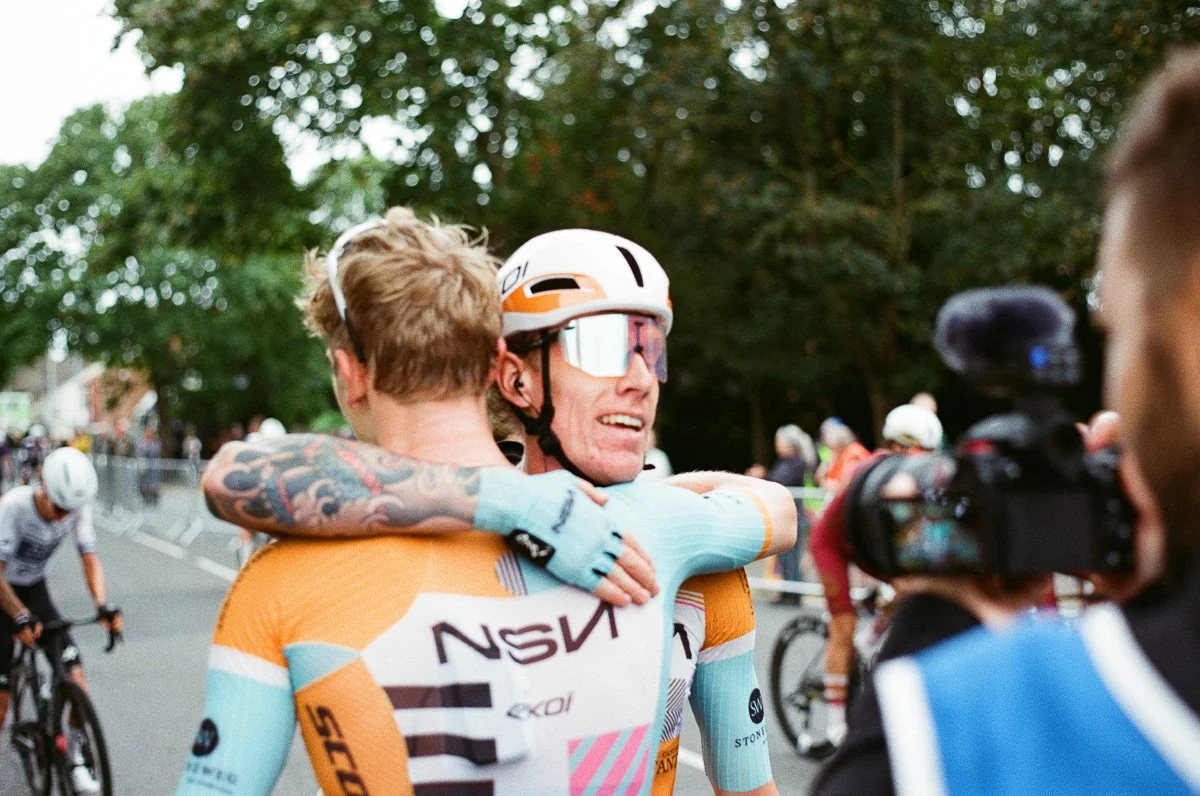
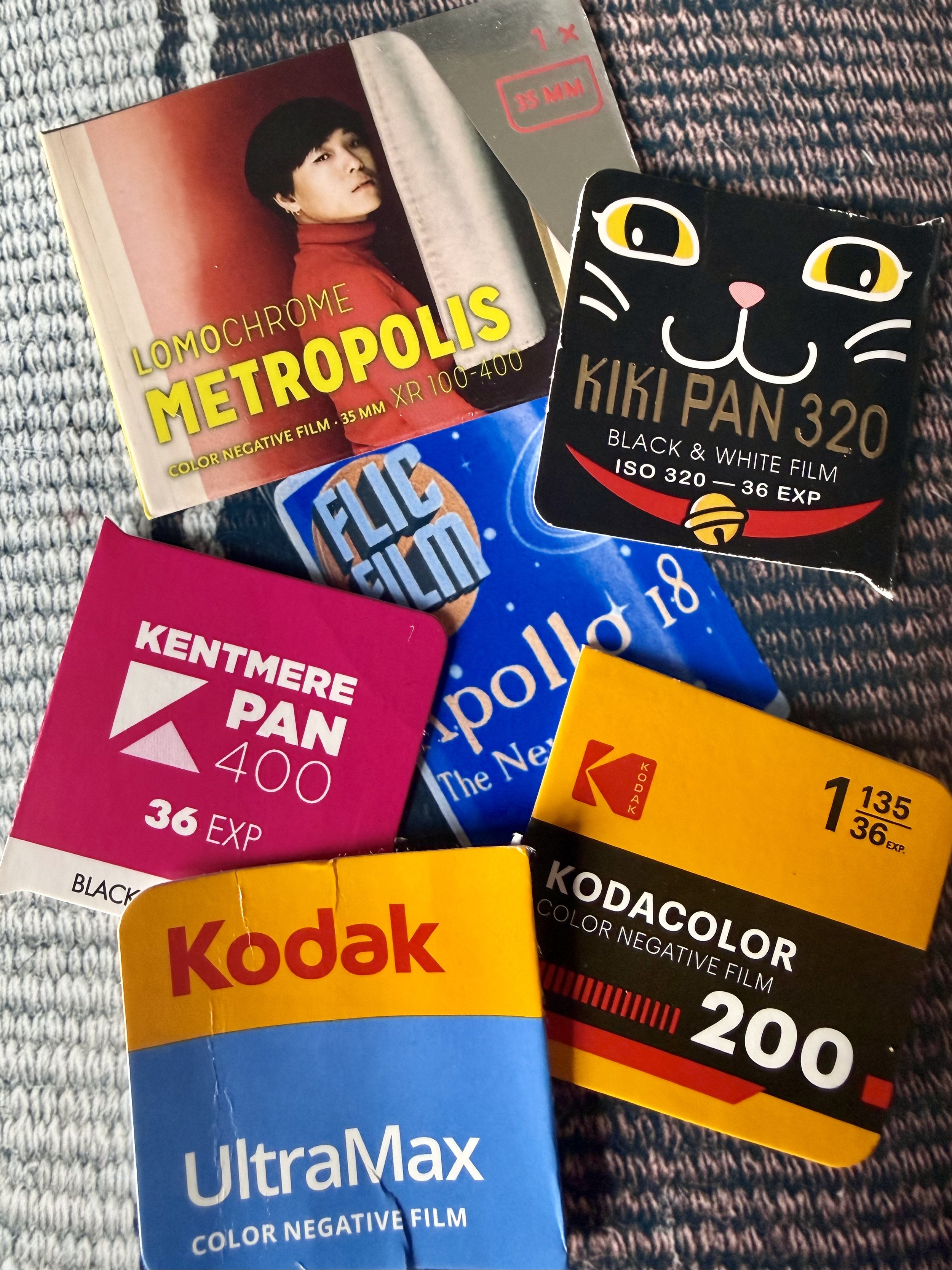
I used several different film stocks during the race and will go into detail in further posts.
Day 1 was shot on Flic Film Apollo 18 colour, LomoChrome Metropolis colour, Kentmere Pan 400 black & white and Kodak UltraMax colour film.
Day 2 included Kiki Pan 320 black & white and Kodacolor 200.
Day 3 continued with the Kodacolor 200.
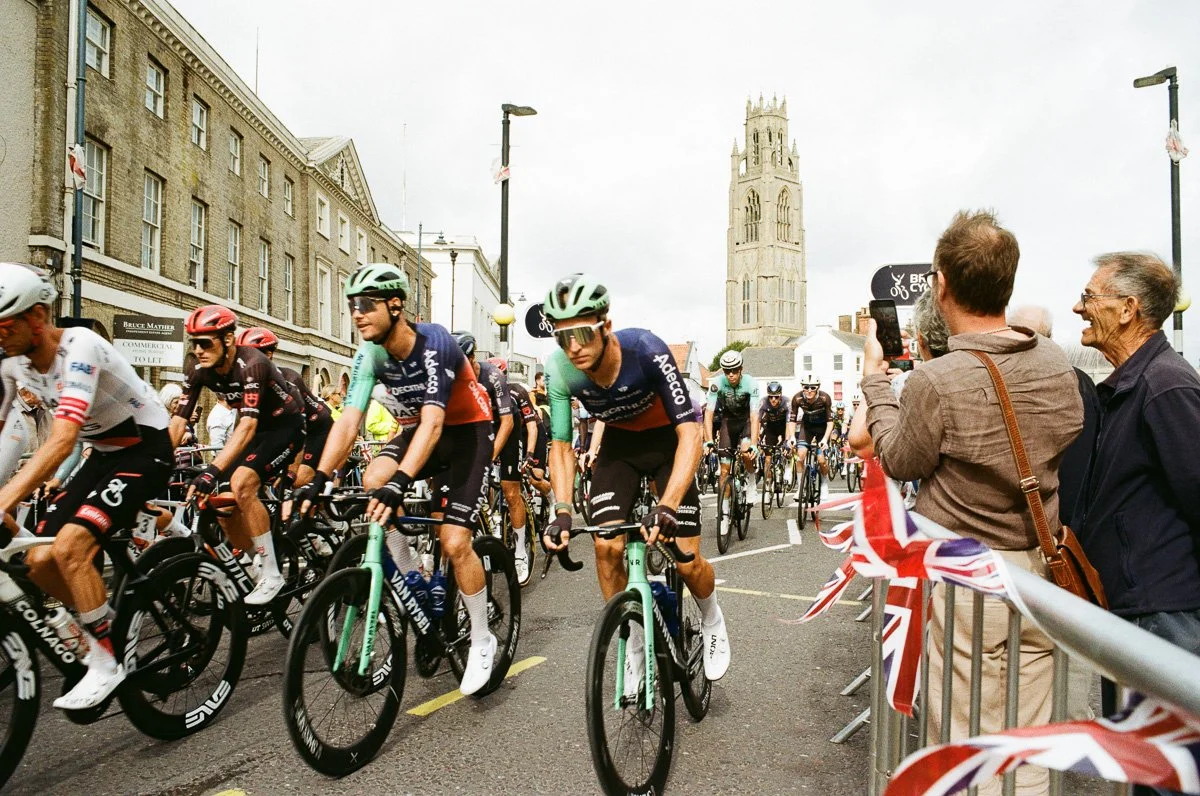
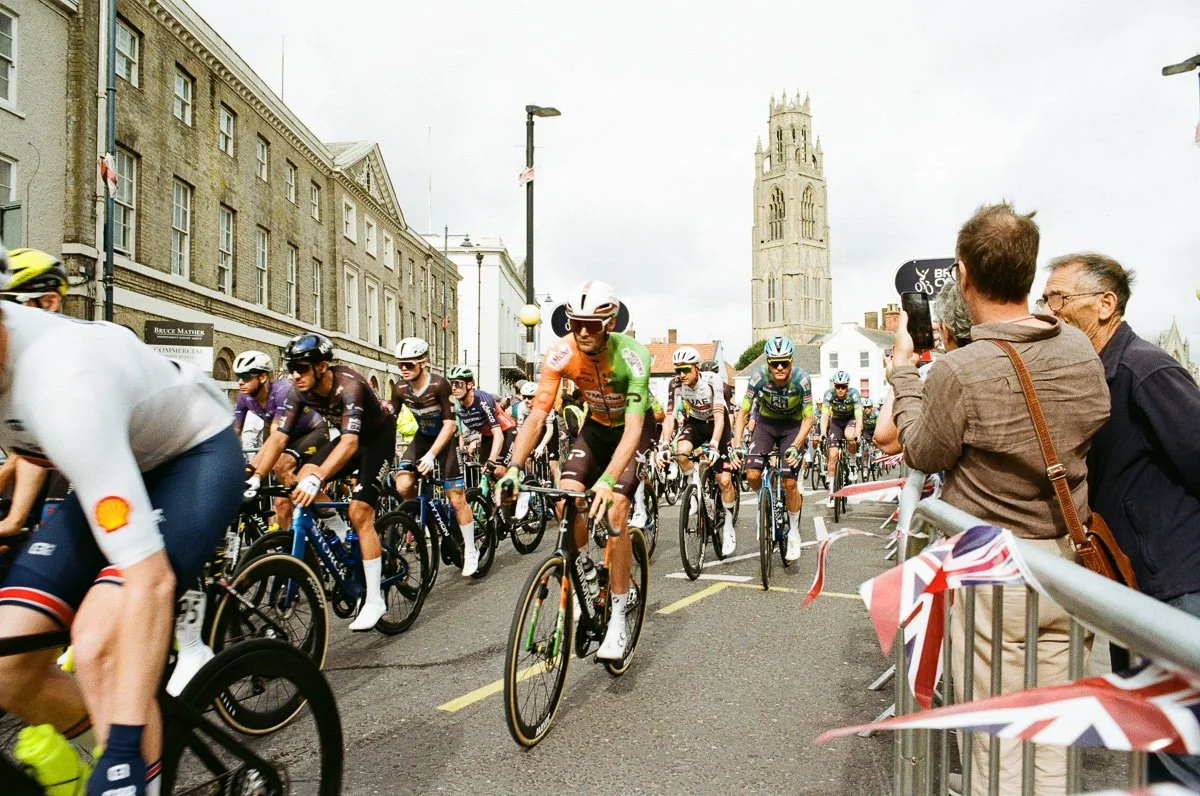
Stage Two Rolls Out of Boston
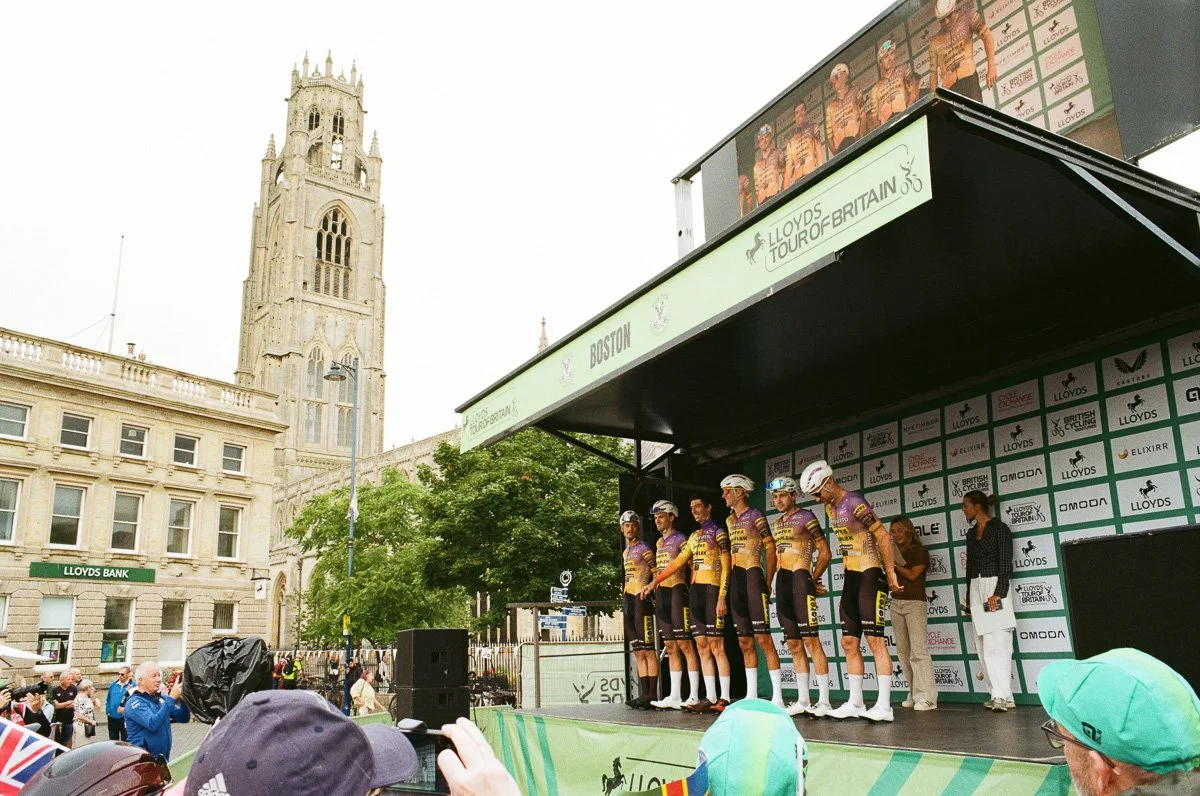
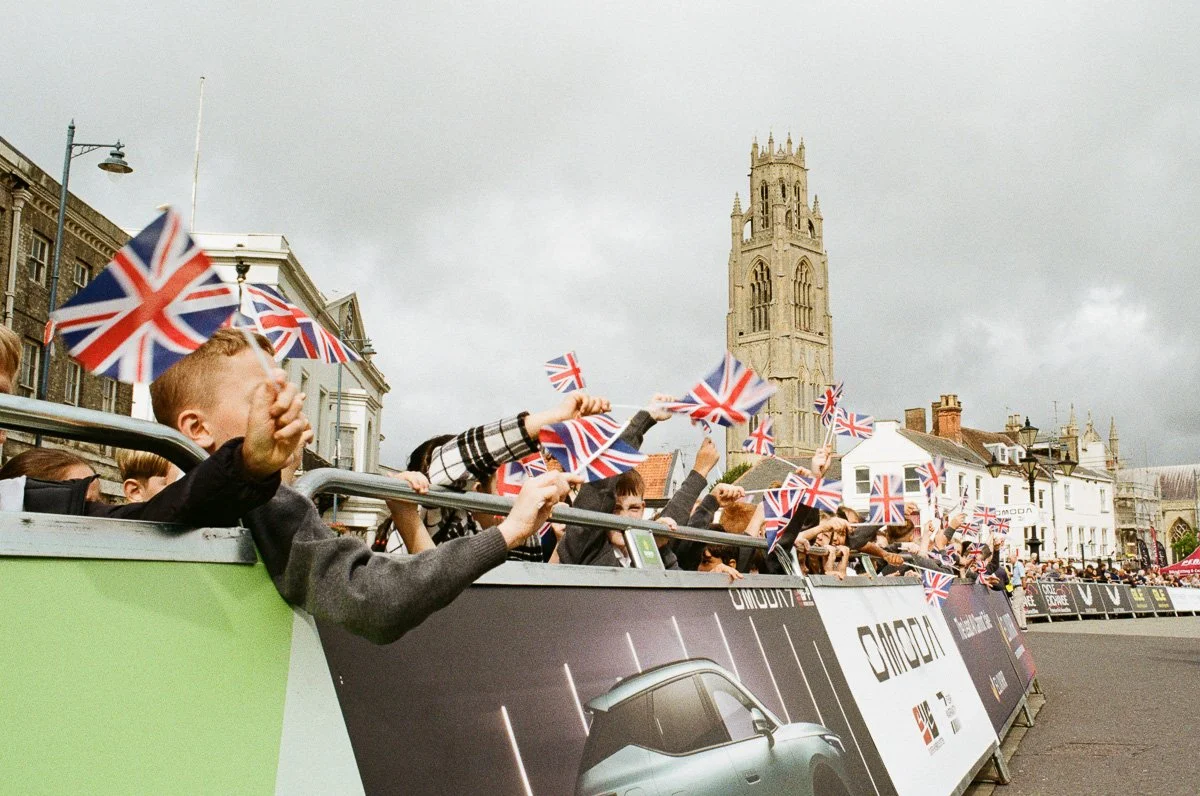
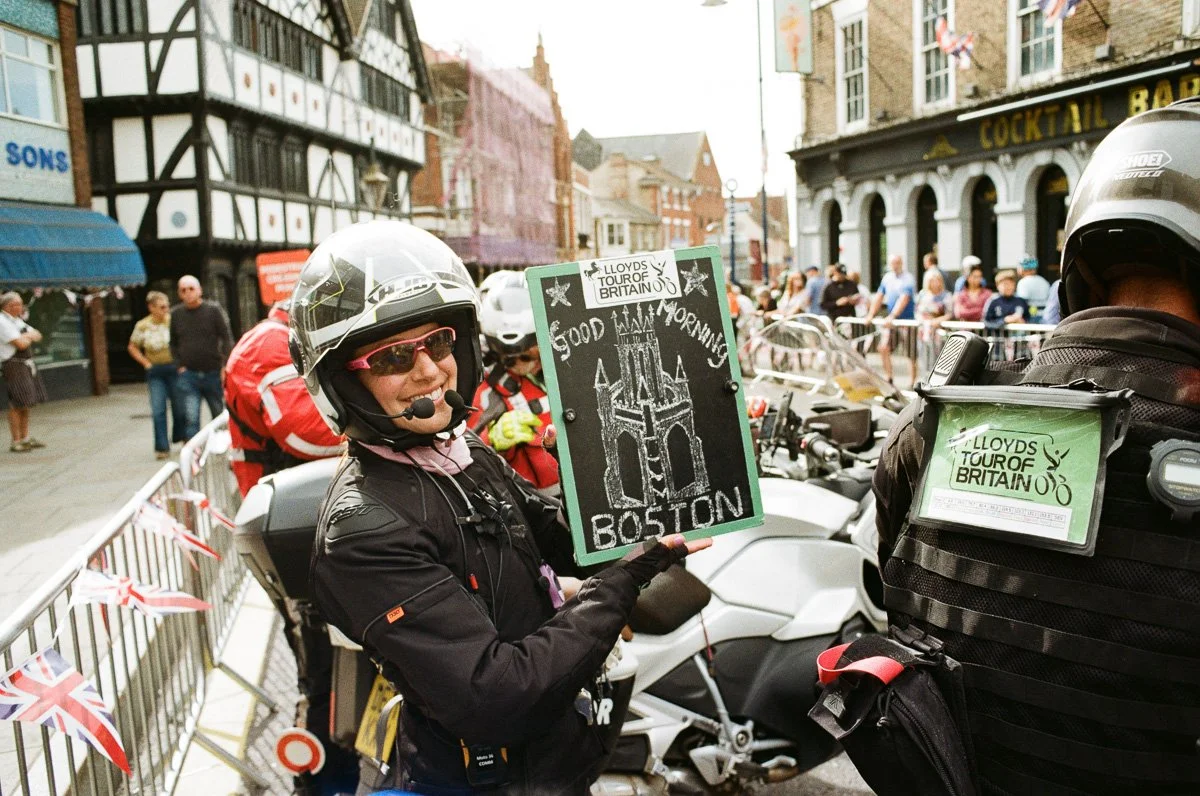
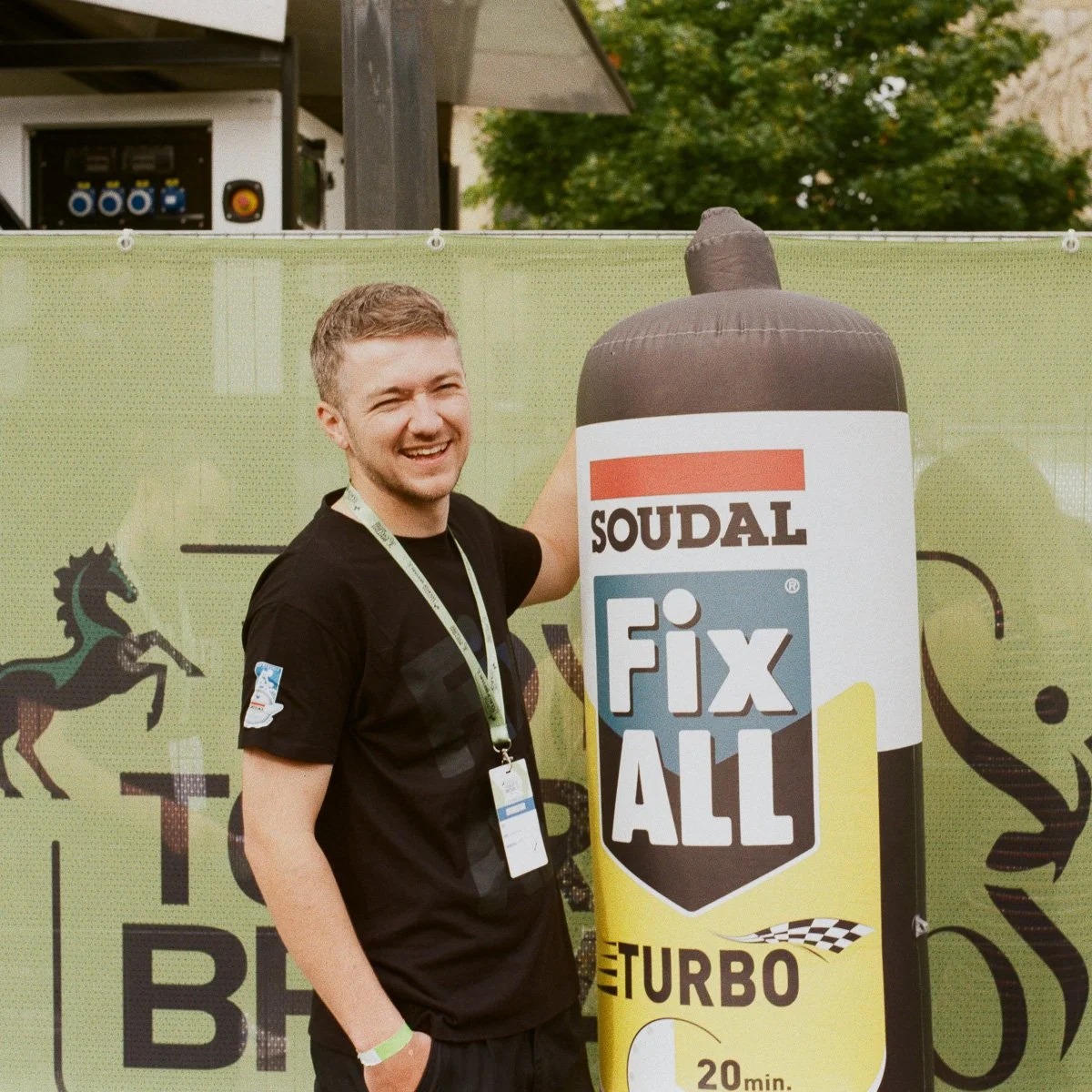
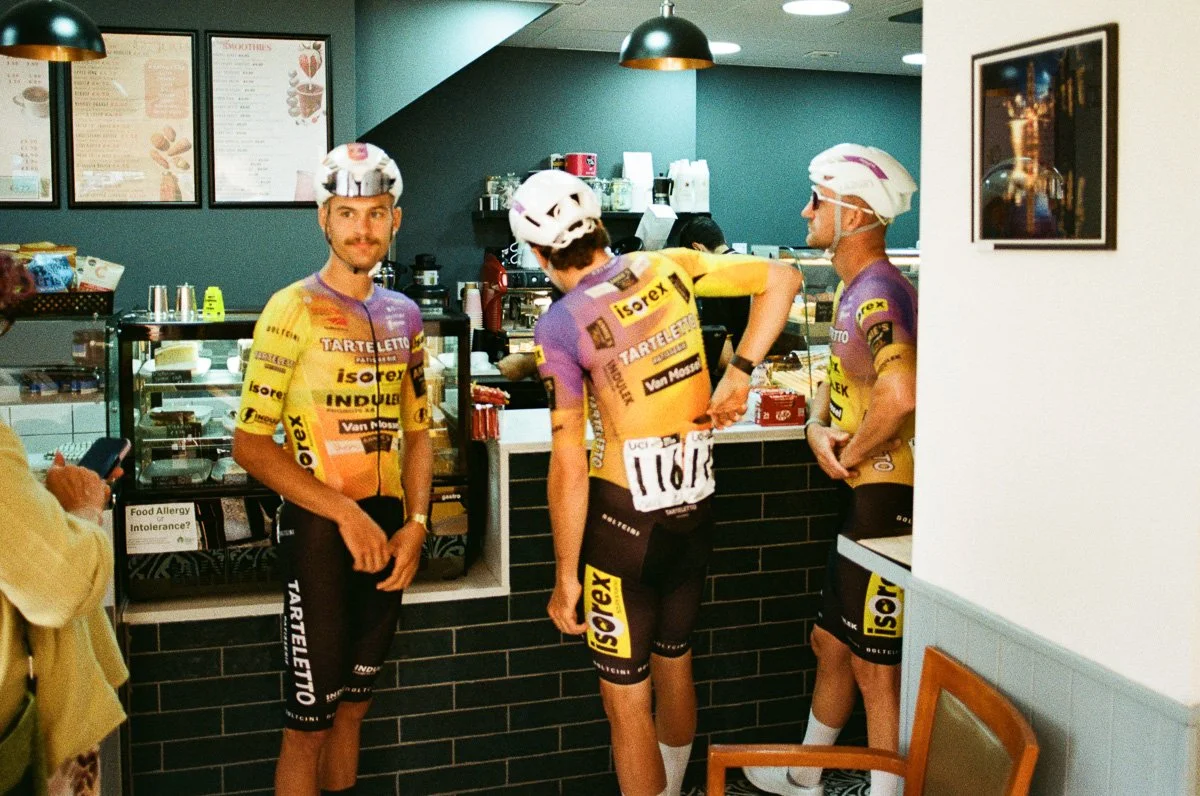
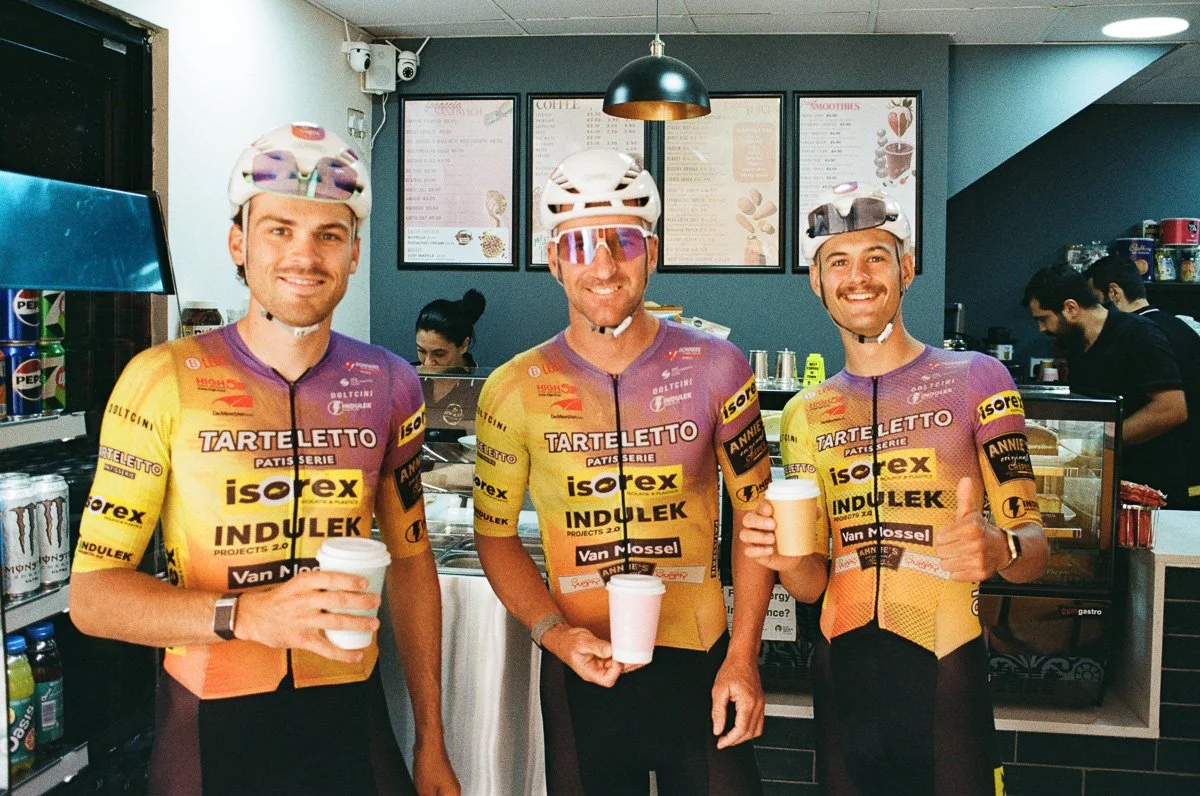
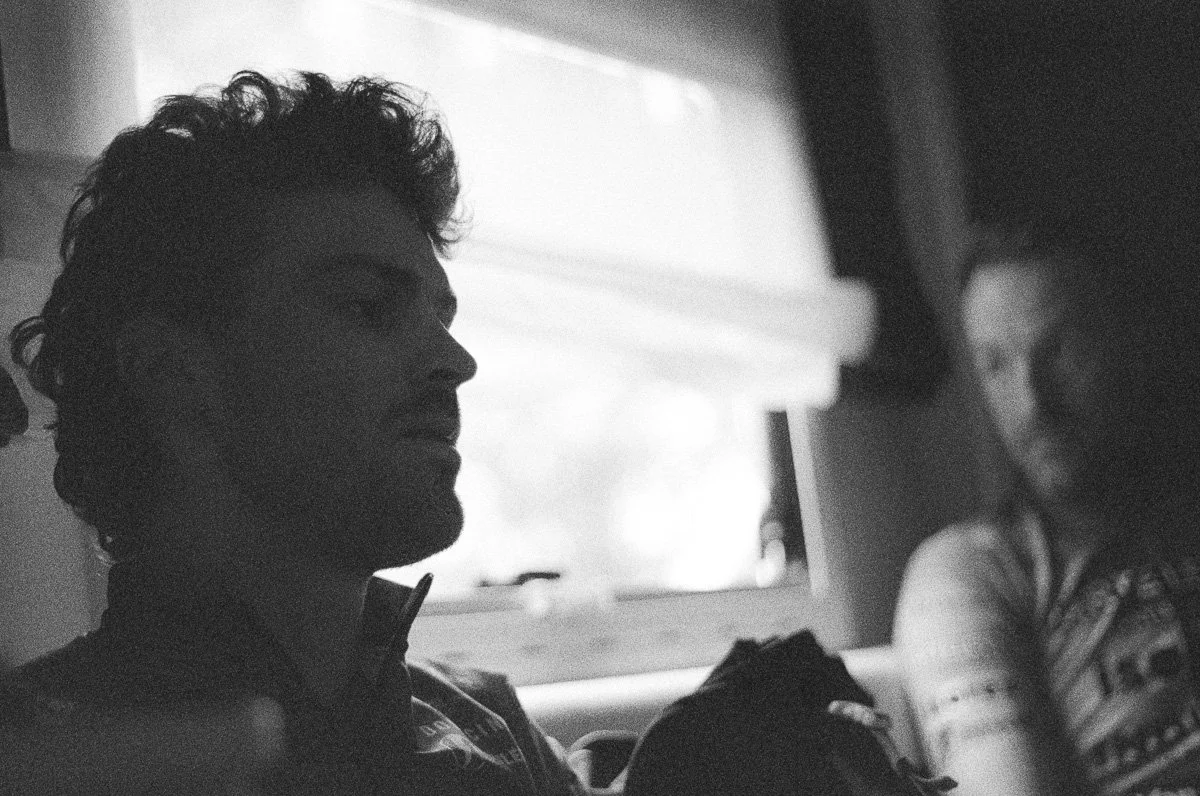
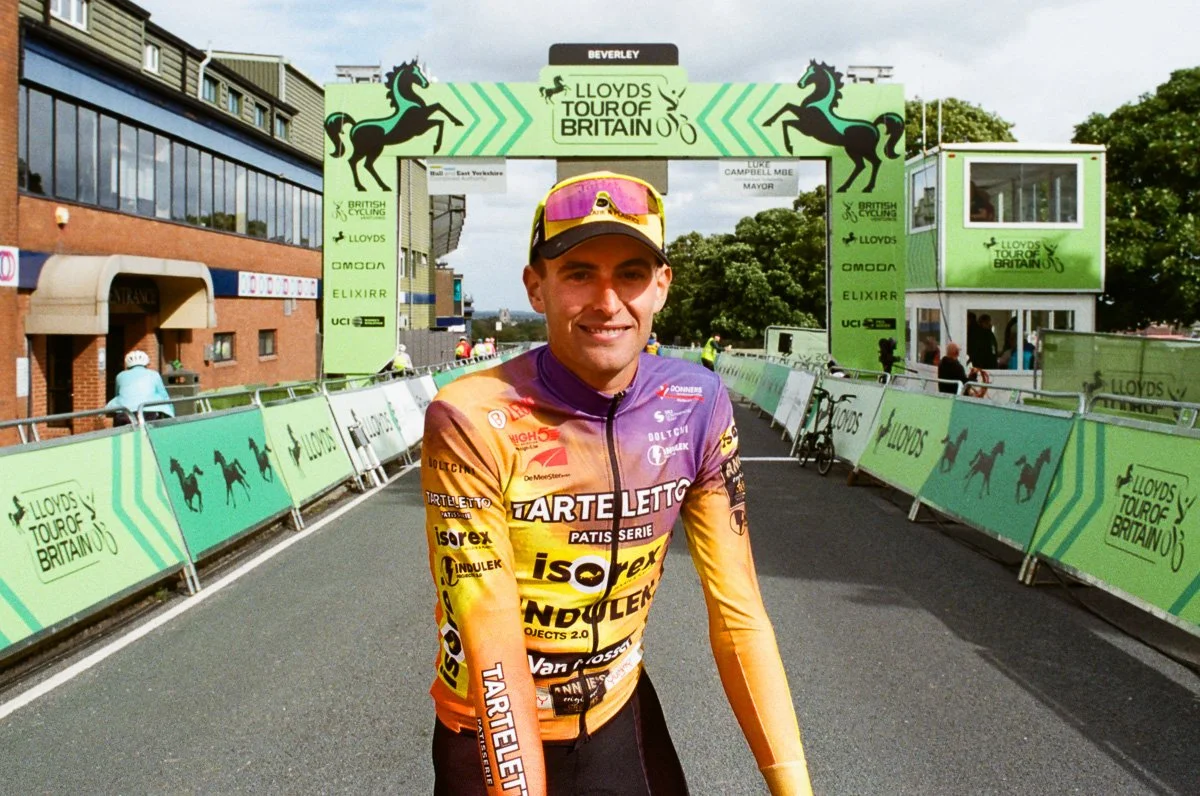
I spotted three riders from the Tarteletto Isorex Team grabbing a pre-start coffee in a nearby cafe and managed to grab a couple of shots.
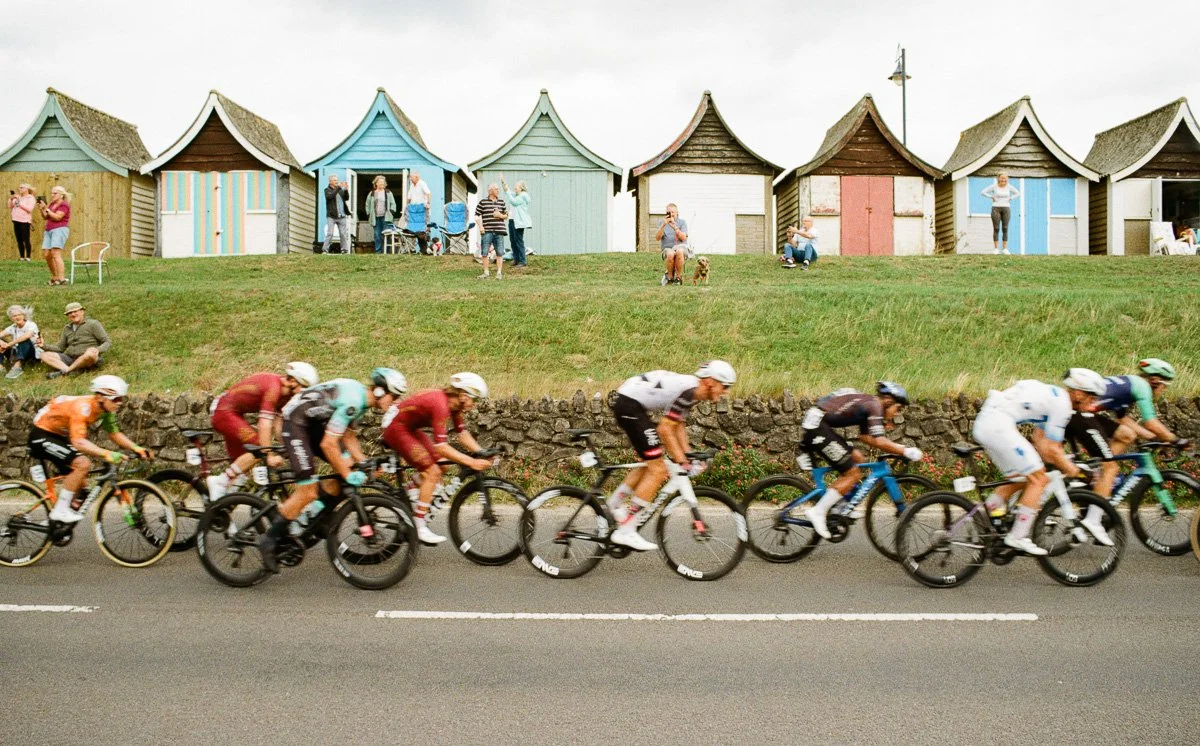
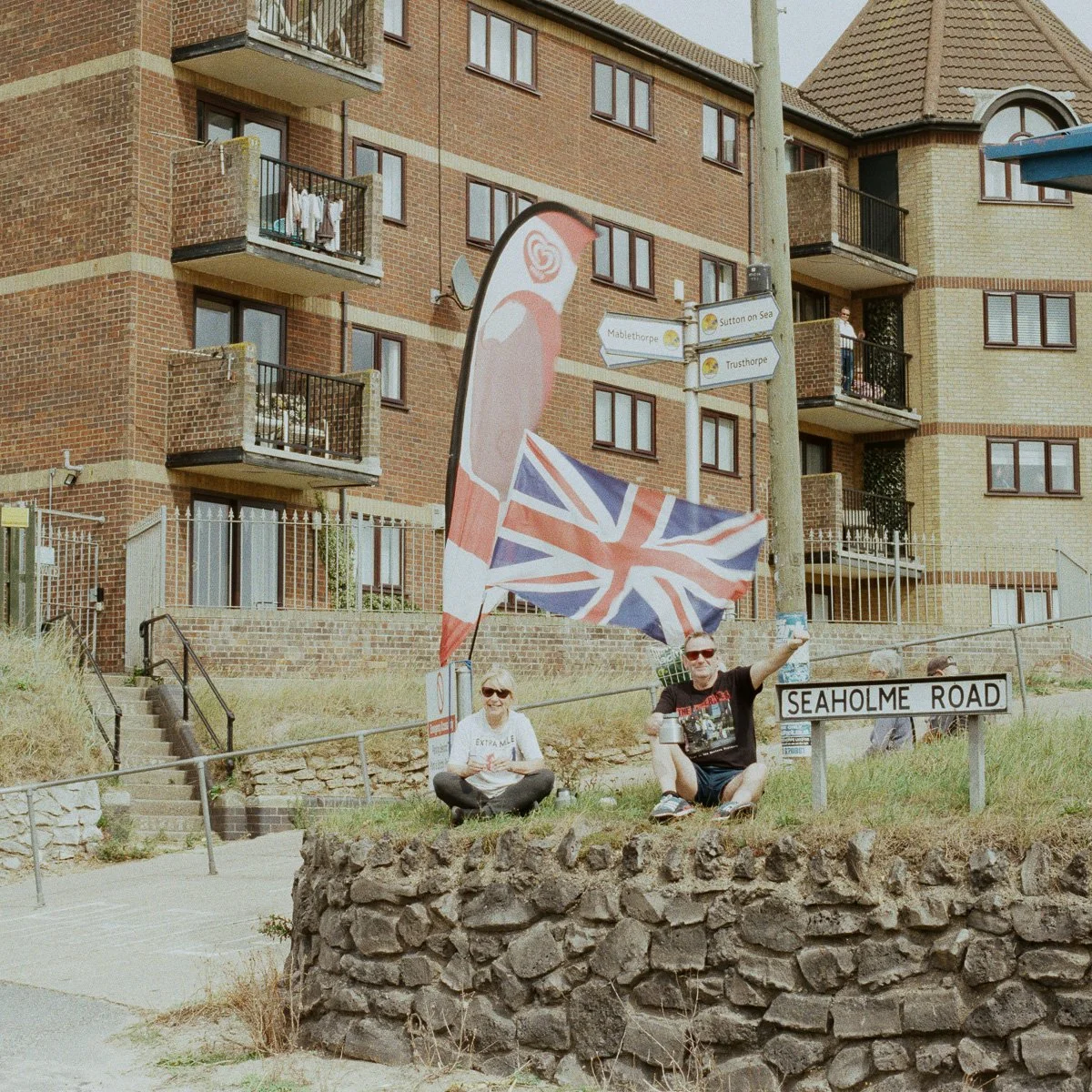
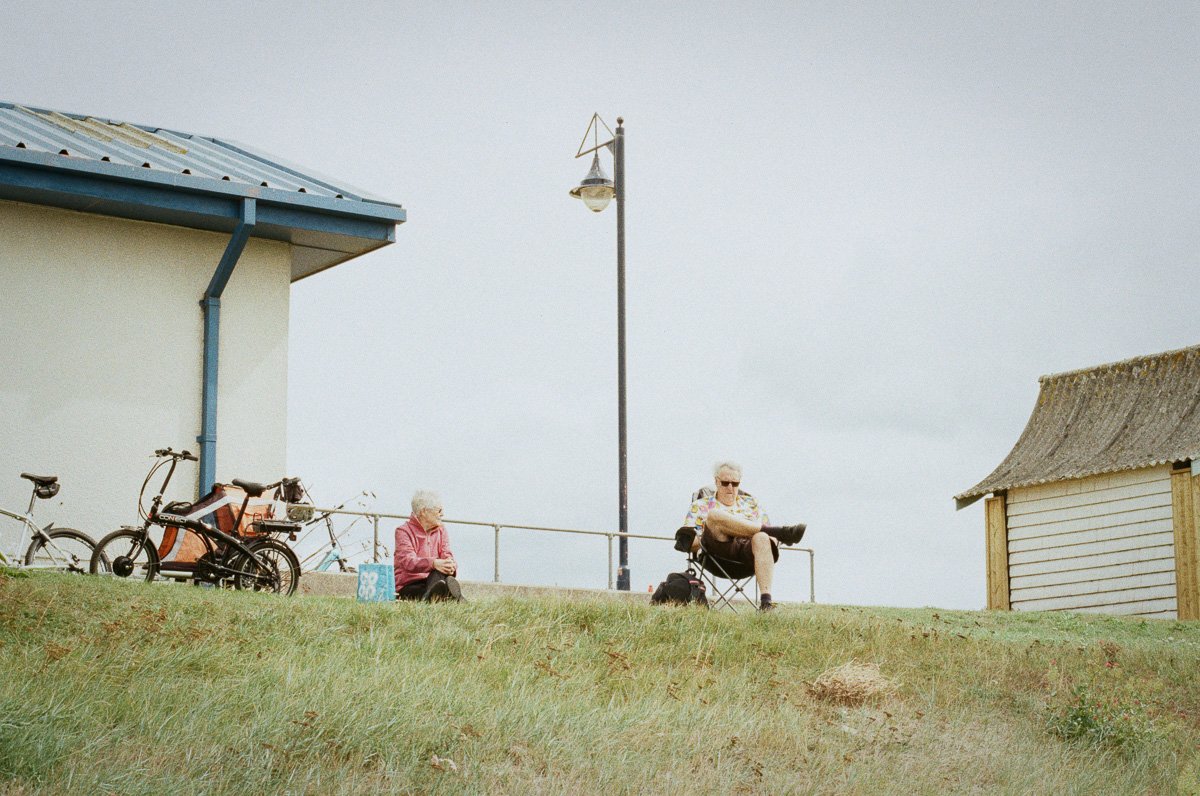
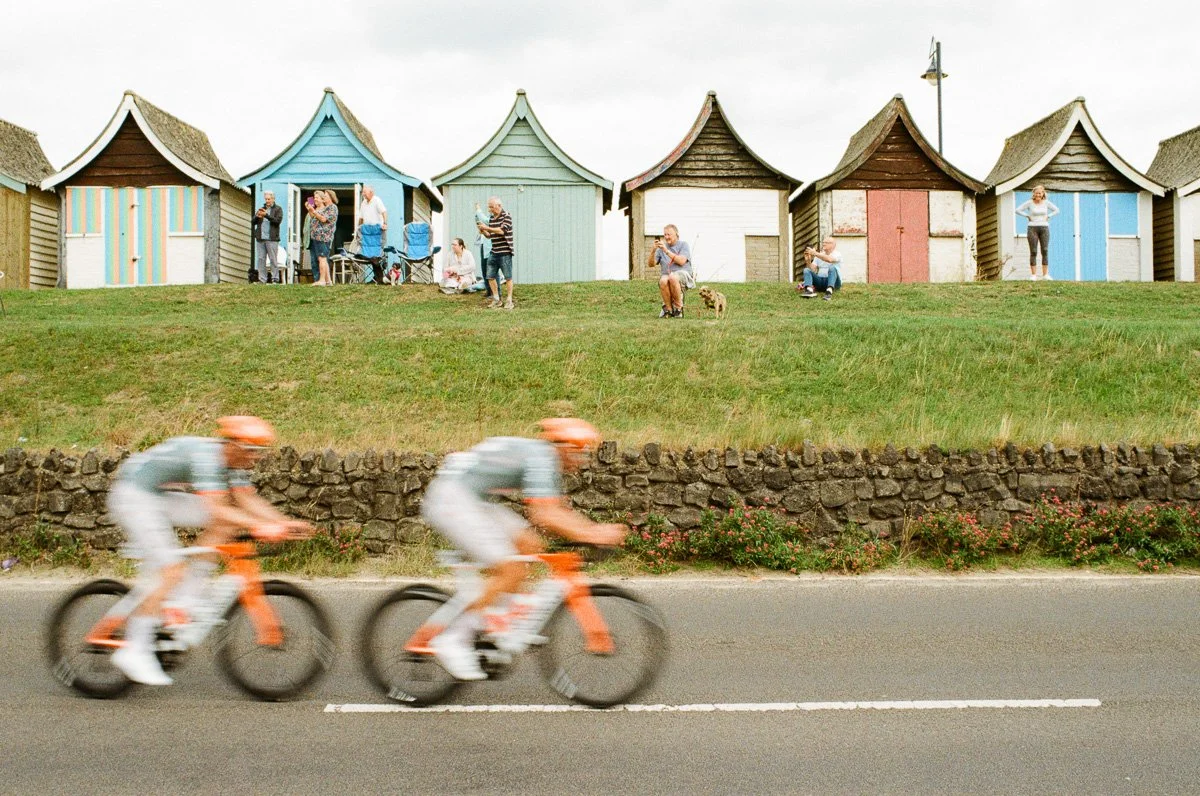
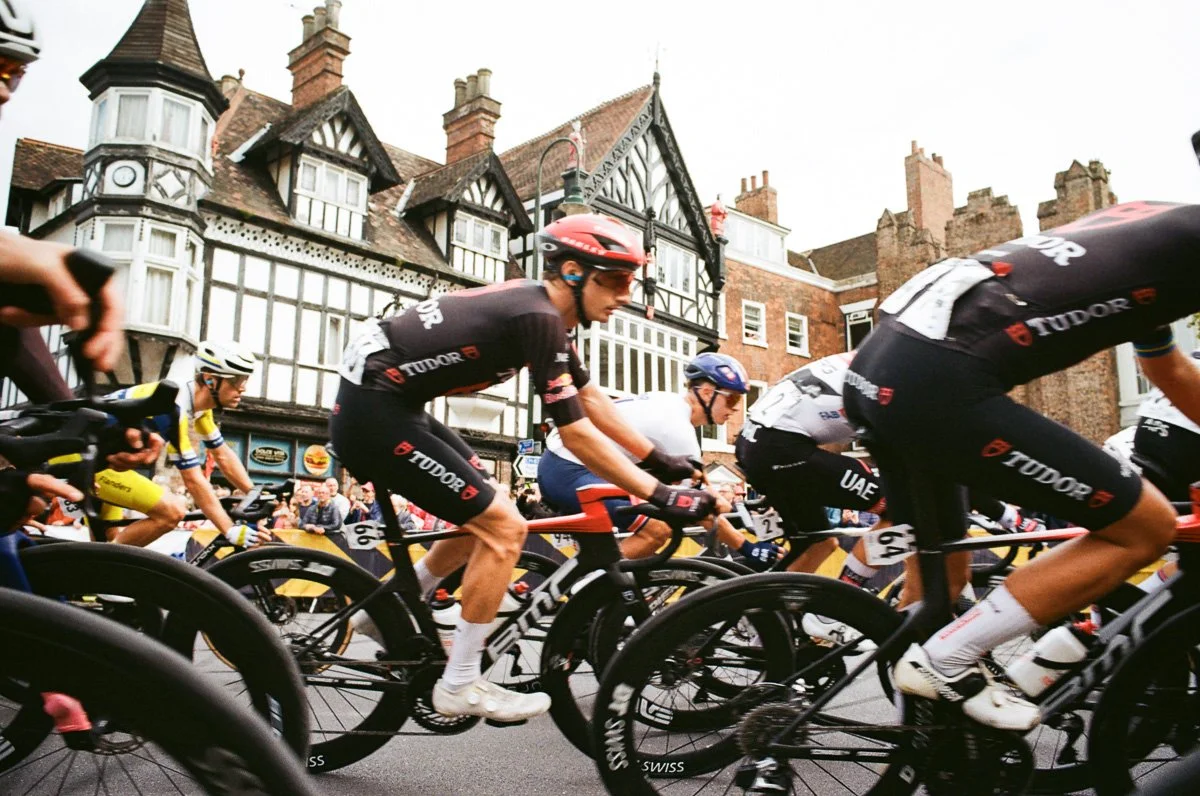
As the race headed between Mablethorpe and Sutton on Sea I knew it would pass this line of iconic beach huts alongside the beach. I pre-planned my position here and hoped the race would still be together, with a bunch passing in front of me. I anticipated a high speed and wanted a relatively slow shutter speed to emphasise the pace.
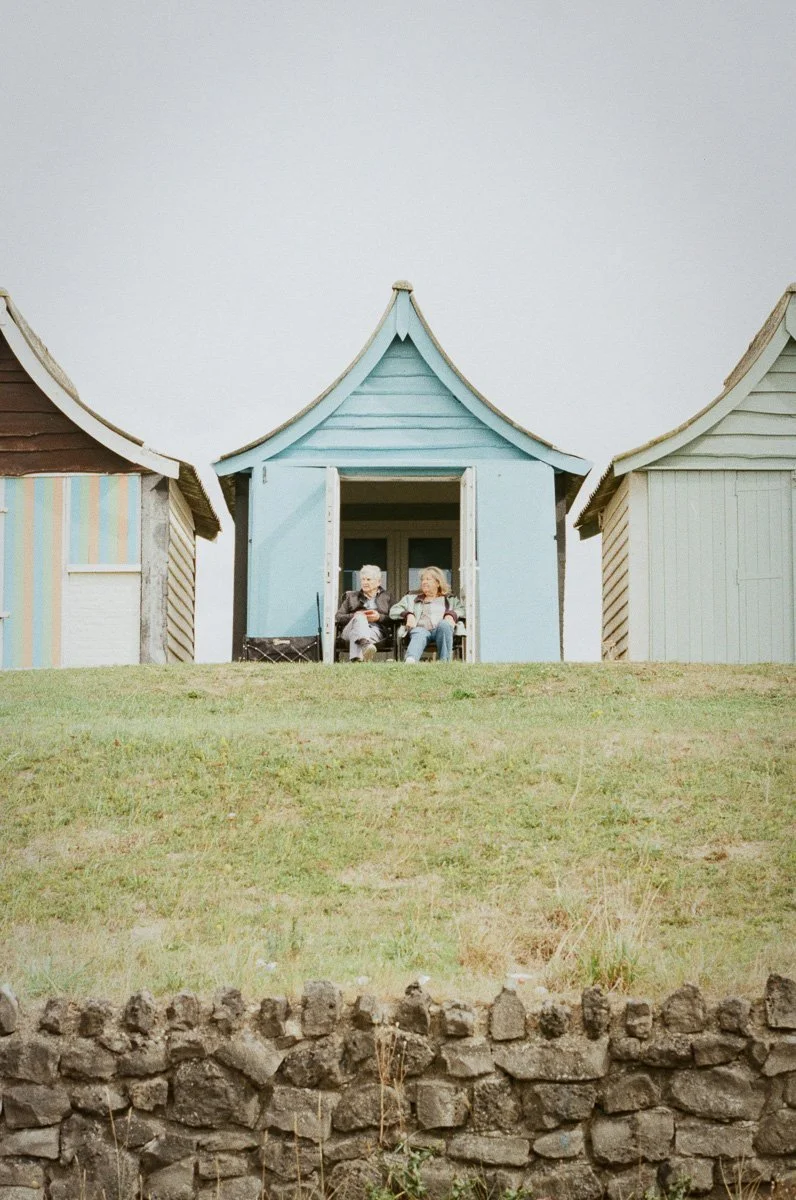
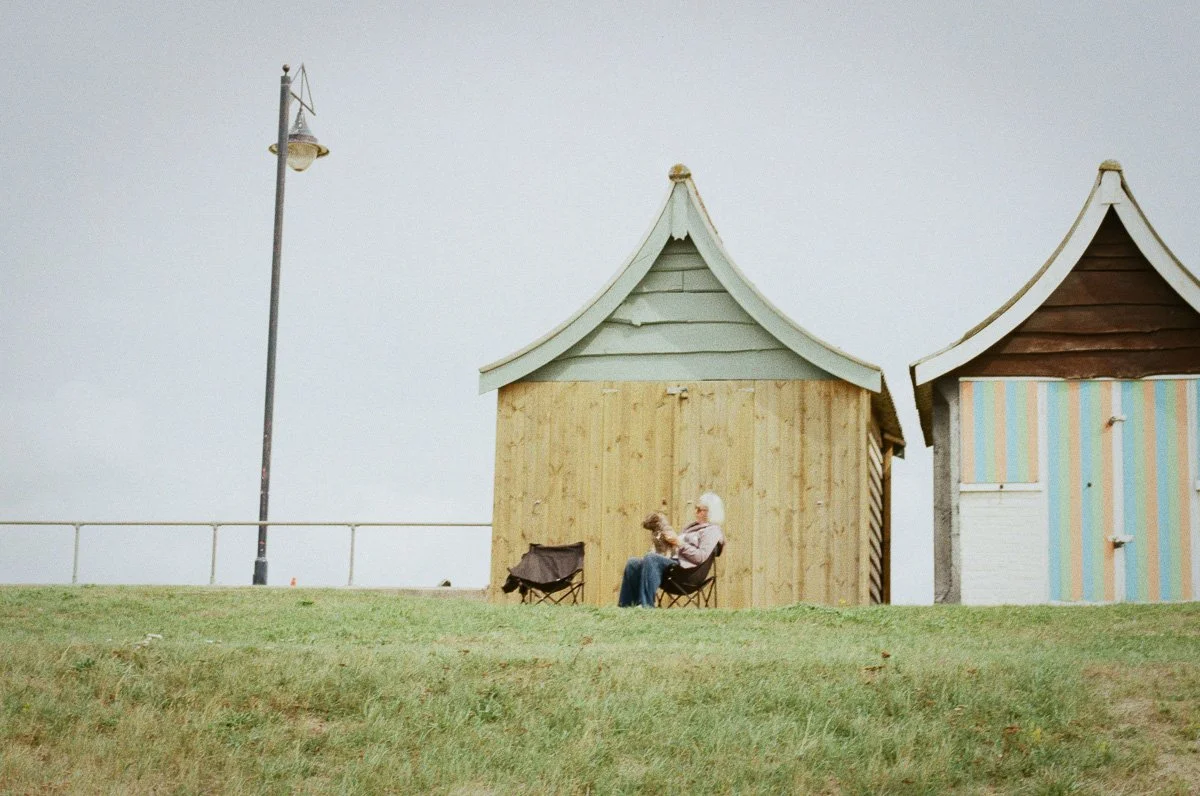
I hadn’t anticipated the number of people that chose this spot to watch the race pass, I was delighted as people set up their folding chairs and settled in to watch. My image is full of stories, the riders and the spectators beautifully stretched out across my frame.
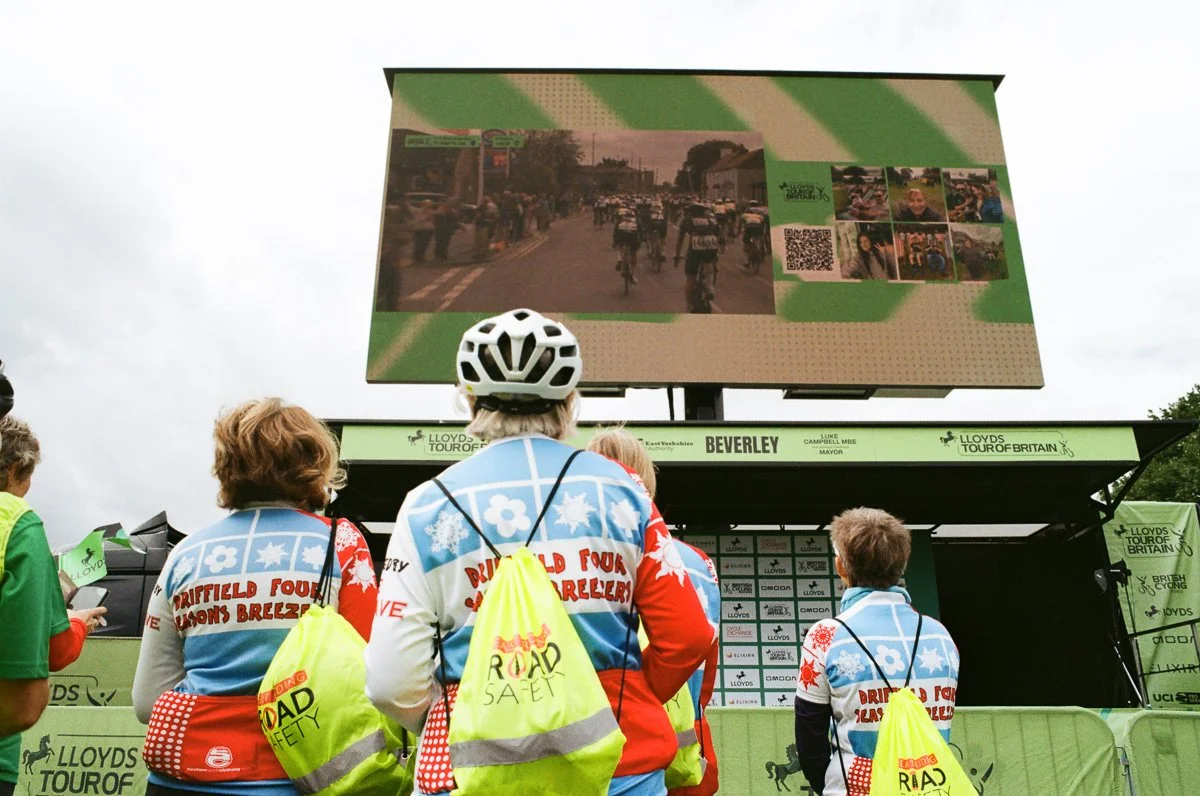
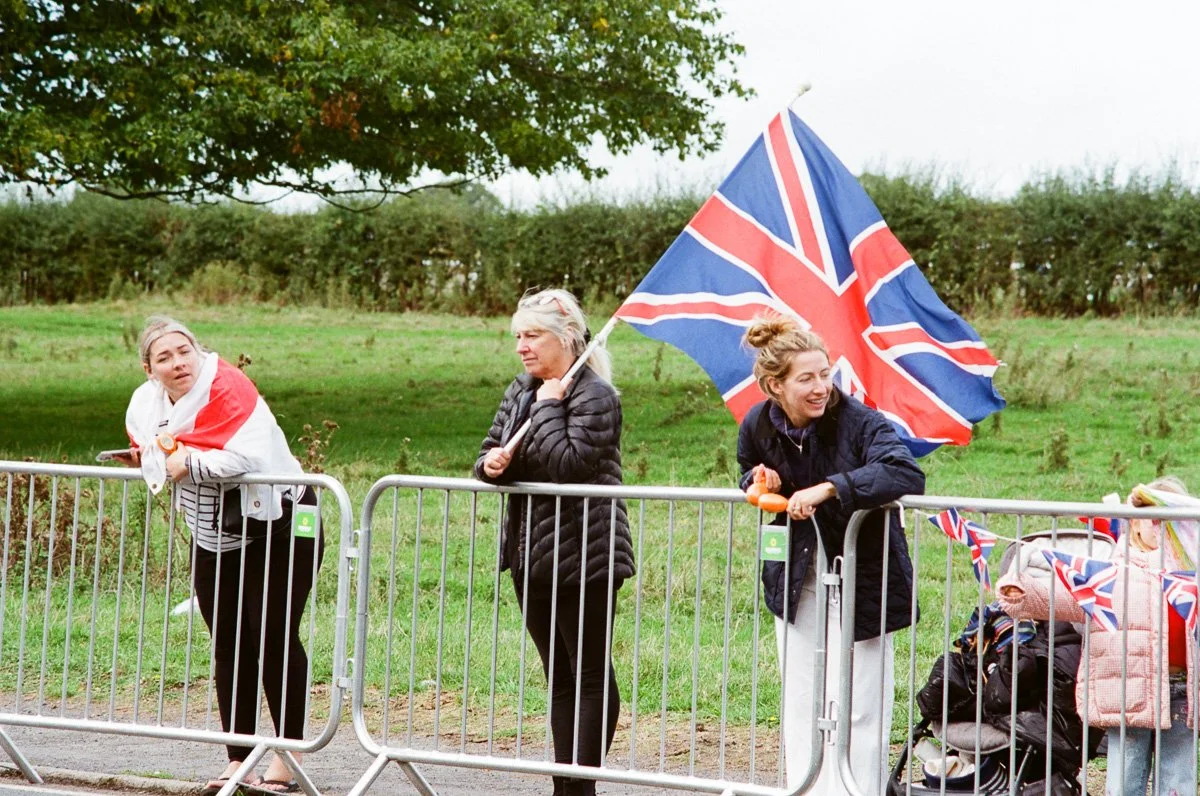
Spectators Enjoying the Race Pass By
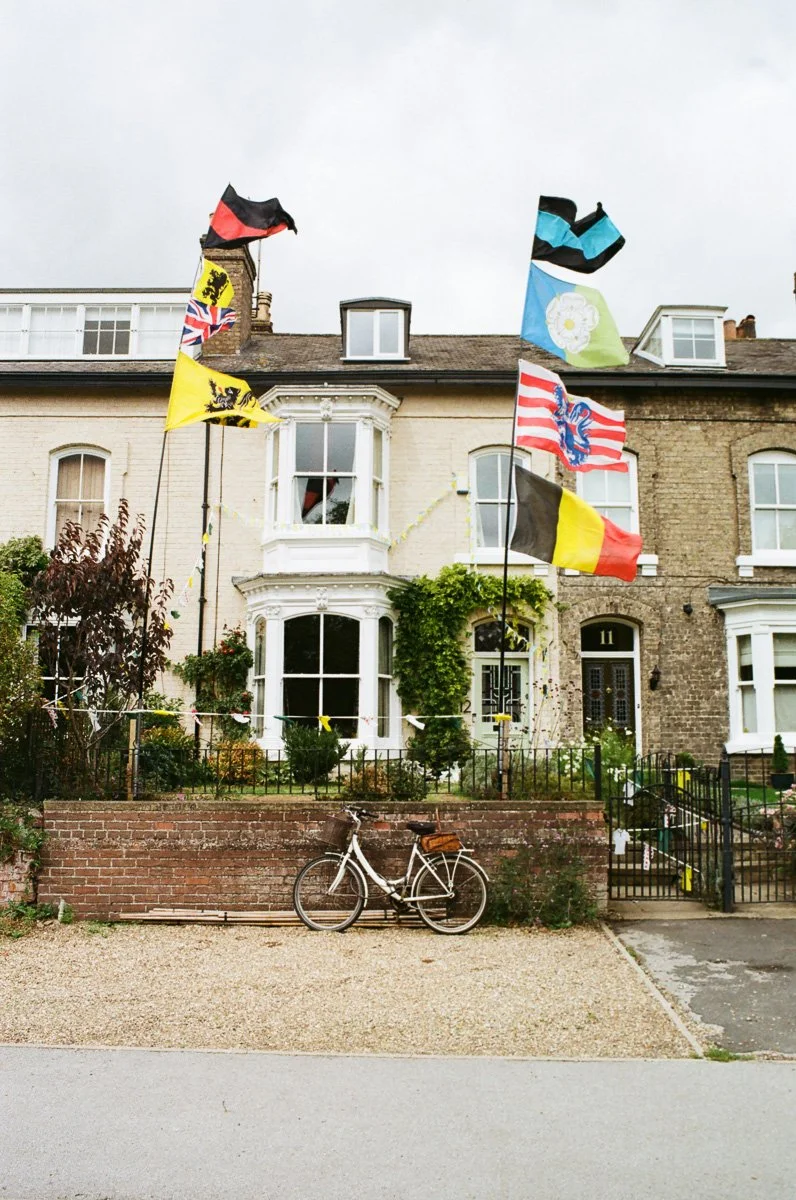
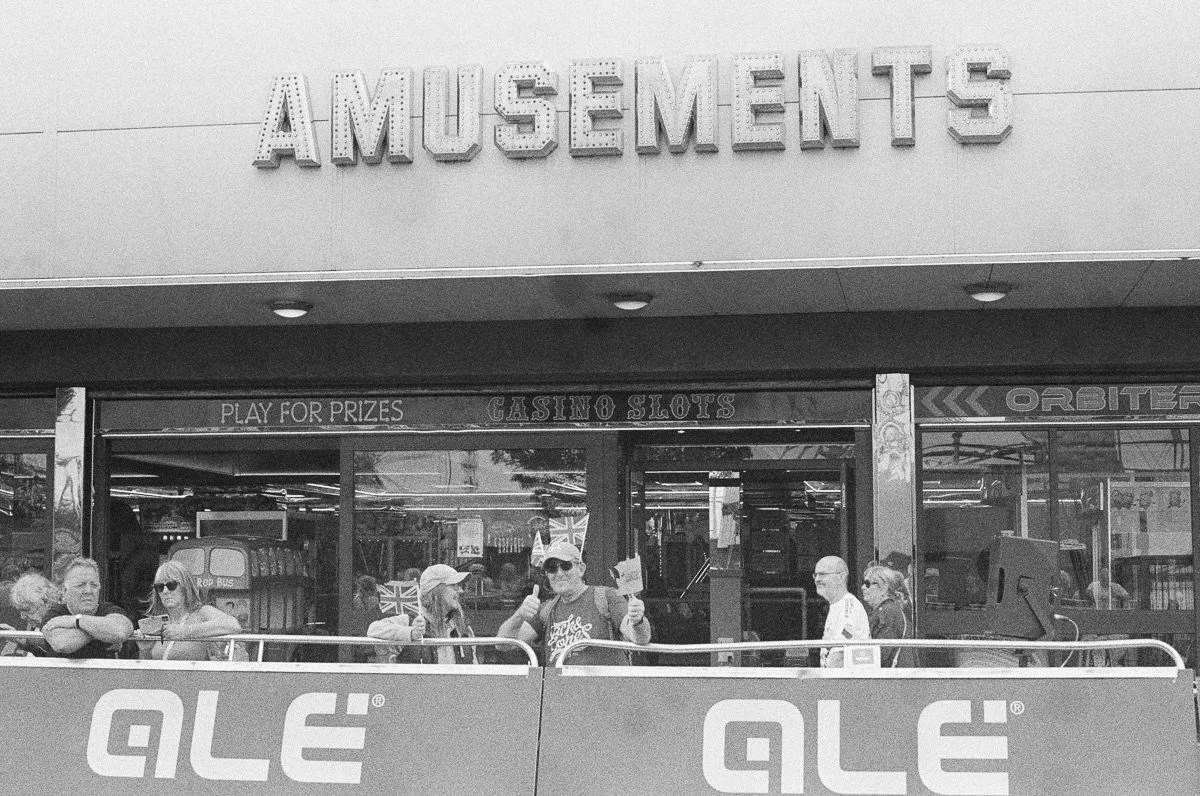
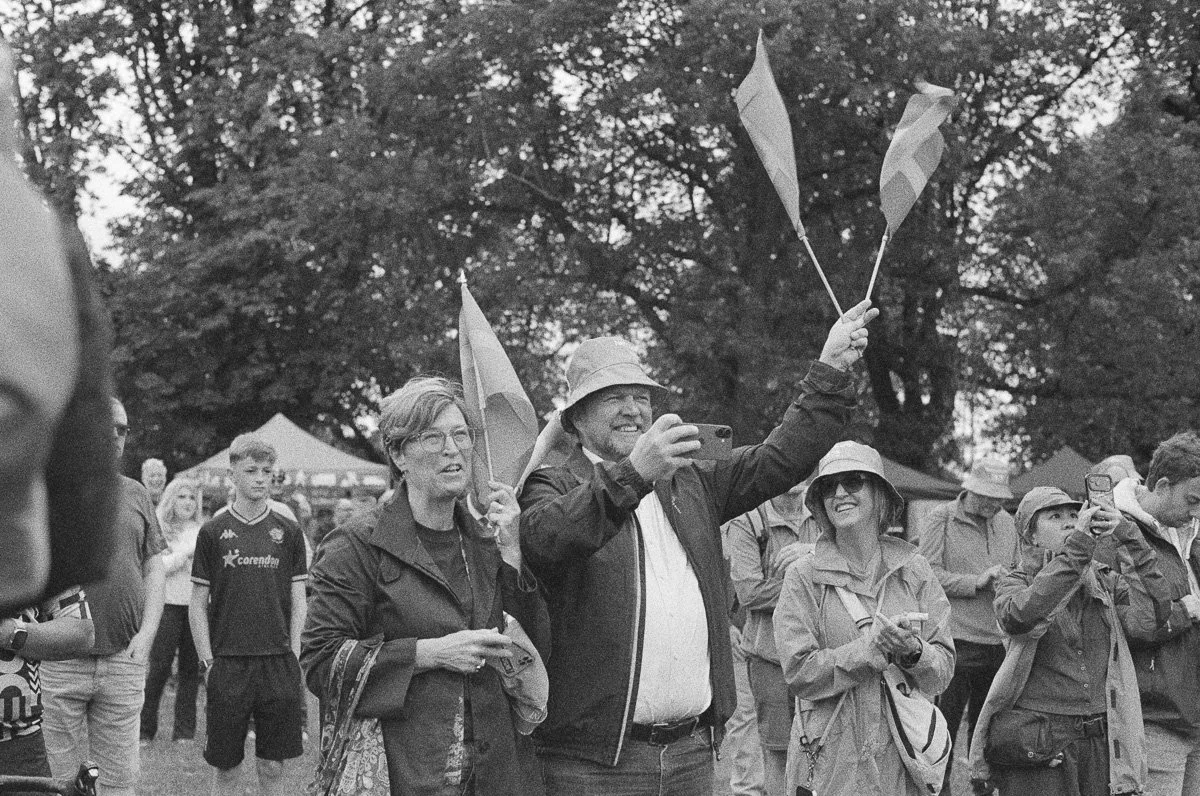
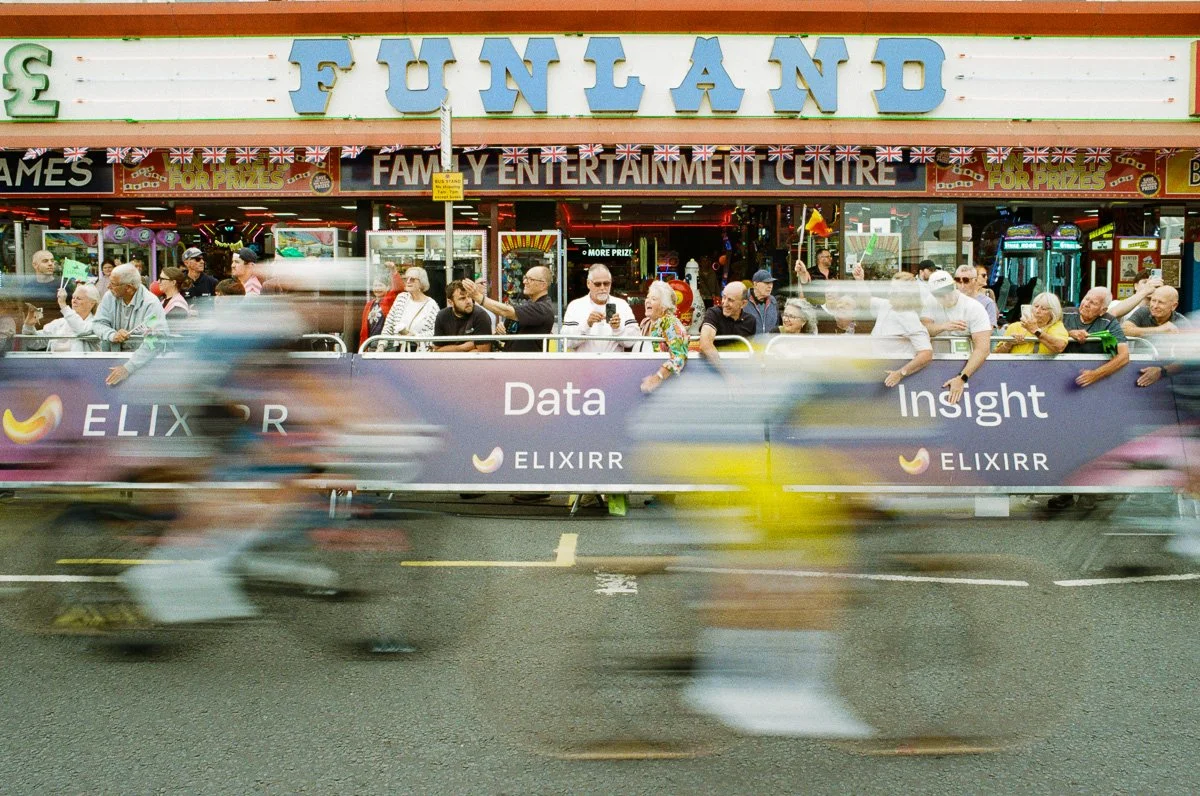
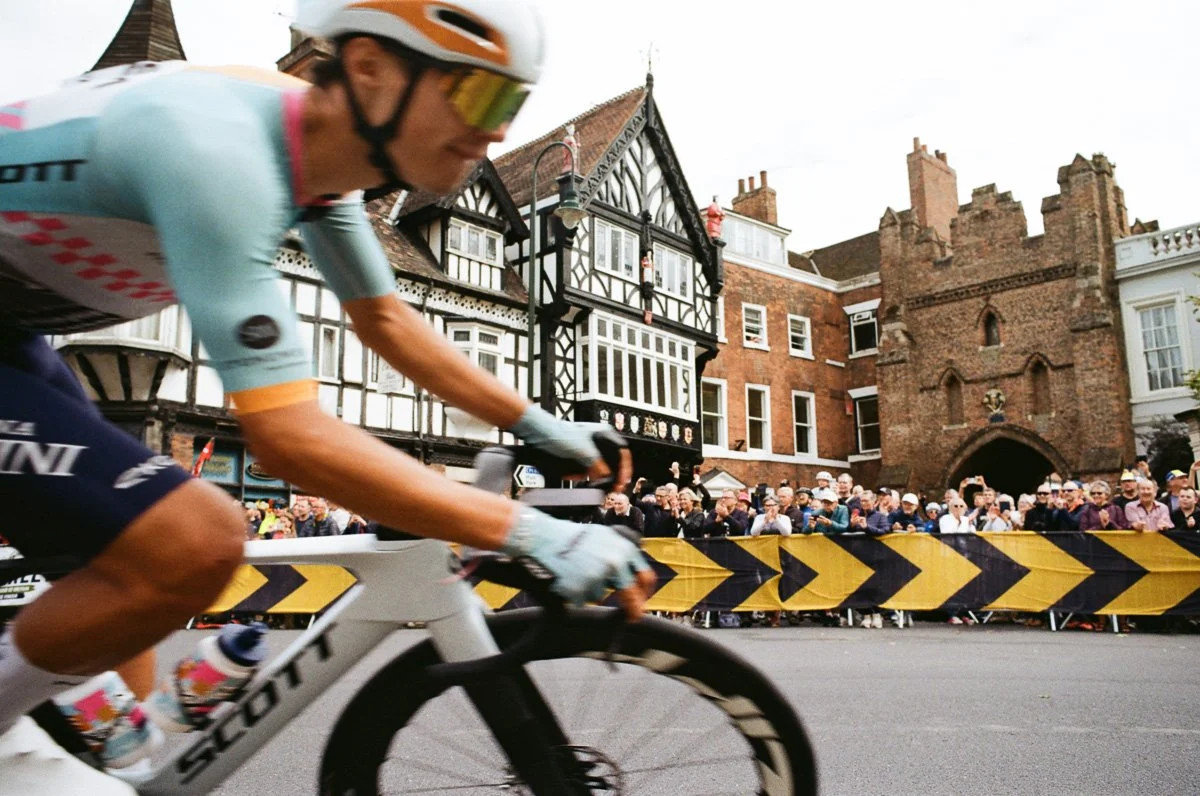
In Skegness I was more interested in the background, what says seaside more than Funland arcade? As with the beach hut shot above, the crowd add as much energy to the shot as the passing riders in full sprint.
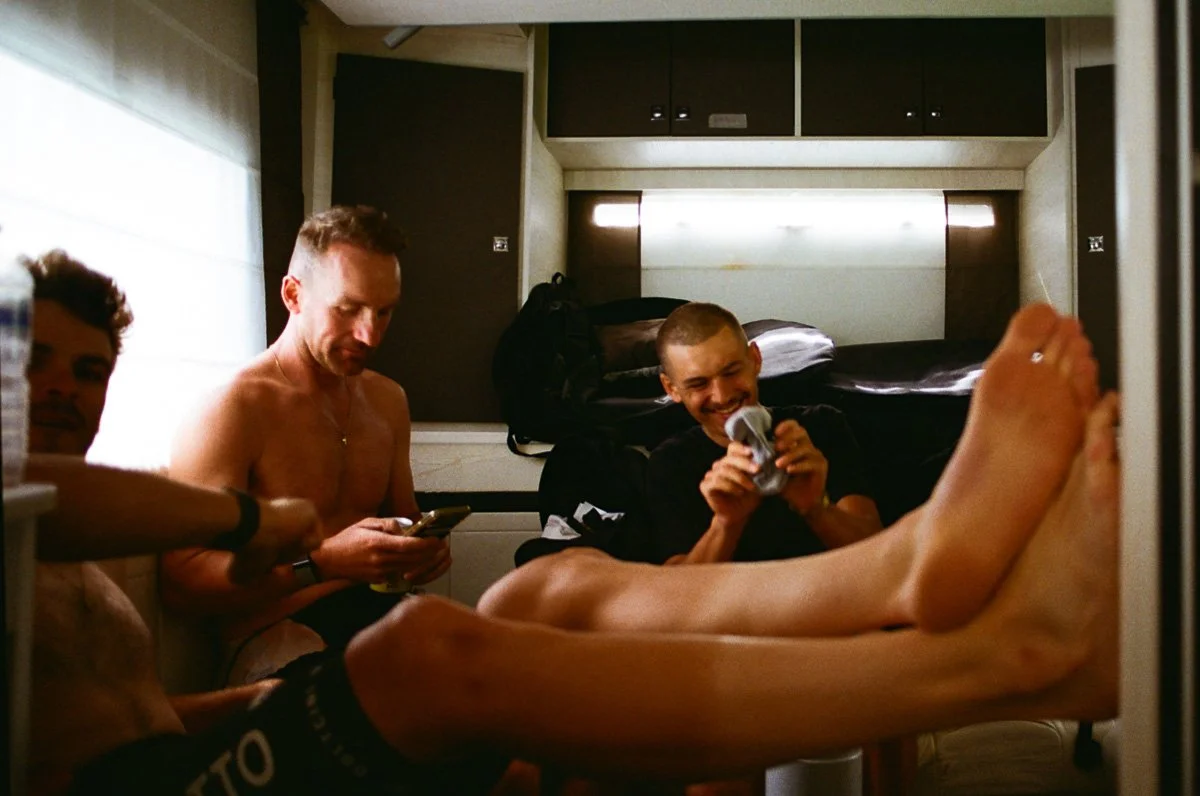
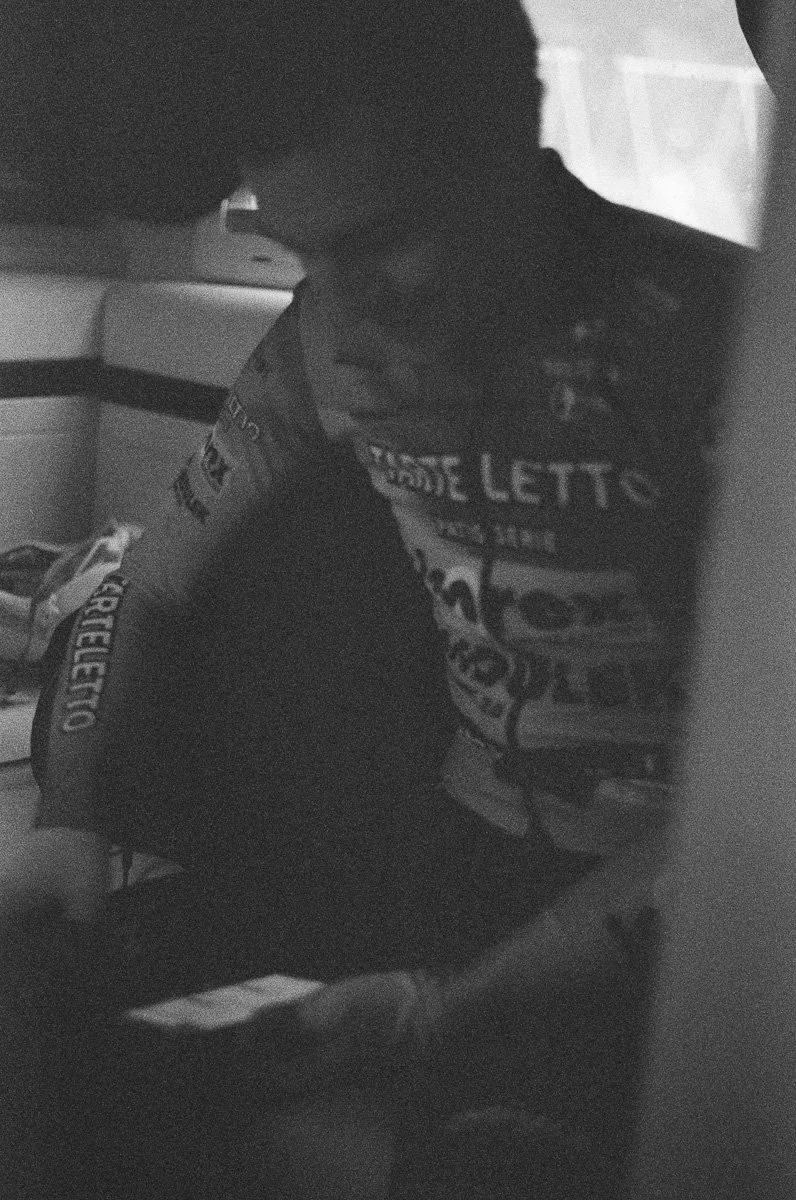
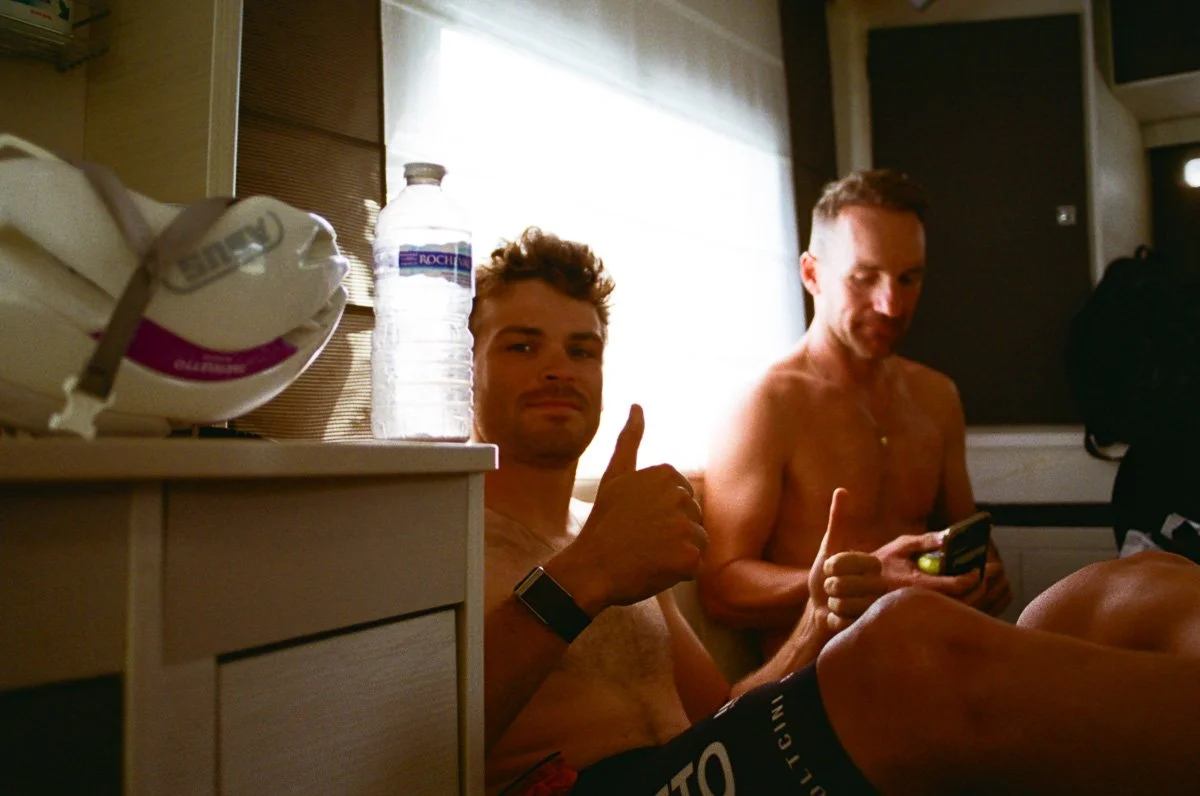
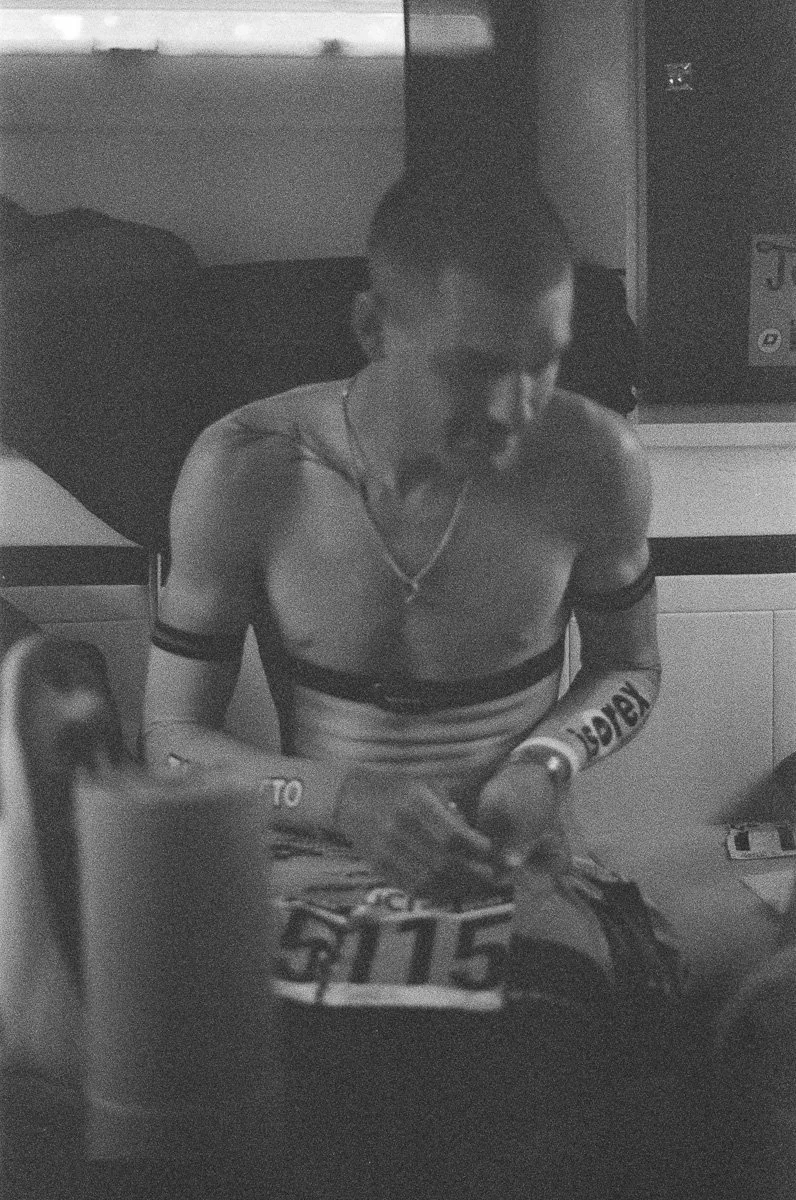
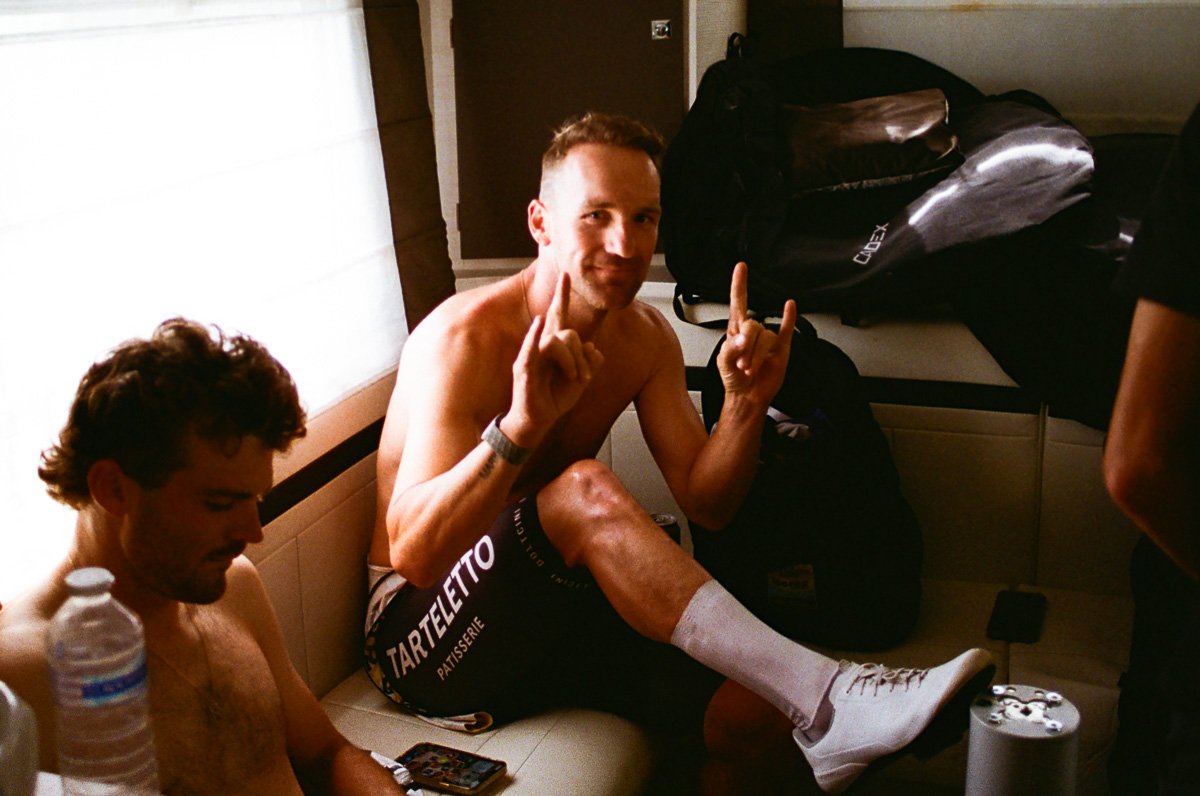
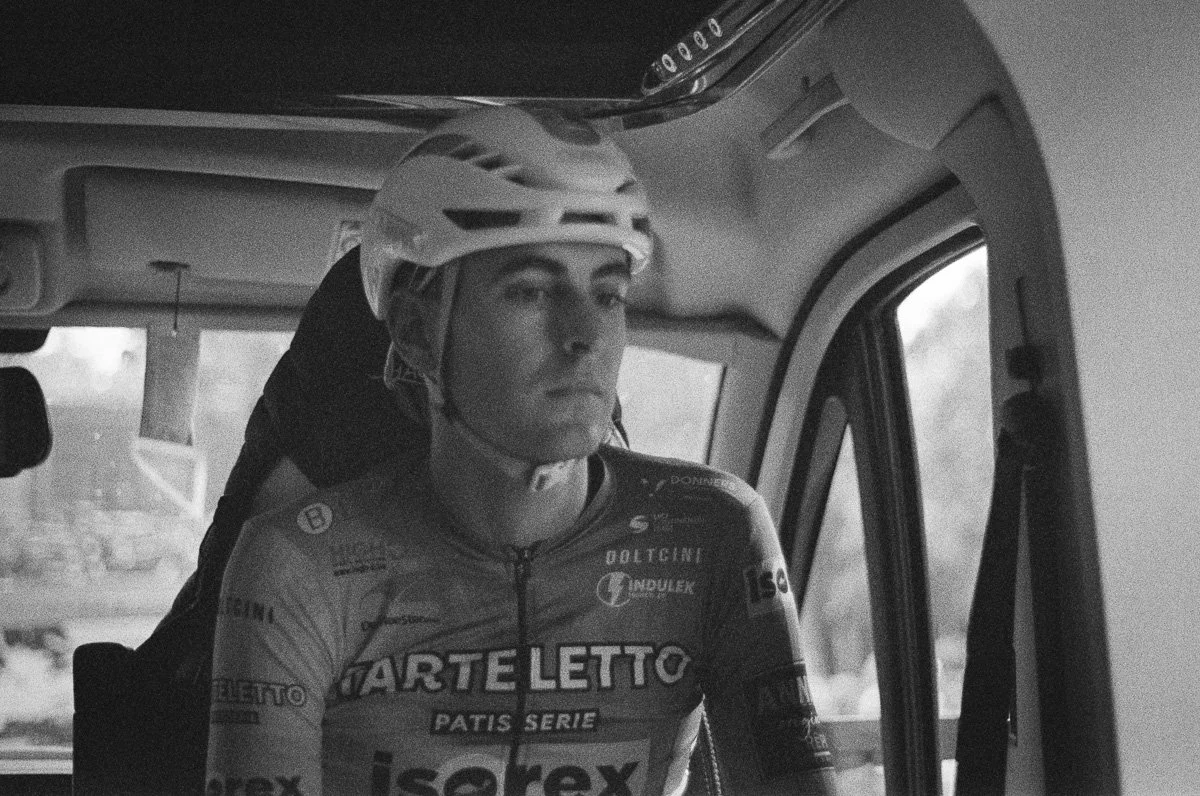
I shared my photos of the Tarteletto Isorex Team members in the Boston coffee shop and was invited into the team bus to meet them in Hull. Spirits were high after a successful stage and a combativity award the day before.
They attacked again on the stage between Hull and Beverley, winning another combativity award and grabbing two top 10 finishes in the stage’s sprint finish, maybe the photographer’s a lucky charm!
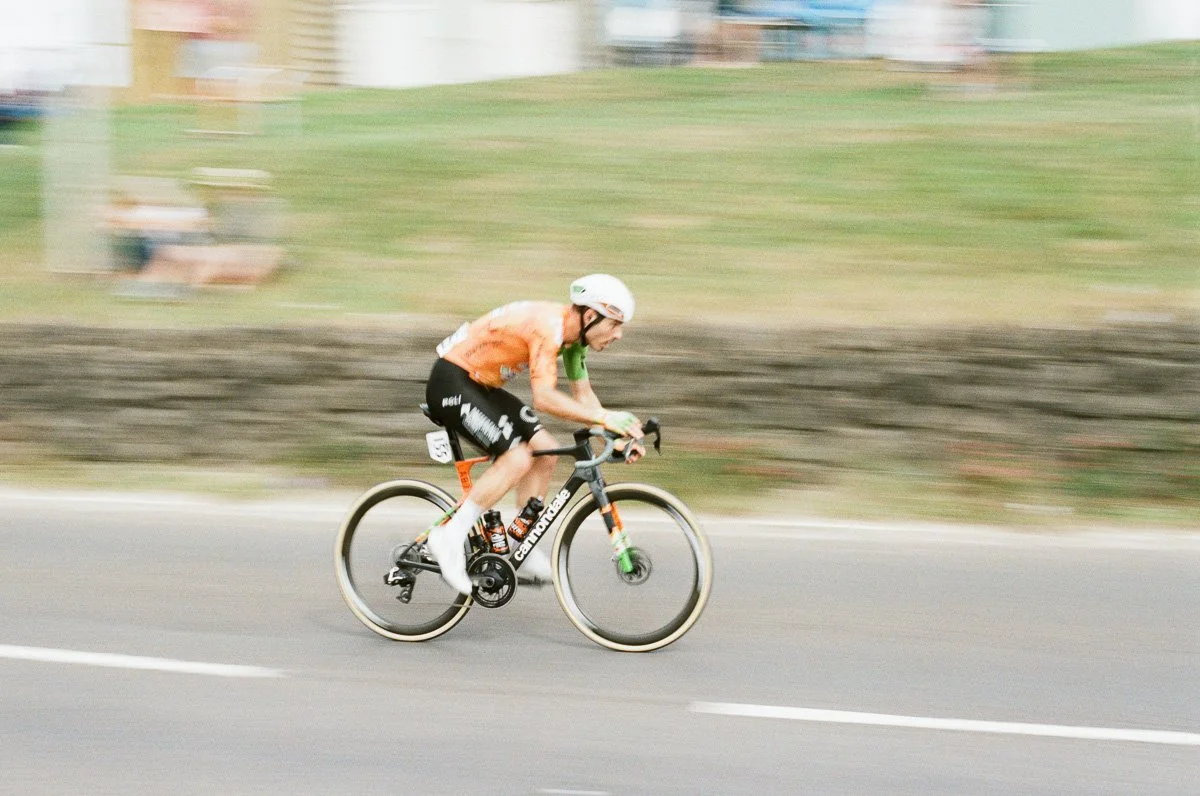
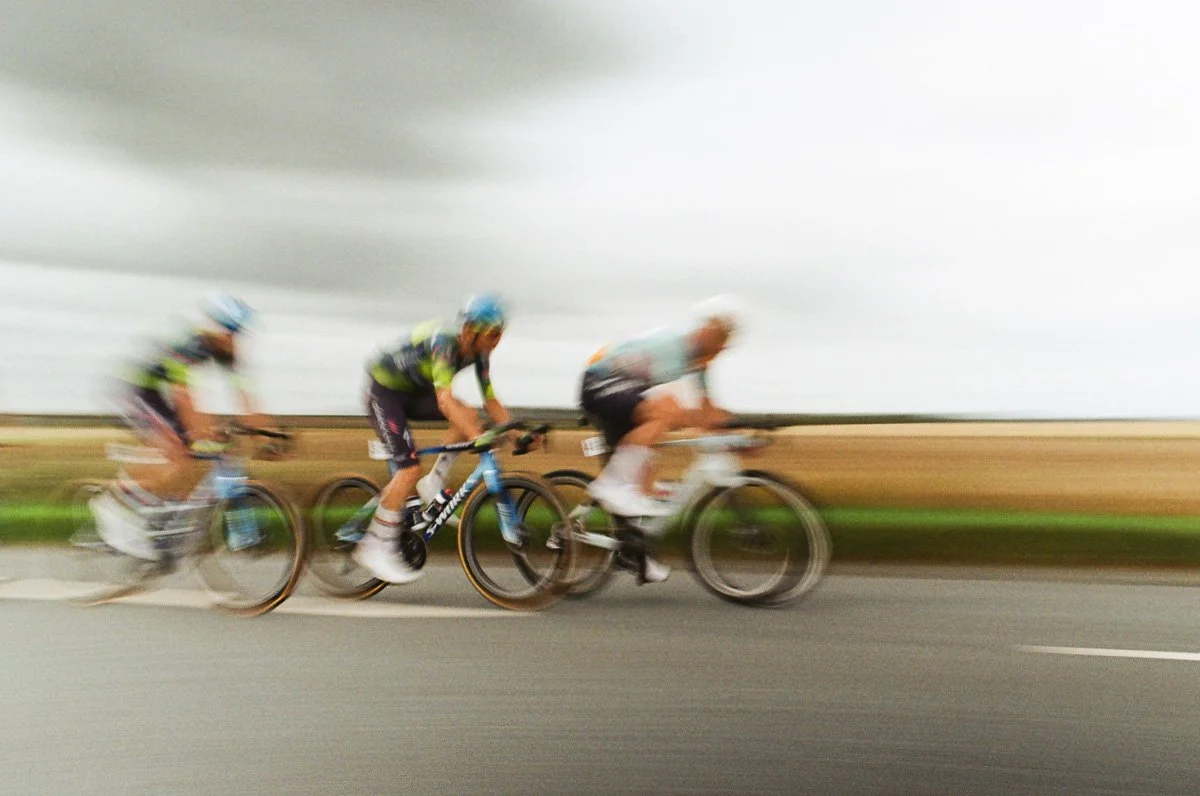
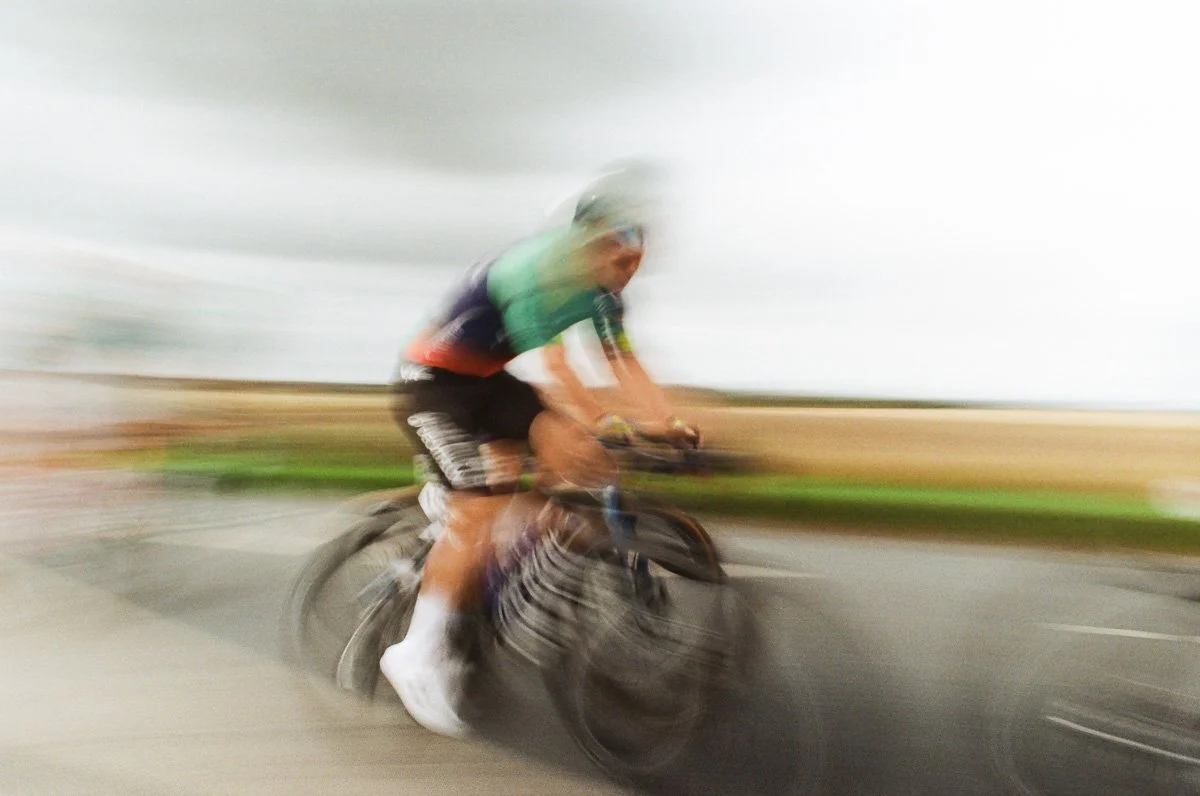
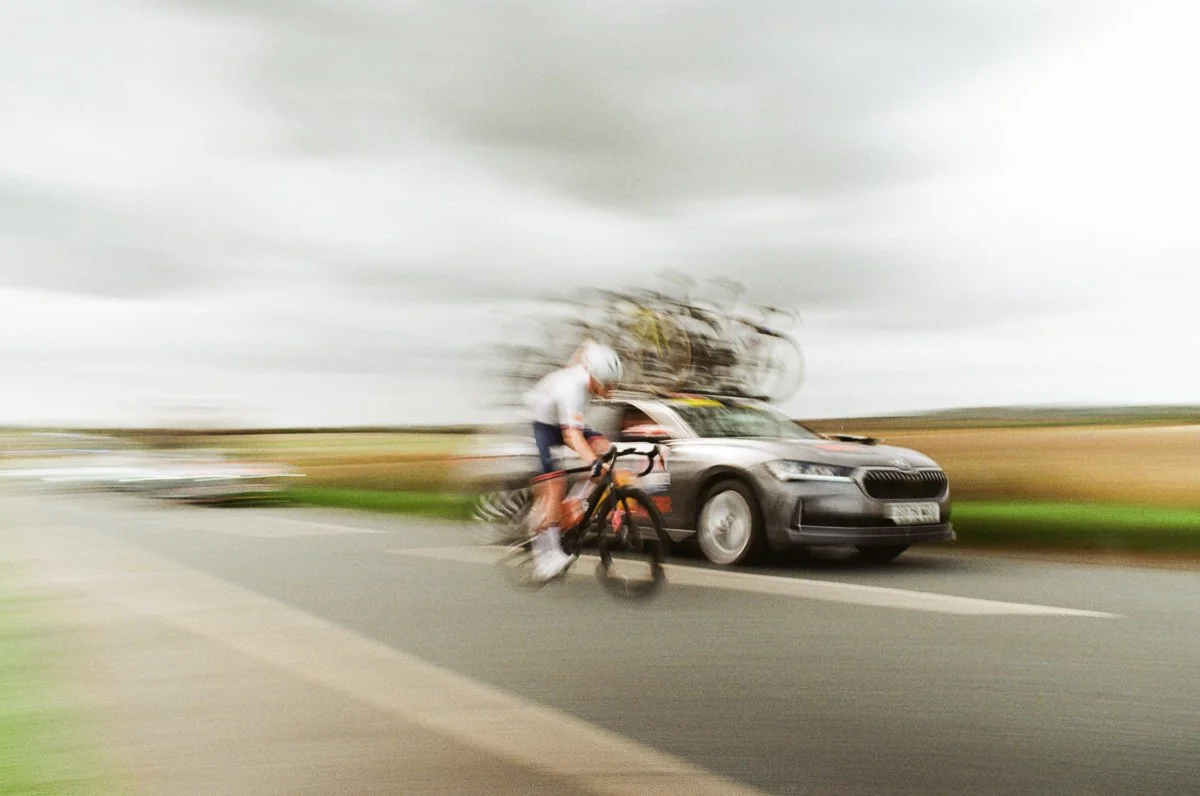
Whilst the race headed up the east coast it never actually saw the sea and unfortunately there was no opportunity to get a ‘beach backdrop’. Instead I headed to an open stretch of road with a clear background to shoot some slow shutter speed panning shots.
Come with me behind the scenes as I shoot the Tour of Britain on Film
Panning is a really effective way of portraying movement and speed. Standard panning is moving the camera, at the speed of a subject travelling across your point of view, with a relatively slow shutter speed to blur the background, not the subject.
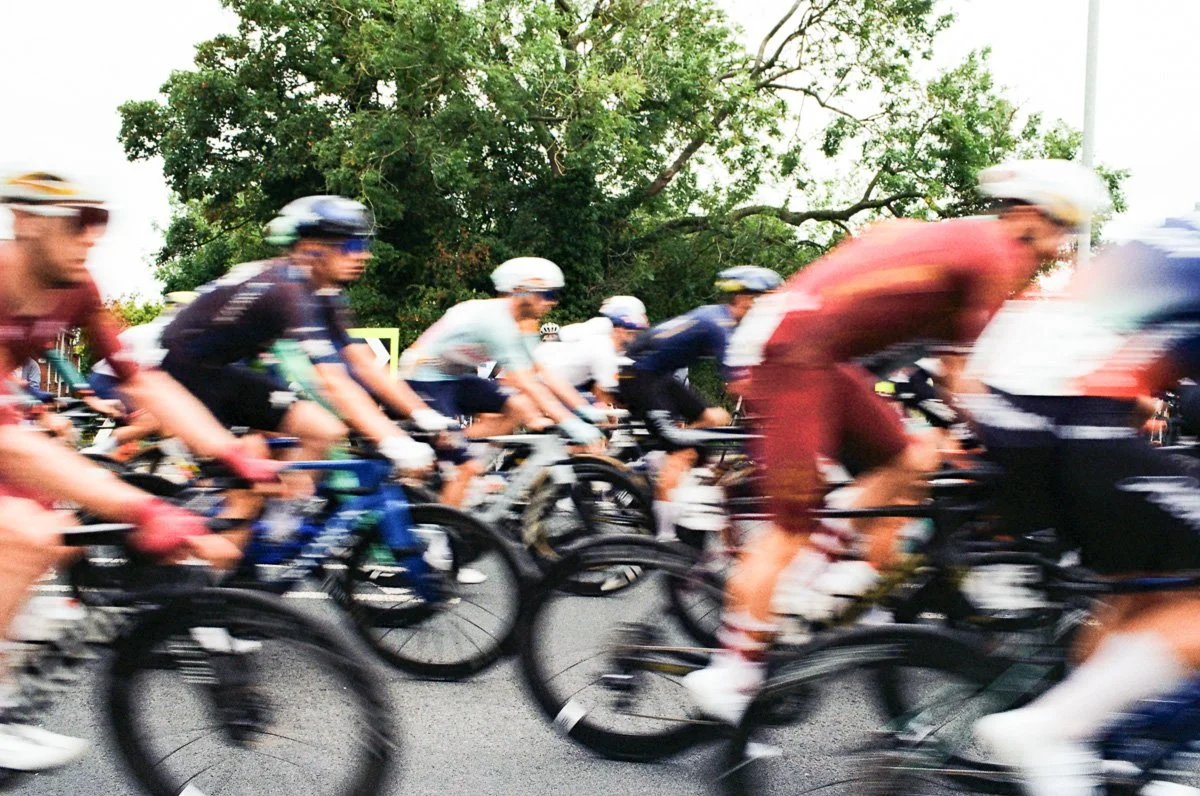
When you get really close to a fast moving subject you also add the rapid change of distance between subject and camera, which adds a similar effect to zooming in/out whilst capturing with a slow shutter.
Sometimes a little ‘abstract’, the technique takes practice, good technical skill and if you’re shooting on film with manual focus, a fixed prime lens and no image review, strong nerves
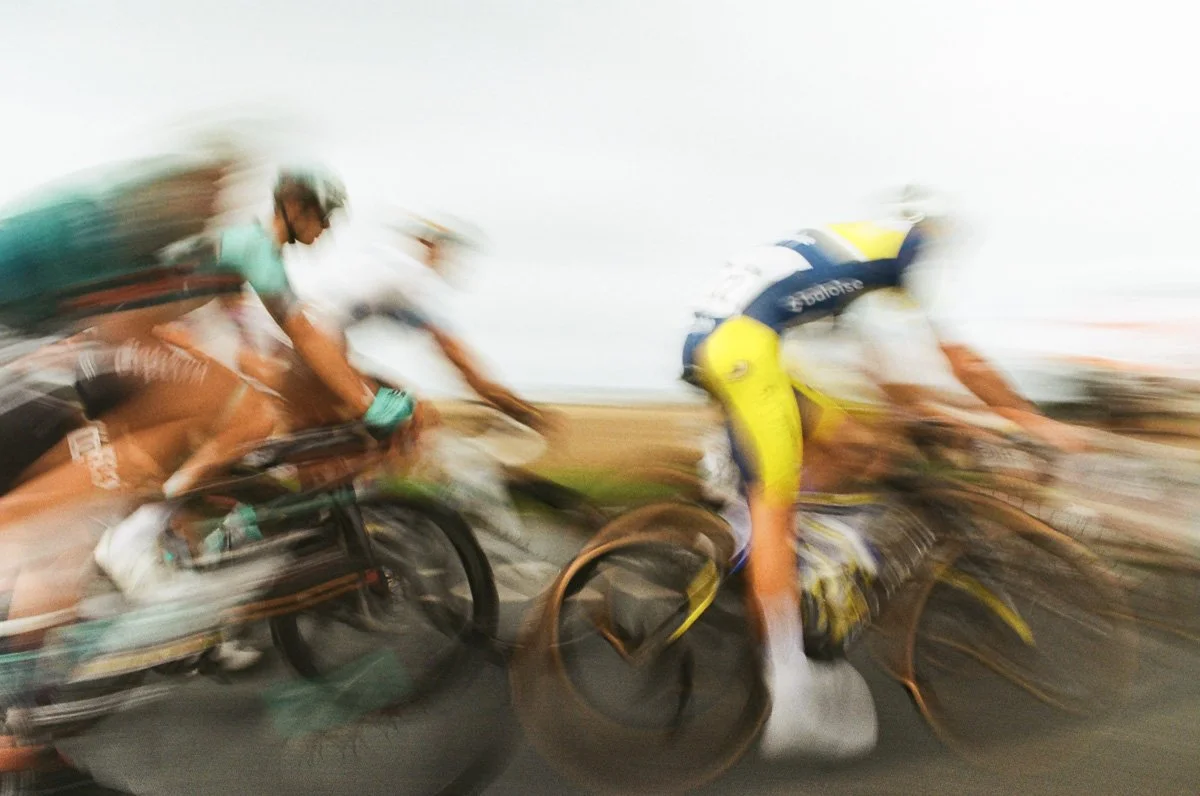
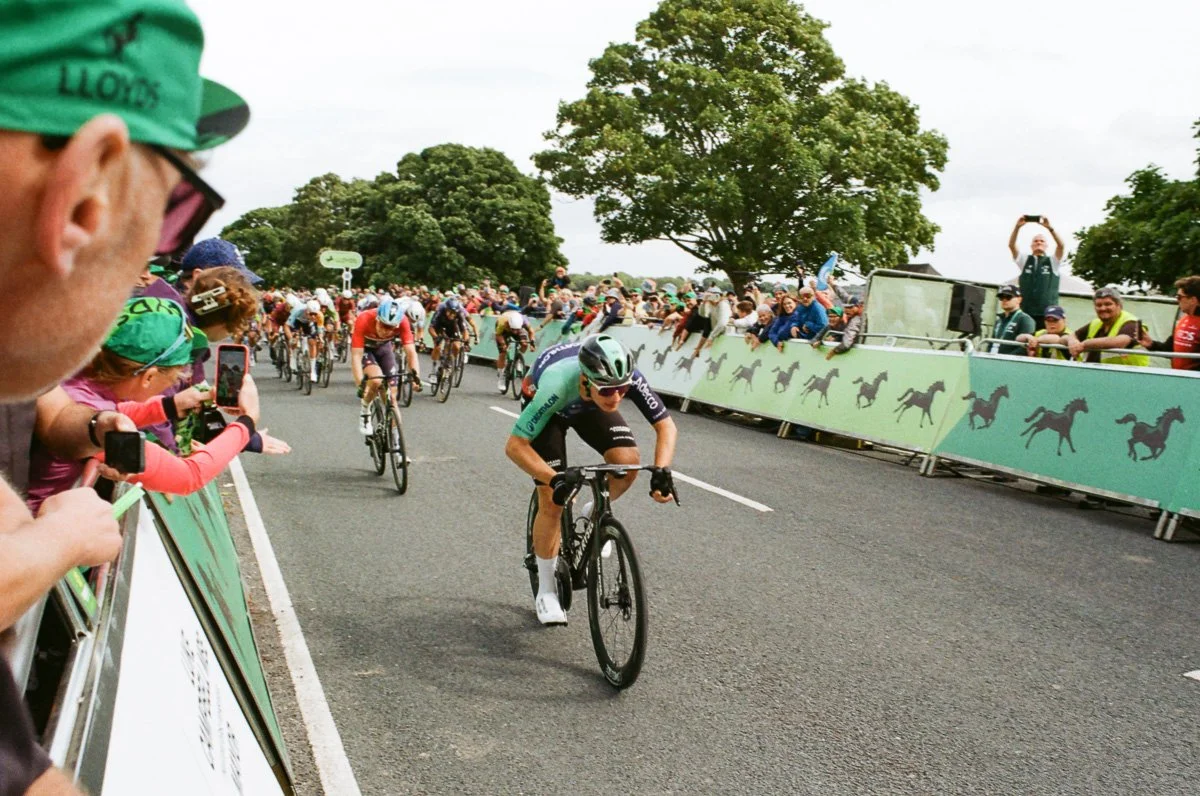
The long straight run to the finish line in Beverley was never going to be a photographer’s favourite, I managed to grab a spot right by the finish line to get close to Olav Kooij’s winning sprint.
Did I Meet My Challenge?
I think so! I feel I achieved the images I set out to capture. The result of the planning and prepation I put in and importantly for me, it was a lot of fun to approach the image making in a new (old) way.
Whilst I’ve shot film for many years for my own enjoyment I learned a few new things that I will talk about in future articles and maybe discuss a few things I might change next time.
I’ve received lots of comments and questions on social media as I’ve shared my images and try to respond to them all, please feel free to use the comments section below and I’ll try to answer as many as I can.